
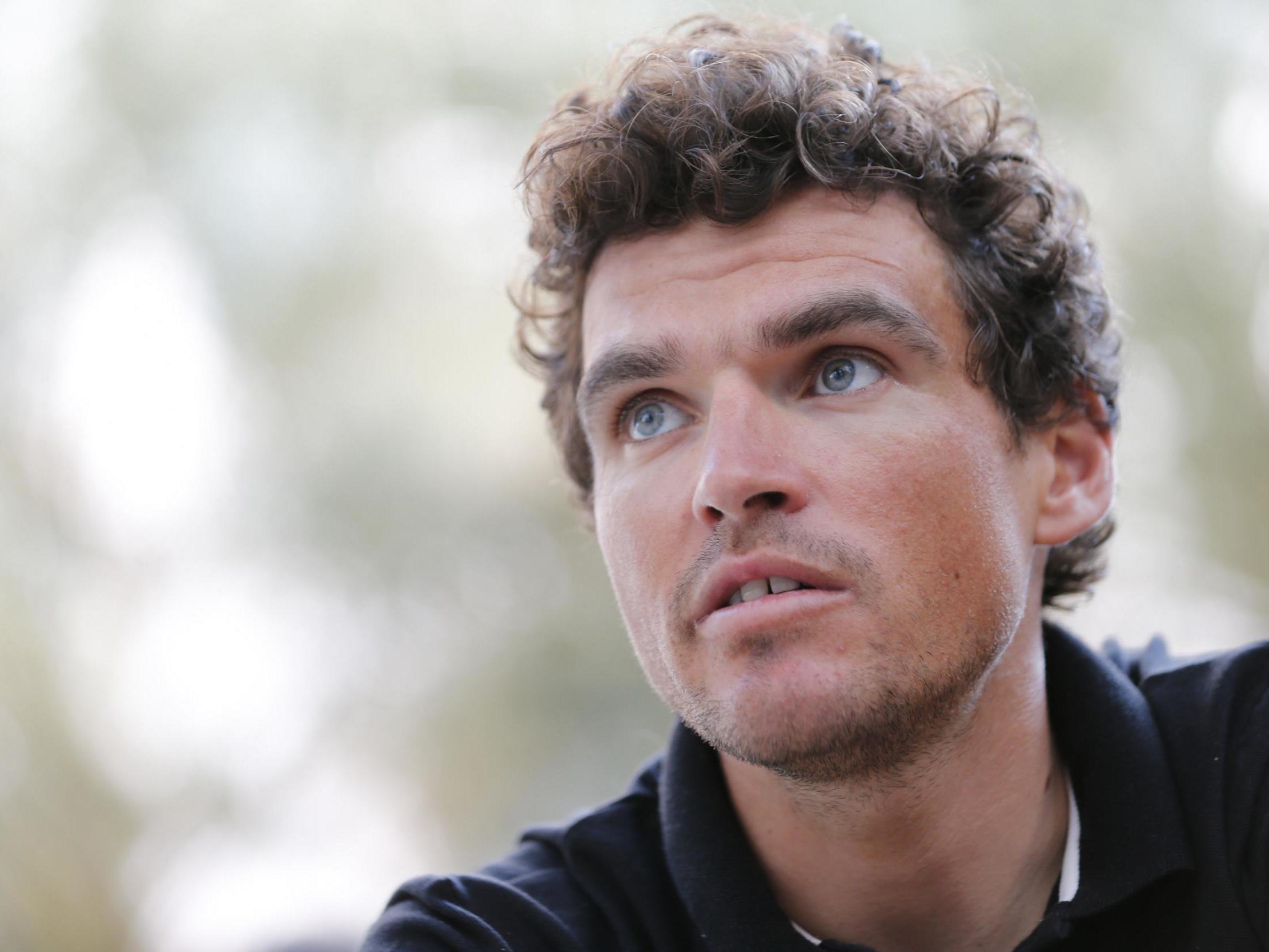
A few months ago, Greg van Avermaet was approaching the Poggio, the decisive final ascent of Milan-San Remo: one of the five Monuments of road cycling, and a race he has never won. The day was going well and van Avermaet, the reigning Olympic champion and one of the world’s pre-eminent one-day racers, felt strong. But as the jostling pack reached the foot of the climb, all of a sudden something didn’t quite sit right.
When you have spent your life riding in bunches, you get a sort of sixth sense for where the big attack is going to come, and where you are in relation to it. As the critical break materialised, van Avermaet immediately realised he had allowed himself to slip too far back. Frantically he searched for a gap, only to find himself blocked, nudged, outmanoeuvred. As Julian Alaphilippe of France sprinted clear to claim the biggest win of his career, van Avermaet trailed in 42nd place. After almost 300 flawless kilometres in the saddle, his race had evaporated in the space of a few seconds.
Afterwards, the normally mild-mannered and courteous Van Avermaet was furious. He marched wordlessly straight past the waiting television cameras, and for the first time that anyone on his CCC team could remember, refused to speak to the press. “I don’t like to see guys happy at the finish if it didn’t go the right way,” he says now. “If you have high expectations, you have to feel defeated. If you don’t have this, you don’t have any ambition.”
We’ll tell you what’s true. You can form your own view.
From
15p
€0.18
$0.18
USD 0.27
a day, more exclusives, analysis and extras.
It’s a couple of months later, and van Avermaet is sitting in a hotel bar on the outskirts of Leeds, philosophising on the fine line between success and failure. On the maddening caprice of a sport where your own skill and hard work guarantee nothing on their own. Where the greatest rider with the best preparation can do everything right for six hours, only for someone to crash, or a team-mate to flag, at exactly the worst moment.
“It’s super-hard,” he says. “And also hard to explain to people. They think: ‘you lost, you’re not as strong as this guy’. But it’s about details: making the right choices, being in the right position in the sprint. Sometimes you’re 12th or 10th, and you’re stronger than the winner. That’s hard to deal with. In football, you win, you draw or you lose. Cycling… it’s a lot of losing.”
1/64 2019 Tour de France
The route from Brussels to Paris, via the Pyrenees and the Alps, in what has been dubbed “the highest race in history”.
letour
2/64 Stage 1, Grand Depart – Brussels (194.5km, flat)
Sixty-one years after Brussels’ first Grand Depart, the Tour returns for a flat opening stage which begins and ends in the Belgian capital via a loop south to Charleroi and west via Mur de Grammont. A breakaway is likely to be reeled in by the sprint teams, with finishers like the Australian Caleb Ewan (Lotto-Soudal) and the Colombian Fernando Gaviria (UAE-Team Emirates) eyeing victory.
3/64 Stage 1, Grand Depart – Brussels (194.5km, flat)
Stage profile.
4/64 Stage 1, Grand Depart – Brussels (194.5km, flat)
Final kilometre.
5/64 Stage 2 – Brussels (27.6km, team time-trial)
Day two sees the teams head in formulaic convoy from the Palais Royal to the Atomium on a sweeping route around the city. Greg van Avermaet’s CCC Pro Team are one of those expected to impress here, as are the in-form Jakob Fulgsang’s Astana Pro Team, in what is likely to be a closely fought stage.
6/64 Stage 2 – Brussels (27.6km, team time-trial)
Stage profile.
7/64 Stage 2 – Brussels (27.6km, team time-trial)
Final kilometre.
8/64 Stage 3 – Binche to Epernay (215km, hilly)
After 12km of its third stage, the 2019 Tour will enter France for the first time. A flat day charging south is complicated by a lumpy finish with four categorised climbs to disrupt the race. This may entice riders like Julian Alaphilippe to get into the break and collect King of the Mountains points, but if they’re caught then expect a quick but punchy rider like Peter Sagan or Michael Matthews to be involved at the finish.
9/64 Stage 3 – Binche to Epernay (215km, hilly)
Stage profile.
10/64 Stage 3 – Binche to Epernay (215km, hilly)
Final kilometre.
11/64 Stage 4 – Reims to Nancy (213.5km, flat)
This day is perfectly set up for the sprinters, with a long straight drag of around 1.5km into the finish line, with only a small categorised halfway through the day to break the rhythm.
12/64 Stage 4 – Reims to Nancy (213.5km, flat)
Stage profile.
13/64 Stage 4 – Reims to Nancy (213.5km, flat)
Final kilometre.
14/64 Stage 5 – Saint-die-des-Vosges to Colmar (175.5km, hilly)
The first really testing climbs of this Tour arrive on day five in the second half of this route across a patch of north-east France. In the final 50km, the category-two Cote des Trois-Epis is quickly followed by the category-three Cote des Cinq Chateax, and they will demand of their winner strong climbing with skillful handling on the fast descent into Colmar.
15/64 Stage 5 – Saint-die-des-Vosges to Colmar (175.5km, hilly)
Stage profile.
16/64 Stage 5 – Saint-die-des-Vosges to Colmar (175.5km, hilly)
Final kilometre.
17/64 Stage 6 – Mulhouse to La Planche des Belles Filles (160.5km, mountainous)
The first mountain stage of the Tour and an opportunity for one of the yellow-jersey contenders to make their mark. The summit of La Planche des Belles Filles (The Plank of Beautiful Girls) has featured three times as a stage finish, with Chris Froome winning in 2012 and Vincenzo Nibali winning in 2014, the year he won the Tour, and its 7km ascent at 8.7% will again bring the best out of the most impressive climbers.
18/64 Stage 6 – Mulhouse to La Planche des Belles Filles (160.5km, mountainous)
Stage profile.
19/64 Stage 6 – Mulhouse to La Planche des Belles Filles (160.5km, mountainous)
Final kilometre.
20/64 Stage 7 – Belfort to Chalon-sur-Saone (230km, flat)
The longest stage of the 2019 edition is a fairly straightforward route heading south-west, taking in three small climbs in the first half of the stage before a flat run towards the finish. Expect an early breakaway, but the sprinters are likely to reel it in and contest the stage win.
21/64 Stage 7 – Belfort to Chalon-sur-Saone (230km, flat)
Stage profile.
22/64 Stage 7 – Belfort to Chalon-sur-Saone (230km, flat)
Final kilometre.
23/64 Stage 8 – Macon to Saint Etienne (200km, hilly)
The race heads south to Saint Etienne in what is one of the most challenging early days of this Tour, with seven categorised climbs. Expect plenty of action and quite possibly a significant day for the yellow jersey over 3,800m of climbing.
24/64 Stage 8 – Macon to Saint Etienne (200km, hilly)
Stage profile.
25/64 Stage 8 – Macon to Saint Etienne (200km, hilly)
Final kilometre.
26/64 Stage 9 – Saint Etienne to Brioude (170.5km, hilly)
A day well set up for a breakaway with the savagely steep Mur-d’Aurec-sur-Loire abruptly entering the race 30km in, offering a chance for an early attack. The fast descent into Brioude will require careful balance of risk and reward.
27/64 Stage 9 – Saint Etienne to Brioude (170.5km, hilly)
Stage profile.
28/64 Stage 9 – Saint Etienne to Brioude (170.5km, hilly)
Final kilometre.
29/64 Stage 10 – Saint Flour to Albi (217.5km, flat)
A long and potentially uneventful day in the saddle, given how exhausted the peloton will be by this point, but with three early climbs there is plenty of opportunity for someone punchy sniffing a stage victory on a route taking the race towards the south of France.
30/64 Stage 10 – Saint Flour to Albi (217.5km, flat)
Stage profile.
31/64 Stage 10 – Saint Flour to Albi (217.5km, flat)
Final kilometre.
32/64 Stage 11 – Albi to Toulouse (167km, flat)
From here on in, opportunities for the sprinters are rare, so expect those that made it this far to be determined to take this victory on the streets of Toulouse.
33/64 Stage 11 – Albi to Toulouse (167km, flat)
Stage profile.
34/64 Stage 11 – Albi to Toulouse (167km, flat)
Final kilometre.
35/64 Stage 12 – Toulouse to Bagneres de-Bigorre (209.5km, mountainous)
The peloton gets a warm welcome to the Pyrenees with two gruelling climbs – the Peyresourde and Hourquette d’Ancizan – before a fast descent to the finish. It could be a day for the yellow jersey to stamp authority on the race – or to switch hands.
36/64 Stage 12 – Toulouse to Bagneres de-Bigorre (209.5km, mountainous)
Stage profile.
37/64 Stage 12 – Toulouse to Bagneres de-Bigorre (209.5km, mountainous)
Final kilometre.
38/64 Stage 13 – Pau to Pau (27.2km, individual time-trial)
A little lumpy but no serious climbs, meaning the best pure time-triallists – Rohan Dennis, Serge Pauwels, Bob Jungels – will be eyeing the chance to win a stage.
39/64 Stage 13 – Pau to Pau (27.2km, individual time-trial)
Stage profile.
40/64 Stage 13 – Pau to Pau (27.2km, individual time-trial)
Final kilometre.
41/64 Stage 14 – Tarbes to Tourmalet Bareges (117.5km, mountainous)
One of the most eye-catching stages of the Tour, with the Col du Soulor draining the legs before the legendary Col du Tourmalet, with a summit finish where all the big climbers – like Geraint Thomas, Vincenzo Nibali, Nairo Quintana – will all want to claim a famous victory.
42/64 Stage 14 – Tarbes to Tourmalet Bareges (117.5km, mountainous)
Stage profile.
43/64 Stage 14 – Tarbes to Tourmalet Bareges (117.5km, mountainous)
Final kilometre.
44/64 Stage 15 – Limoux to Foix (185km, mountainous)
One of the toughest days of the Tour, with more hard climbing and more tests for those in the hunt for the yellow jersey. The final 75km contains three category one climbs, finishing atop Prat d’Albis.
45/64 Stage 15 – Limoux to Foix (185km, mountainous)
Stage profile.
46/64 Stage 15 – Limoux to Foix (185km, mountainous)
Final kilometre.
47/64 Stage 16 – Nimes (177km, flat)
Some relief for weary legs as the peloton comes down from the mountains to take a far more leisurely ride around the south of France. The flat finish into Nimes, where the stage also starts, is tempting for any sprinters who survived the Pyrenees, if their team can carry them to the front of the race.
48/64 Stage 16 – Nimes (177km, flat)
Stage profile.
49/64 Stage 16 – Nimes (177km, flat)
Final kilometre.
50/64 Stage 17 – Pont du Gard to Gap (200km, hilly)
A first taste of the Alps. Through the Rhone Valley and on to Gap, this is not an easy stage with plenty of gentle but long inclines and the sharp Col de la Sentinelle inside the final 10km which stands between any breakaway and a stage victory.
51/64 Stage 17 – Pont du Gard to Gap (200km, hilly)
Stage profile.
52/64 Stage 17 – Pont du Gard to Gap (200km, hilly)
53/64 Stage 18 – Embrun to Valloire (208km, mountainous)
This is likely to be a decisive day in the battle for the yellow jersey, with the famous Col de Vars, Col d’Izoard and Col du Galibier, all peaking above 2,000m. They are long and steep, with fast technical descents, and the winner of this Tour de France is going to have to withstand plenty of pressure on this day.
54/64 Stage 18 – Embrun to Valloire (208km, mountainous)
Stage profile.
55/64 Stage 18 – Embrun to Valloire (208km, mountainous)
Final kilometre.
56/64 Stage 19 – Saint-Jean-de-Mauruenne to Tignes (126.5km, mountainous)
A shorter day but still difficult, with a summit finish in Tignes coming after the monstrous Col de l’Iseran, the highest paved road in Europe.
57/64 Stage 19 – Saint-Jean-de-Mauruenne to Tignes (126.5km, mountainous)
Stage profile.
58/64 Stage 19 – Saint-Jean-de-Mauruenne to Tignes (126.5km, mountainous)
Final kilometre.
59/64 Stage 20 – Albertville to Val Thorens (130km, mountainous)
The final Alpine stage is another brutal one, with the huge 33.4km drag up to Val Thorens to finish once again above 2,000m for the third time in this Tour, something never done before. This is a Tour de France which will be won in the clouds around the Alps, and if the yellow jersey can beat his rivals to Val Thorens he will have clinched the race victory.
60/64 Stage 20 – Albertville to Val Thorens (130km, mountainous)
Stage profile.
61/64 Stage 20 – Albertville to Val Thorens (130km, mountainous)
Final kilometre.
62/64 Stage 21 – Rambouillet to Champs-Elysees (128km, flat)
The procession to Paris will offer any remaining sprinters one last chance for glory, and the opportunity for the race winner to sip champagne after a tough three weeks.
63/64 Stage 21 – Rambouillet to Champs-Elysees (128km, flat)
Stage profile.
64/64 Stage 21 – Rambouillet to Champs-Elysees (128km, flat)
Final kilometre.
1/64 2019 Tour de France
The route from Brussels to Paris, via the Pyrenees and the Alps, in what has been dubbed “the highest race in history”.
letour
2/64 Stage 1, Grand Depart – Brussels (194.5km, flat)
Sixty-one years after Brussels’ first Grand Depart, the Tour returns for a flat opening stage which begins and ends in the Belgian capital via a loop south to Charleroi and west via Mur de Grammont. A breakaway is likely to be reeled in by the sprint teams, with finishers like the Australian Caleb Ewan (Lotto-Soudal) and the Colombian Fernando Gaviria (UAE-Team Emirates) eyeing victory.
3/64 Stage 1, Grand Depart – Brussels (194.5km, flat)
Stage profile.
4/64 Stage 1, Grand Depart – Brussels (194.5km, flat)
Final kilometre.
5/64 Stage 2 – Brussels (27.6km, team time-trial)
Day two sees the teams head in formulaic convoy from the Palais Royal to the Atomium on a sweeping route around the city. Greg van Avermaet’s CCC Pro Team are one of those expected to impress here, as are the in-form Jakob Fulgsang’s Astana Pro Team, in what is likely to be a closely fought stage.
6/64 Stage 2 – Brussels (27.6km, team time-trial)
Stage profile.
7/64 Stage 2 – Brussels (27.6km, team time-trial)
Final kilometre.
8/64 Stage 3 – Binche to Epernay (215km, hilly)
After 12km of its third stage, the 2019 Tour will enter France for the first time. A flat day charging south is complicated by a lumpy finish with four categorised climbs to disrupt the race. This may entice riders like Julian Alaphilippe to get into the break and collect King of the Mountains points, but if they’re caught then expect a quick but punchy rider like Peter Sagan or Michael Matthews to be involved at the finish.
9/64 Stage 3 – Binche to Epernay (215km, hilly)
Stage profile.
10/64 Stage 3 – Binche to Epernay (215km, hilly)
Final kilometre.
11/64 Stage 4 – Reims to Nancy (213.5km, flat)
This day is perfectly set up for the sprinters, with a long straight drag of around 1.5km into the finish line, with only a small categorised halfway through the day to break the rhythm.
12/64 Stage 4 – Reims to Nancy (213.5km, flat)
Stage profile.
13/64 Stage 4 – Reims to Nancy (213.5km, flat)
Final kilometre.
14/64 Stage 5 – Saint-die-des-Vosges to Colmar (175.5km, hilly)
The first really testing climbs of this Tour arrive on day five in the second half of this route across a patch of north-east France. In the final 50km, the category-two Cote des Trois-Epis is quickly followed by the category-three Cote des Cinq Chateax, and they will demand of their winner strong climbing with skillful handling on the fast descent into Colmar.
15/64 Stage 5 – Saint-die-des-Vosges to Colmar (175.5km, hilly)
Stage profile.
16/64 Stage 5 – Saint-die-des-Vosges to Colmar (175.5km, hilly)
Final kilometre.
17/64 Stage 6 – Mulhouse to La Planche des Belles Filles (160.5km, mountainous)
The first mountain stage of the Tour and an opportunity for one of the yellow-jersey contenders to make their mark. The summit of La Planche des Belles Filles (The Plank of Beautiful Girls) has featured three times as a stage finish, with Chris Froome winning in 2012 and Vincenzo Nibali winning in 2014, the year he won the Tour, and its 7km ascent at 8.7% will again bring the best out of the most impressive climbers.
18/64 Stage 6 – Mulhouse to La Planche des Belles Filles (160.5km, mountainous)
Stage profile.
19/64 Stage 6 – Mulhouse to La Planche des Belles Filles (160.5km, mountainous)
Final kilometre.
20/64 Stage 7 – Belfort to Chalon-sur-Saone (230km, flat)
The longest stage of the 2019 edition is a fairly straightforward route heading south-west, taking in three small climbs in the first half of the stage before a flat run towards the finish. Expect an early breakaway, but the sprinters are likely to reel it in and contest the stage win.
21/64 Stage 7 – Belfort to Chalon-sur-Saone (230km, flat)
Stage profile.
22/64 Stage 7 – Belfort to Chalon-sur-Saone (230km, flat)
Final kilometre.
23/64 Stage 8 – Macon to Saint Etienne (200km, hilly)
The race heads south to Saint Etienne in what is one of the most challenging early days of this Tour, with seven categorised climbs. Expect plenty of action and quite possibly a significant day for the yellow jersey over 3,800m of climbing.
24/64 Stage 8 – Macon to Saint Etienne (200km, hilly)
Stage profile.
25/64 Stage 8 – Macon to Saint Etienne (200km, hilly)
Final kilometre.
26/64 Stage 9 – Saint Etienne to Brioude (170.5km, hilly)
A day well set up for a breakaway with the savagely steep Mur-d’Aurec-sur-Loire abruptly entering the race 30km in, offering a chance for an early attack. The fast descent into Brioude will require careful balance of risk and reward.
27/64 Stage 9 – Saint Etienne to Brioude (170.5km, hilly)
Stage profile.
28/64 Stage 9 – Saint Etienne to Brioude (170.5km, hilly)
Final kilometre.
29/64 Stage 10 – Saint Flour to Albi (217.5km, flat)
A long and potentially uneventful day in the saddle, given how exhausted the peloton will be by this point, but with three early climbs there is plenty of opportunity for someone punchy sniffing a stage victory on a route taking the race towards the south of France.
30/64 Stage 10 – Saint Flour to Albi (217.5km, flat)
Stage profile.
31/64 Stage 10 – Saint Flour to Albi (217.5km, flat)
Final kilometre.
32/64 Stage 11 – Albi to Toulouse (167km, flat)
From here on in, opportunities for the sprinters are rare, so expect those that made it this far to be determined to take this victory on the streets of Toulouse.
33/64 Stage 11 – Albi to Toulouse (167km, flat)
Stage profile.
34/64 Stage 11 – Albi to Toulouse (167km, flat)
Final kilometre.
35/64 Stage 12 – Toulouse to Bagneres de-Bigorre (209.5km, mountainous)
The peloton gets a warm welcome to the Pyrenees with two gruelling climbs – the Peyresourde and Hourquette d’Ancizan – before a fast descent to the finish. It could be a day for the yellow jersey to stamp authority on the race – or to switch hands.
36/64 Stage 12 – Toulouse to Bagneres de-Bigorre (209.5km, mountainous)
Stage profile.
37/64 Stage 12 – Toulouse to Bagneres de-Bigorre (209.5km, mountainous)
Final kilometre.
38/64 Stage 13 – Pau to Pau (27.2km, individual time-trial)
A little lumpy but no serious climbs, meaning the best pure time-triallists – Rohan Dennis, Serge Pauwels, Bob Jungels – will be eyeing the chance to win a stage.
39/64 Stage 13 – Pau to Pau (27.2km, individual time-trial)
Stage profile.
40/64 Stage 13 – Pau to Pau (27.2km, individual time-trial)
Final kilometre.
41/64 Stage 14 – Tarbes to Tourmalet Bareges (117.5km, mountainous)
One of the most eye-catching stages of the Tour, with the Col du Soulor draining the legs before the legendary Col du Tourmalet, with a summit finish where all the big climbers – like Geraint Thomas, Vincenzo Nibali, Nairo Quintana – will all want to claim a famous victory.
42/64 Stage 14 – Tarbes to Tourmalet Bareges (117.5km, mountainous)
Stage profile.
43/64 Stage 14 – Tarbes to Tourmalet Bareges (117.5km, mountainous)
Final kilometre.
44/64 Stage 15 – Limoux to Foix (185km, mountainous)
One of the toughest days of the Tour, with more hard climbing and more tests for those in the hunt for the yellow jersey. The final 75km contains three category one climbs, finishing atop Prat d’Albis.
45/64 Stage 15 – Limoux to Foix (185km, mountainous)
Stage profile.
46/64 Stage 15 – Limoux to Foix (185km, mountainous)
Final kilometre.
47/64 Stage 16 – Nimes (177km, flat)
Some relief for weary legs as the peloton comes down from the mountains to take a far more leisurely ride around the south of France. The flat finish into Nimes, where the stage also starts, is tempting for any sprinters who survived the Pyrenees, if their team can carry them to the front of the race.
48/64 Stage 16 – Nimes (177km, flat)
Stage profile.
49/64 Stage 16 – Nimes (177km, flat)
Final kilometre.
50/64 Stage 17 – Pont du Gard to Gap (200km, hilly)
A first taste of the Alps. Through the Rhone Valley and on to Gap, this is not an easy stage with plenty of gentle but long inclines and the sharp Col de la Sentinelle inside the final 10km which stands between any breakaway and a stage victory.
51/64 Stage 17 – Pont du Gard to Gap (200km, hilly)
Stage profile.
52/64 Stage 17 – Pont du Gard to Gap (200km, hilly)
53/64 Stage 18 – Embrun to Valloire (208km, mountainous)
This is likely to be a decisive day in the battle for the yellow jersey, with the famous Col de Vars, Col d’Izoard and Col du Galibier, all peaking above 2,000m. They are long and steep, with fast technical descents, and the winner of this Tour de France is going to have to withstand plenty of pressure on this day.
54/64 Stage 18 – Embrun to Valloire (208km, mountainous)
Stage profile.
55/64 Stage 18 – Embrun to Valloire (208km, mountainous)
Final kilometre.
56/64 Stage 19 – Saint-Jean-de-Mauruenne to Tignes (126.5km, mountainous)
A shorter day but still difficult, with a summit finish in Tignes coming after the monstrous Col de l’Iseran, the highest paved road in Europe.
57/64 Stage 19 – Saint-Jean-de-Mauruenne to Tignes (126.5km, mountainous)
Stage profile.
58/64 Stage 19 – Saint-Jean-de-Mauruenne to Tignes (126.5km, mountainous)
Final kilometre.
59/64 Stage 20 – Albertville to Val Thorens (130km, mountainous)
The final Alpine stage is another brutal one, with the huge 33.4km drag up to Val Thorens to finish once again above 2,000m for the third time in this Tour, something never done before. This is a Tour de France which will be won in the clouds around the Alps, and if the yellow jersey can beat his rivals to Val Thorens he will have clinched the race victory.
60/64 Stage 20 – Albertville to Val Thorens (130km, mountainous)
Stage profile.
61/64 Stage 20 – Albertville to Val Thorens (130km, mountainous)
Final kilometre.
62/64 Stage 21 – Rambouillet to Champs-Elysees (128km, flat)
The procession to Paris will offer any remaining sprinters one last chance for glory, and the opportunity for the race winner to sip champagne after a tough three weeks.
63/64 Stage 21 – Rambouillet to Champs-Elysees (128km, flat)
Stage profile.
64/64 Stage 21 – Rambouillet to Champs-Elysees (128km, flat)
Final kilometre.
Van Avermaet could have been a footballer. He played in goal for his local team in Belgium, but in a part of the world where great cyclists are more revered than any other kind of athlete, it was the call of the road, and the chance to emulate his father and grandfather – both pro riders – that ultimately grabbed him. Now, at the age of 34, he’s won plenty: Olympic gold in 2016, Paris-Roubaix in 2017, two stages and 11 days in the yellow jersey at the Tour de France, where he will return this weekend. But the defeats still sting hardest.
“I’m never angry when I cannot do better,” he says. “If you get dropped on the road, it’s easy. But if you have the feeling you were capable of doing better, then it’s really hard. That’s why I say the mental part of cycling is really underestimated.”
It’s a game that van Avermaet has spent half a lifetime trying to master. To pedal the hills of Flanders is to take possession of a treasured inheritance. It takes a certain leap of imagination, coming from a largely cycling-agnostic country like our own, to grasp just how seriously Belgians take their cycling. From Merckx to Museeuw to Boonen, the greatest Classics riders are feted like national heroes. It’s telling that when van Avermaet met Tottenham Hotspur’s Jan Vertonghen to film an advert last year, it was Vertonghen – a massive cycling fan – who was the one starstruck.
The great Peter Sagan recently said that to be Belgian in the sport was a double-edged sword. The opportunities and rewards are legion, but equally: “there’s so much history piled on these guys’ shoulders”. Does van Avermaet agree?
“Yeah, I feel it,” he replies. “It’s not always a benefit to be a Belgian guy. You carry the history. It’s really nice that we have a lot of support and a lot of fans. You feel a lot of respect. But it’s sometimes hard to handle all the pressure. With me, when I was becoming professional, they directly call you ‘the new Tom Boonen’. That’s how the country works. If something happens with me, it’s a full page in the newspaper. And sometimes it affects your feelings a little bit.”
After a stellar start to his junior career, it took van Avermaet some years to meet the expectations invested in him. There were numerous top-10 finishes, an agonising defeat to Fabian Cancellara in the 2014 Tour of Flanders, a fifth place in the world championships of the same year. A surprise Olympic gold, on a Rio course expected to favour the pure climbers, came at the age of 31, and was followed by a host of big wins in 2017. Finally, after more than a decade in the sport, van Avermaet had shifted his reputation as an honest nearly-man.
And although the wins have dried up a little over the last couple of seasons, as his BMC team passed into new ownership and trusted team-mates like Richie Porte, Rohan Dennis and Tejay van Garderen departed, success has sweetened the multiple pills of failure. “It gets easier by the years,” van Avermaet says when asked how he deals with defeat. “For me, I was always reaching for a big goal, like the Olympics. When I finally won this, it was a big relief. I could finally say my career was successful. And afterwards, you can live with the losses from before, and the losses you have now.” The big miss at Milan-San Remo in March, he says, took him “one day” to get over.
In a sport replete with living legends, cult heroes and fresh young things, it’s fair to say van Avermaet is one of those riders who inspires reverence rather than genuine love. He doesn’t have the crowd-pleasing ostentation of a Sagan, the storied hero-worship of his fellow Belgians Boonen or Philippe Gilbert, the electrifying newness of the young Dutch cyclo-cross star Mathieu van der Poel. What van Avermaet offers instead is a sort of old-school integrity: an authentic, unstarry manner and a deep reverence for the sport’s traditions, which when allied to a murderous work ethic and a gift for tactics, makes him one of the most respected one-day racers on the planet. Off the bike, he’s decent, intelligent, engaging company. On it, he wants you beaten.
“You need a kind of anger – a push – to be the best,” he says. “As a sportsman, you have an ego. If you don’t have this, it’s really hard to keep up. You need to have this fire inside yourself. And you always have to put the wood on it, keep it burning. If you don’t put wood, your career is fast over.”
The good thing about being a rider as versatile as van Avermaet is that wood is easy to come by. A first win at the Tour of Flanders, he says is “the biggest thing that is missing” from his roll of honour. “But also Roubaix a second time. Amstel. Liege. Those are my big goals in cycling. Then I want to be world champion. And I want to go to Tokyo [in 2020] and defend my Olympic title.”
But first to Brussels, where this year’s Tour begins in honour of the 50th anniversary of Eddy Merckx’s first win – there you are, the burden of history again. And while van Avermaet won’t be riding for the general classification, there are several opportunities for stage wins, particularly now Porte’s departure has left CCC without a genuine GC contender. Last year, he claimed the yellow jersey after the team time trial on stage three and held onto it for over a week, beyond the first rest day and into the Alps, before finally relinquishing it to Geraint Thomas. “The Tour is really important,” he says. “I was really happy to wear the yellow jersey. For me, it was one of my dreams as a kid.”
And so you might say that for a rider who has spent most of his career trying to manage the weight of pressure, the next few weeks finally offer van Avermaet a chance to race without it. To mix things up, get in the break, enjoy the ride. “A lot of riders have lost the feeling a bit,” he says. “They see it more as work. For me, it’s not work. It’s still my hobby, and I enjoy it every day. This is my job. But I realise every day that this is also my dream life.”