

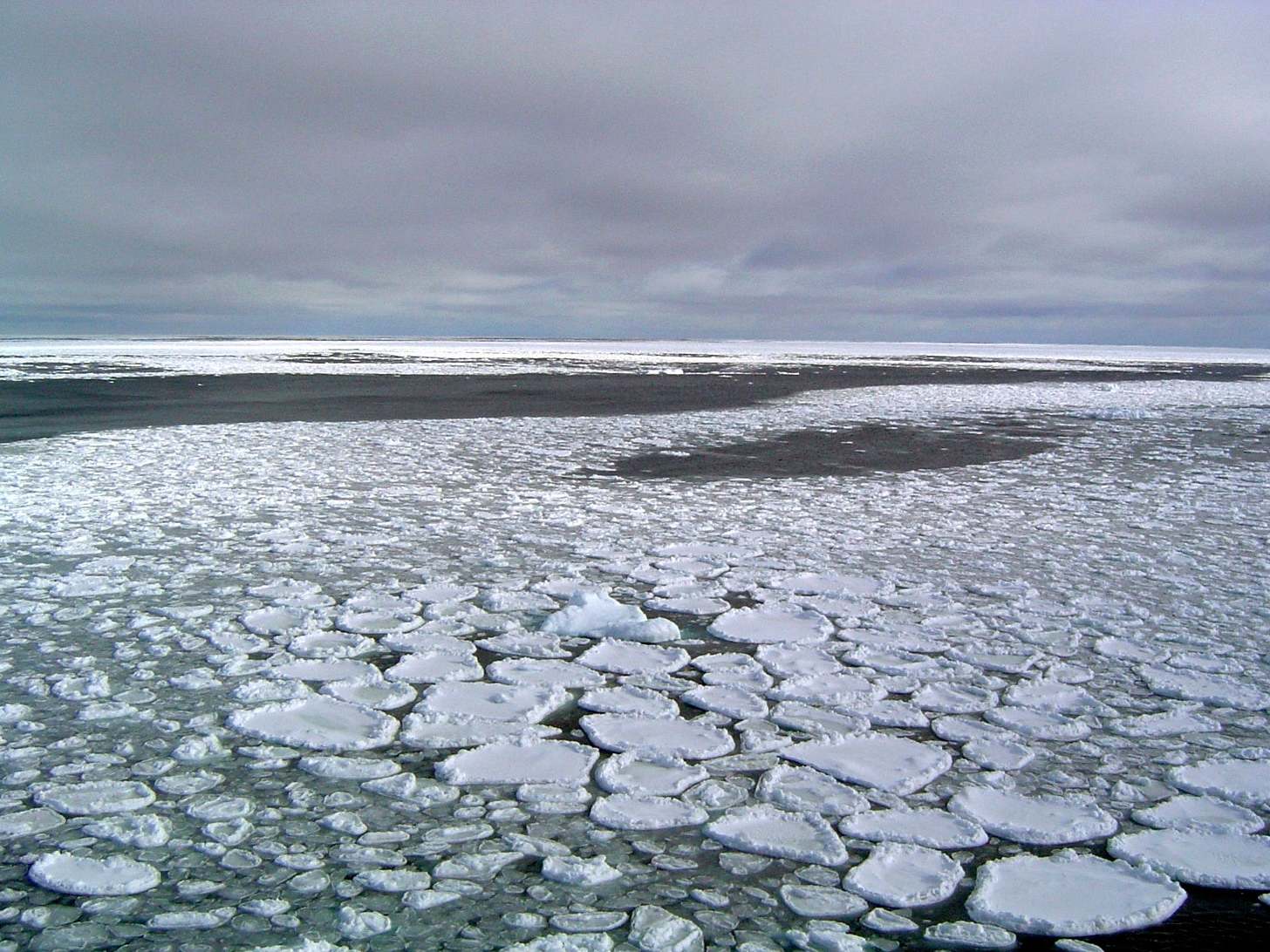
The amount of ice floating in the sea across Antarctica has fallen to a record low just three years after hitting an all-time high.
Floating ice levels near the continent increased steadily from 1979 to 2014, when it hit 4.9m square miles, the highest amount on record.
But by 2017 the amount of ice was at 4.1m square miles, its lowest ever mark, according to a Nasa study of satellite data.
We’ll tell you what’s true. You can form your own view.
From
15p
€0.18
$0.18
USD 0.27
a day, more exclusives, analysis and extras.
The amount of sea ice lost in those three years would cover an area bigger than the size of Mexico.
Losing that much ice so rapidly “is pretty incredible” and faster than anything researchers have seen before, said Claire Parkinson, a Nasa climate scientist who authored the new study.
1/20
An iceberg floats in a fjord near the town of Tasiilaq
Reuters
2/20
Meltwater pools on top of the Helheim glacier near Tasiilaq
Reuters
3/20
Safety officer Brian Rougeux works with student Febin Magar to assemble a radar dome while working in a science camp on the side of the Helheim glacier
Reuters
4/20
Airplane Mechanic, David Fuller, left, works with a local worker to move a Nasa Gulfstream III during a pre-flight inspection before a flight to support the Oceans Melting Greenland research mission
Reuters
5/20
Meltwater pools on top of the Helheim glacier
Reuters
6/20
Earth Science Flight Programs Director at Nasa, Eric Ianson, looks out at the Greenland ice sheet
Reuters
7/20
Glacial ice is seen from the window during the Nasa flight
Reuters
8/20
Oceanographer David Holland’s science camp on the side of the Helheim glacier
Reuters
9/20
An iceberg floats in a fjord near the town of Tasiilaq
Reuters
10/20
A large crevasse forms near the calving front of the Helheim glacier
Reuters
11/20
Safety officer Brian Rougeux uses a drill to install antennas for scientific instruments that will be left on top of the Helheim glacier
Reuters
12/20
Tabular icebergs float in the Sermilik Fjord after a large calving event at the Helheim glacier
Reuters
13/20
Radar Engineer, Ron Muellerschoen, monitors data collection inside a NASA Gulfstream III flying above Greenland to measure loss to the country’s ice sheet
Reuters
14/20
GPS tracking equipment is left on top of the Helheim glacier
REUTERS
15/20
Sunshine lights up the Helheim glacier
Reuters
16/20
A glacial terminus above the east coast of Greenland
REUTERS
17/20
Student Febin Magar watches as leftover wood burns in a research camp
Reuters
18/20
Tabular icebergs float in the Sermilik Fjord after a large calving event
Reuters
19/20
Oceanographer David Holland repairs a broken GPS module at his research camp
Reuters
20/20
An iceberg floats in a fjord near the town of Tasiilaq
Reuters
1/20
An iceberg floats in a fjord near the town of Tasiilaq
Reuters
2/20
Meltwater pools on top of the Helheim glacier near Tasiilaq
Reuters
3/20
Safety officer Brian Rougeux works with student Febin Magar to assemble a radar dome while working in a science camp on the side of the Helheim glacier
Reuters
4/20
Airplane Mechanic, David Fuller, left, works with a local worker to move a Nasa Gulfstream III during a pre-flight inspection before a flight to support the Oceans Melting Greenland research mission
Reuters
5/20
Meltwater pools on top of the Helheim glacier
Reuters
6/20
Earth Science Flight Programs Director at Nasa, Eric Ianson, looks out at the Greenland ice sheet
Reuters
7/20
Glacial ice is seen from the window during the Nasa flight
Reuters
8/20
Oceanographer David Holland’s science camp on the side of the Helheim glacier
Reuters
9/20
An iceberg floats in a fjord near the town of Tasiilaq
Reuters
10/20
A large crevasse forms near the calving front of the Helheim glacier
Reuters
11/20
Safety officer Brian Rougeux uses a drill to install antennas for scientific instruments that will be left on top of the Helheim glacier
Reuters
12/20
Tabular icebergs float in the Sermilik Fjord after a large calving event at the Helheim glacier
Reuters
13/20
Radar Engineer, Ron Muellerschoen, monitors data collection inside a NASA Gulfstream III flying above Greenland to measure loss to the country’s ice sheet
Reuters
14/20
GPS tracking equipment is left on top of the Helheim glacier
REUTERS
15/20
Sunshine lights up the Helheim glacier
Reuters
16/20
A glacial terminus above the east coast of Greenland
REUTERS
17/20
Student Febin Magar watches as leftover wood burns in a research camp
Reuters
18/20
Tabular icebergs float in the Sermilik Fjord after a large calving event
Reuters
19/20
Oceanographer David Holland repairs a broken GPS module at his research camp
Reuters
20/20
An iceberg floats in a fjord near the town of Tasiilaq
Reuters
“Things have been crazy,” said Mark Serreze, director of the US National Snow and Ice Data Centre.
He said observing the plummeting ice levels had been a “white knuckle ride”.
Antarctica has previously not been as affected by global warming as the Arctic.
Non-scientists who reject mainstream climate science have often previously pointed to the south pole’s ice to downplay the impact of global warming on the polar ice caps.
Mr Serreze and other experts do not know if the Antarctic ice level fall is a natural blip or a sign that long-term global warming is finally catching up with the south pole.
“The fact that a change this big can happen in such a short time should be viewed as an indication that the Earth has the potential for significant and rapid change,” said Waleed Abdalati, a scientist at the University of Colorado.
The study examines data up to 2017.
Antarctic sea ice levels increased slightly in 2018 but the amount was still at its second lowest since 1979.
Levels in May and June this year were the lowest on record, eclipsing 2017.
Additional reporting by agencies