

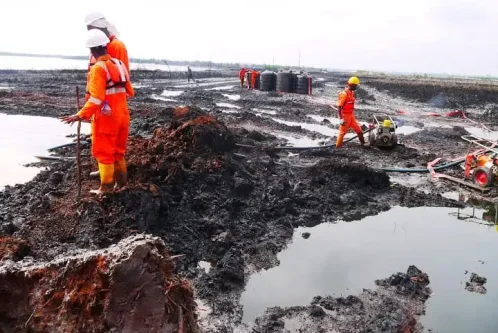
Internal Shell documents have raised fresh concerns about ageing infrastructure, oil spills, pipeline management and a potential $10.9 billion decommissioning bill linked to the company’s former Niger Delta operations. The findings are contained in Amnesty International’s new report, titled Nigeria: Lifting the Lid, which analyses internal Shell emails, technical audits, presentations and confidential corporate reviews disclosed during legal proceedings in the United Kingdom. The report alleges that Shell was aware of significant infrastructure and environmental risks while continuing to operate affected facilities, raising questions over the company’s handling of its legacy liabilities in the Niger Delta. What the report is saying
Amnesty International said the documents challenge Shell’s long-standing emphasis on oil theft and sabotage as the main causes of pollution in the Niger Delta. “Shell knew the risks from ageing and leaking infrastructure, including an old pipeline internally described as ‘a basket’ [case], yet kept oil flowing,” Amnesty International said. “The scandal was not simply illegal ‘bunkering’ or oil theft.
The real scandal is Shell’s pursuit of profit at the expense of people’s rights,” Isa Sanusi, Director of Amnesty International Nigeria, said. “A fossil fuel giant that could not verify the location and integrity of hundreds of wells and pipeline clamps, and lacked effective leak detection, cannot credibly claim it had pollution under control,” Dr Emem Okon of Kebetkache Women Development & Resource Centre said. “For communities seeking justice, Shell’s flawed spill monitoring could mean the difference between compensation and abandonment,” Celestine Akpobari of MEDI said. Shell rejected Amnesty’s characterisation of its operations, saying it remained committed to honesty, integrity and respect for people and that the report did not reflect the “challenging operating environment in the Niger Delta at the time”. More Insights
The report said Shell’s internal documents showed concerns about pipeline integrity, safety standards, maintenance and the company’s ability to detect and properly assess oil spills.
Documents reportedly showed that illegal taps were allowed to remain on some pipelines because removing them would require “considerable system downtime” and temporarily suspend crude oil flows. Internal records also indicated that Shell’s Nigerian subsidiary, Shell Petroleum Development Company (SPDC), was exempted from elements of global health and safety standards to allow oil to continue flowing through tampered pipelines. Internal audits identified a maintenance backlog and more than 1,600 pipeline clamps, including older clamps whose locations were unknown. A 2013 report found that SPDC pipelines did not have a real-time monitoring system, while a 2014 report raised concerns about hundreds of wells missing from electronic tracking systems or whose condition could not be verified. The report also highlighted the old Nembe Creek Trunk Line, which Shell replaced in 2010 but reportedly failed to properly decommission. An internal email from 2014 said about 80 kilometres of the old pipeline remained filled with stagnant crude and had recorded six operational spills since 2010.
The report, Nigeria: Lifting the Lid, analyses Shell documents dating from 2008 to 2014, including 27 redacted documents released in April 2026 following applications by NGOs for their publication in the public interest, as well as further details from a May 2026 court filing. What you should know
Nairametrics earlier reported that internal Shell documents revealed that senior executives approved the continued operation of oil pipelines in Nigeria’s Niger Delta despite repeated warnings from engineers about environmental risks and the potential for oil spills. According to the records, executives at the former parent company, Royal Dutch Shell (RDS), were aware of widespread oil theft and hundreds of illegal pipeline connections between 2008 and 2013 but chose to keep production running in order to minimise operational disruptions. Earlier, Shell Plc revealed that its Nigerian subsidiary, Shell Petroleum Development Company of Nigeria Limited (SPDC), the operator of the SPDC joint venture, reported 20 operational spill incidents of more than 100 kilograms of crude oil in 2024. The Nigeria Extractive Industries Transparency Initiative (NEITI), in 2025, announced a review of divestments involving 26 oil blocks worth $6.03 billion by five International Oil Companies (IOCs), citing the need for transparency and due process in these transactions.