
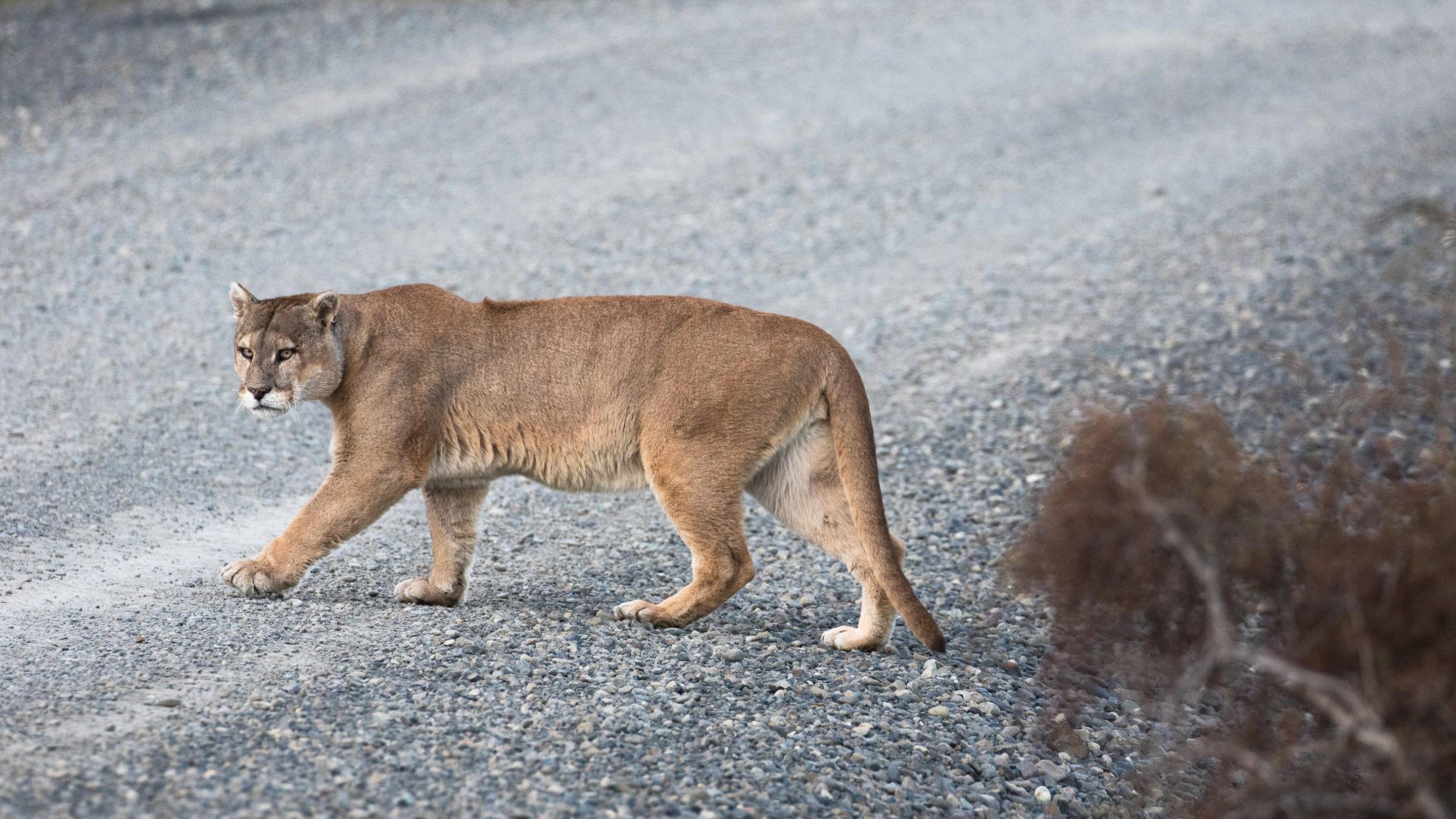
A puma crossing the road in the Olympic Peninsula, Washington state.
Image: Nicolás Lagos, Panthera
Get the Popular Science daily newsletter💡
Breakthroughs, discoveries, and DIY tips sent six days a week.
By signing up, you confirm you are 16+, will receive newsletters and promotional content and agree to our Terms of Use and acknowledge the data practices in our Privacy Policy. You may unsubscribe at any time.
When it comes to living near large carnivores, the drawbacks for humans are pretty obvious. Namely, you or your pets could become lunch. As for the benefits of this proximity, the most obvious ones that come to mind are probably related to animal conservation. This coexistence proves that the species hasn’t gone extinct yet. But what if we told you that large carnivores can be straight-up helpful?
That’s what a team of researchers in Washington state found after investigating the impact pumas (Puma concolor) have in the state’s scenic Olympic Peninsula. By investigating data from camera traps and spatial data from vehicle-wildlife collisions, the team revealed that the presence of pumas (also called cougars, panthers, or mountain lions) changed deer behavior in a way that led to positive outcomes for vehicle drivers. Their findings are detailed in a study published today in the journal Cell Press.
“We found that large carnivores can make roadways safer through their effects on prey behavior and [prey] space use. On the Olympic Peninsula of Washington, deer alter their use of both space and time where pumas are present, overlapping less with roads and reducing activity at night, when some of the most dangerous collisions occur,” Justin Suraci, a co-author of the study and director of wildlife conservation science at Conservation Science Partners, tells Popular Science. “This resulted in an up to 76 percent reduction in deer-vehicle collisions where puma activity is high vs low.”
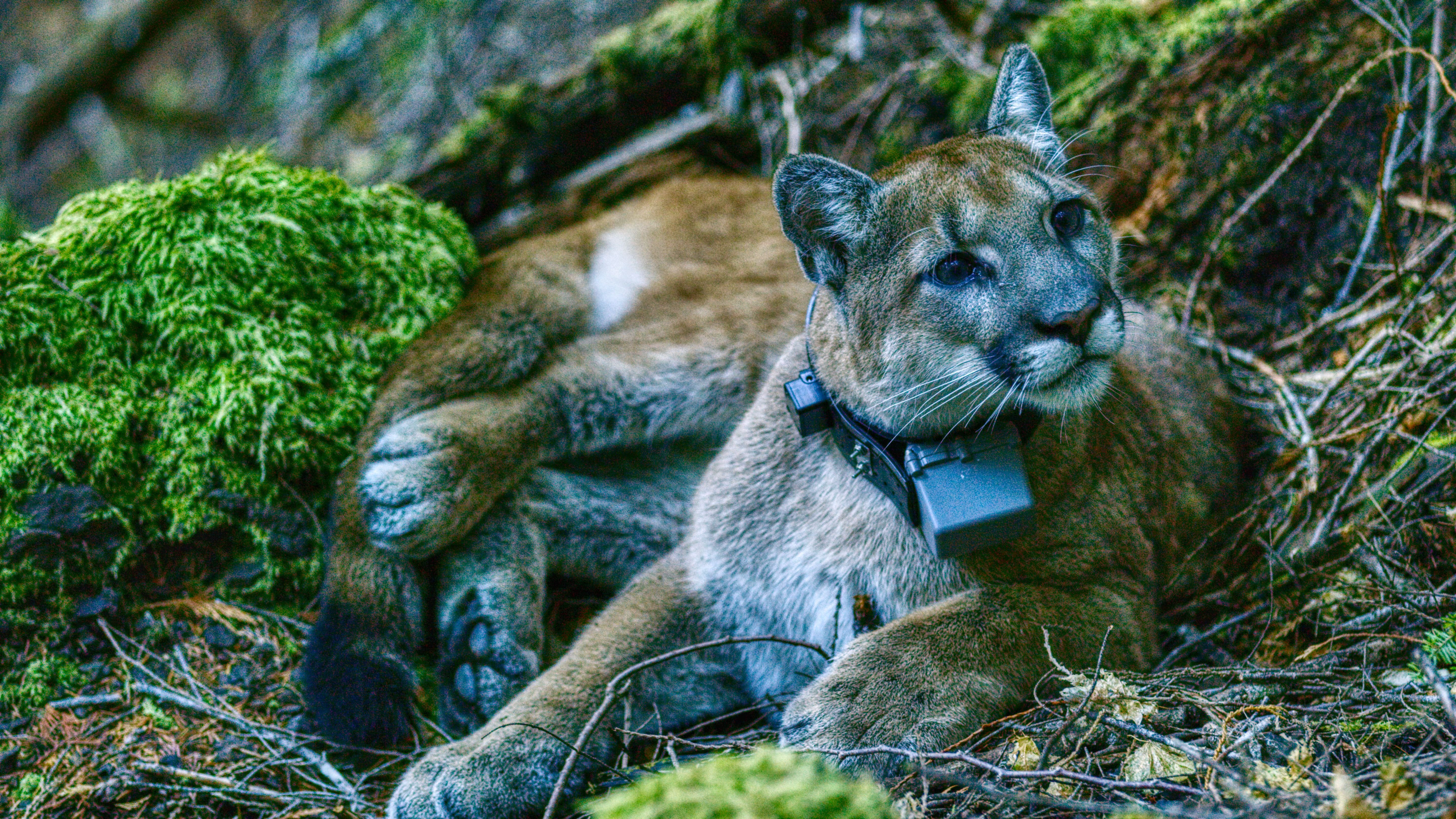
As such, pumas and other large predators can offer an “ecosystem service” in the form of better road safety for humans, he adds. The team also discovered that deer are more active during the day in areas where pumas are present. According to tracking collar data, there were additional daytime car collisions with deer as opposed to overnight, when such incidents are usually worse. Furthermore, deer were more likely to spend increased time in habitats away from high concentrations of roads.
Notably, the research shows that pumas contribute most to decreased deer-vehicle collisions by scaring their prey, and not killing them, highlights Mark Elbroch, director of the Puma Program for Panthera and also a study co-author. Thanks to their scare factor, these big cats essentially carry out the same positive services as wildlife bridges, he points out.
“I think the most important take-away here is that coexisting with large predators is likely providing benefits to human communities right now, even if those benefits have not been clearly demonstrated to date, and this isn’t necessarily limited to road safety,” Suraci says. “The net value of these predation services in any given location remains very much an open question and one I think the conservation community is only beginning to explore.”
Pumas, thank you for your ecosystem service.

2026 Popular Science Home of the Future Awards
39 products that will improve your everyday life.