

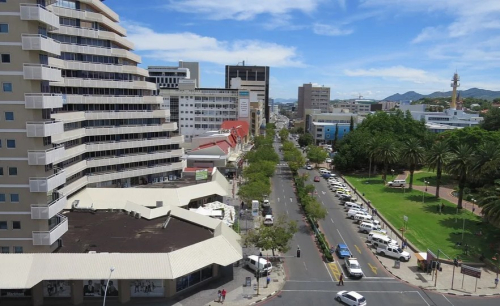
Thousands of Windhoek households are facing another financial blow after the City of Windhoek (CoW) confirmed last week an average 4% increase in municipal tariffs. Although minimal on paper, the increase means a larger share of household and business income will now be spent on basic services, risking weaker consumer spending, slower economic activity, and making it even harder for unemployed Namibians and young families to establish themselves. While the city cites the measure as being necessitated by inflation, there is no doubt the single digit increase will add notable pressure to already constrained family budgets, which are reeling from higher borrowing costs, rising inflation and stubbornly high unemployment. The CoW increases, which took effect retrospectively from 1 July 2026 and will first appear on municipal accounts on 31 July, apply to water, property rates and taxes, sewerage, waste management, refuse removal and fire brigade levies.
The CoW Council stated that the revised tariffs were approved under a Council Resolution and subsequently gazetted. According to the municipality, the increase is necessary to enable the city to continue maintaining essential infrastructure and delivering critical municipal services. Follow us on WhatsApp | LinkedIn for the latest headlines
“We thank you for your continued support and understanding as we work together to build a sustainable Windhoek,” the municipality stated. However, while a 4% increase may appear modest on paper, economists warn that its cumulative effect could significantly deepen the financial strain on households already battling one of the country’s toughest cost-of-living environments in years, thereby adding pressure to residents already stretched to breaking point. Economist Abraham Eita believes the latest tariff adjustment cannot be viewed in isolation. “The problem is not created by one factor only.
It is the result of several pressures happening at the same time,” he said. In a recent opinion, Eita’s warning comes as many homeowners are already paying more on mortgage repayments following recent interest rate increases, while inflation continues to erode household purchasing power. Domestic inflation is currently hovering around 4.4%, while many workers have seen little or no corresponding increase in their salaries. For low-income earners, the mathematics are becoming increasingly unforgiving.
Namibia’s minimum wage is approximately N$4 000 per month; however, transport costs alone can easily consume from N$700 to N$1000 monthly. Daily living expenses in Windhoek are estimated at between N$200 and N$450, meaning even the lower estimate amounts to roughly N$6 000 per month, which is well above the minimum wage before rent, school fees, medical expenses, or municipal accounts are considered. “A 4% tariff increase may seem small on paper, but for a low-income household it can mean choosing between paying a municipal bill, buying enough food, or paying for transport to work,” Eita explained, adding: “In economics, percentages can sometimes hide pain.”
More Read

Meanwhile, Namibia continues to grapple with an unemployment rate of over 36%, with only about 867 000 people participating in the labour force out of a population exceeding three million. As a result, many households rely on a single income earner, informal trading or financial support from relatives. As disposable income shrinks, economists warn that the impact extends beyond individual families. Higher municipal bills leave consumers with less money to spend in shops, restaurants and on discretionary purchases, putting further pressure on already struggling businesses.
“Families will now spend most of their income on survival… They will have little left to save, invest, educate their children properly or support small businesses. Businesses will also suffer because customers have less spending power,” Eita stated.
Justifying the increase, the CoW argues that tariff adjustments are unavoidable if it is to maintain ageing infrastructure, expand services and ensure reliable water, sanitation and waste management. However, the question increasingly asked by residents is whether consumers are receiving sufficient value for the steadily rising costs they are expected to absorb. Municipal tariffs have risen regularly over the past decade as the CoW has sought to keep pace with escalating operating costs, bulk water and electricity price increases, infrastructure maintenance requirements and urban expansion. In recent years, annual adjustments have generally ranged from inflationary increases to above-inflation adjustments for specific services, steadily pushing up the fixed monthly cost of living for Windhoek households and businesses alike.

Critics argue that while residents are repeatedly being asked to pay more, the City itself has come under scrutiny over the remuneration packages paid to some of its senior executives. In recent years, public debate has intensified following disclosures that top municipal executives receive annual remuneration amounting to several million Namibian dollars when salaries, housing, vehicles and other employment benefits are considered. These exorbitant remuneration packages have repeatedly drawn criticism from residents and ratepayer groups, particularly as households have simultaneously faced tariff increases, weak economic growth and deteriorating disposable incomes. Sign up for free AllAfrica Newsletters
Get the latest in African news delivered straight to your inbox
The contrast has fuelled growing calls for restraint in executive remuneration, stronger financial accountability, and clearer evidence that additional revenue collected through tariffs is translating into tangible improvements in service delivery. Economists like Eita believe public acceptance of future increases will depend heavily on transparency. “The City of Windhoek should communicate clearly how additional revenue will improve water supply, waste management, sanitation and emergency services,” he said. “People are more likely to accept higher charges when they can see better value.”
He also cautioned that policymakers need to consider the cumulative burden being placed on consumers.
“When interest rates, municipal bills, food prices and transport costs rise together, the combined effect becomes too heavy for ordinary residents,” Eita added. – [email protected]