

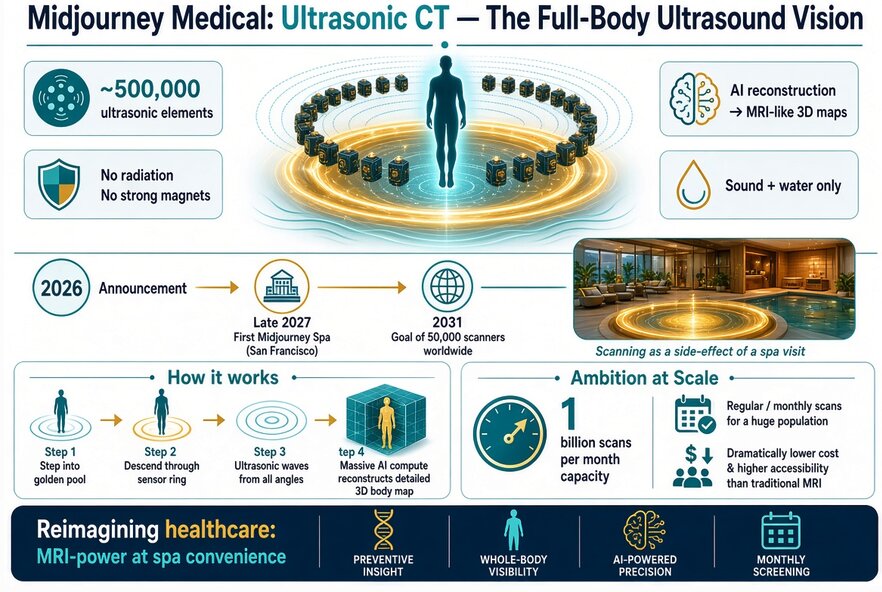
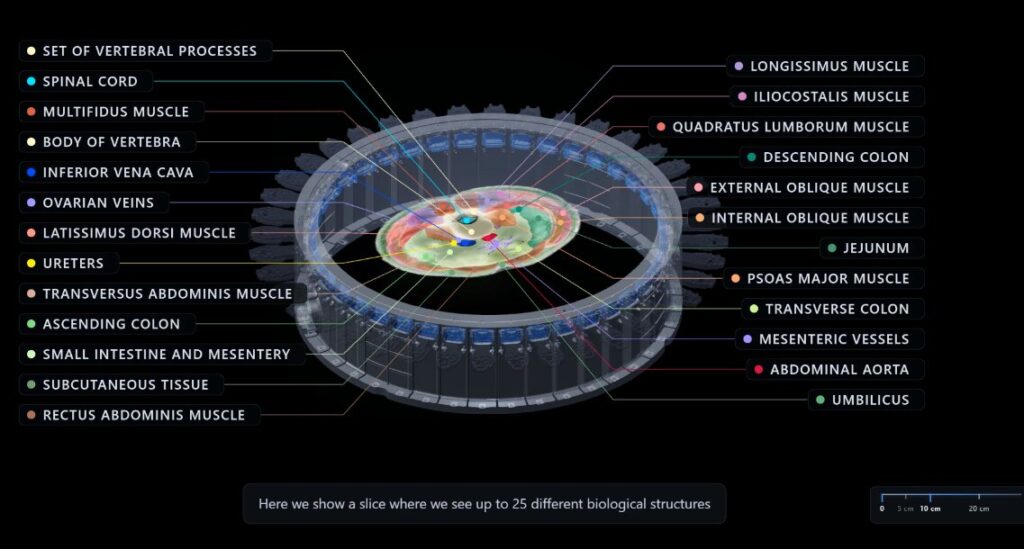
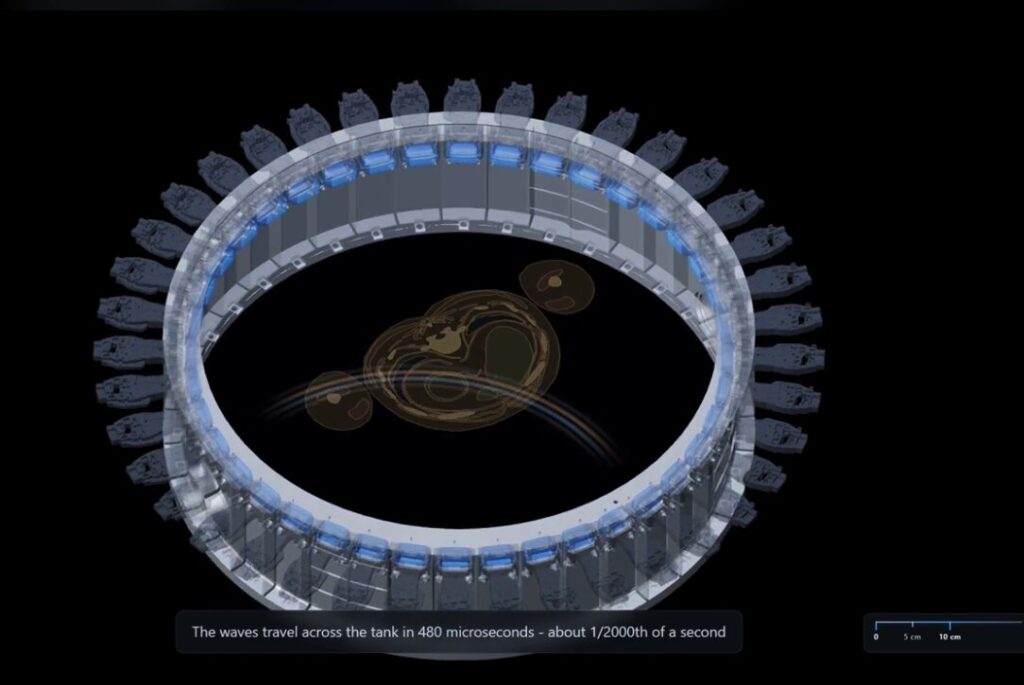
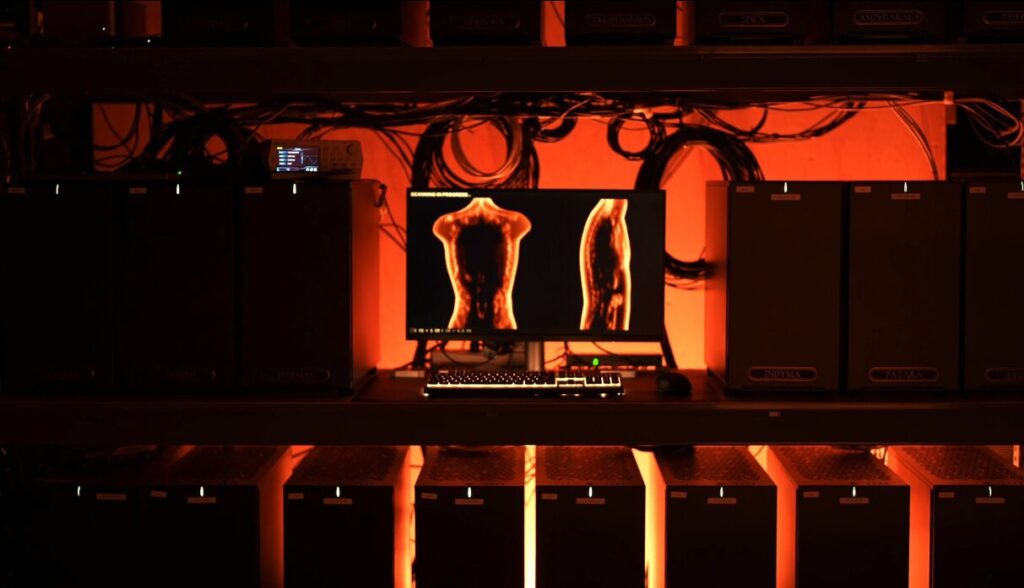
Midjourney, best known for its AI-powered image generation platform, has announced Midjourney Medical to make full-body imaging system to scan a person in just 60 seconds while delivering image quality comparable to MRI. The scanner is based on Butterfly Network ultrasound chips rather than Magnetic Resonance Imaging (MRI), potentially making it significantly faster and less expensive to operate. Users step into a shallow pool of water and descend through the sensor ring as ultrasonic waves pass through the body from multiple angles. The system then reconstructs detailed three-dimensional images of internal structures. Midjourney says its initial focus will be on generating body-composition maps and tracking changes in muscles, fat, bones and organs over time. Future medical applications would require approvals from regulators such as the US Food and Drug Administration.
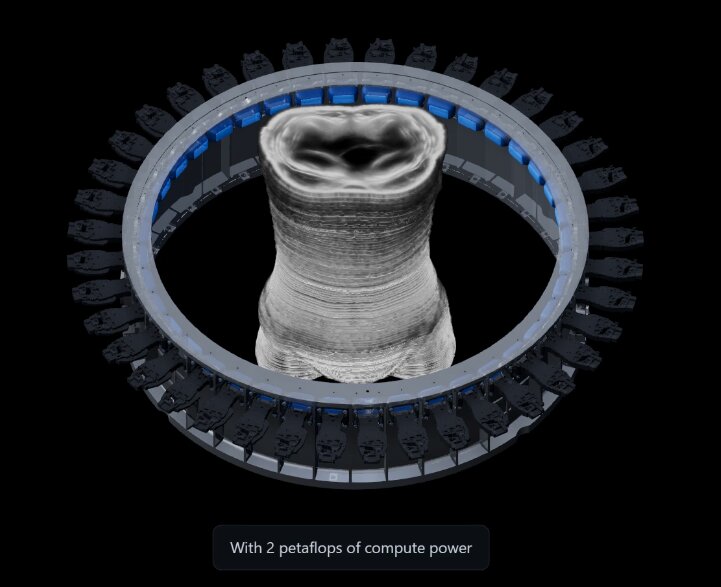
An obvious application would be early detection of cancer tumors. They want to have 50,000 clinics by 2031 and production of 20,000 scans per month per clinic. 2 petaflops is needed to process each clinic.
Key numbers from Midjourney’s description
Each system currently uses ~40 Butterfly Network Ultrasound-on-Chip modules (tens to hundreds of thousands of transducer elements in total, depending on the exact generation quoted).
Raw data rate is roughly 17 GB per second.
About 40 GB of data is needed to reconstruct a single cross-sectional slice.
Reconstruction relies on a computing cluster providing ~2 petaflops.
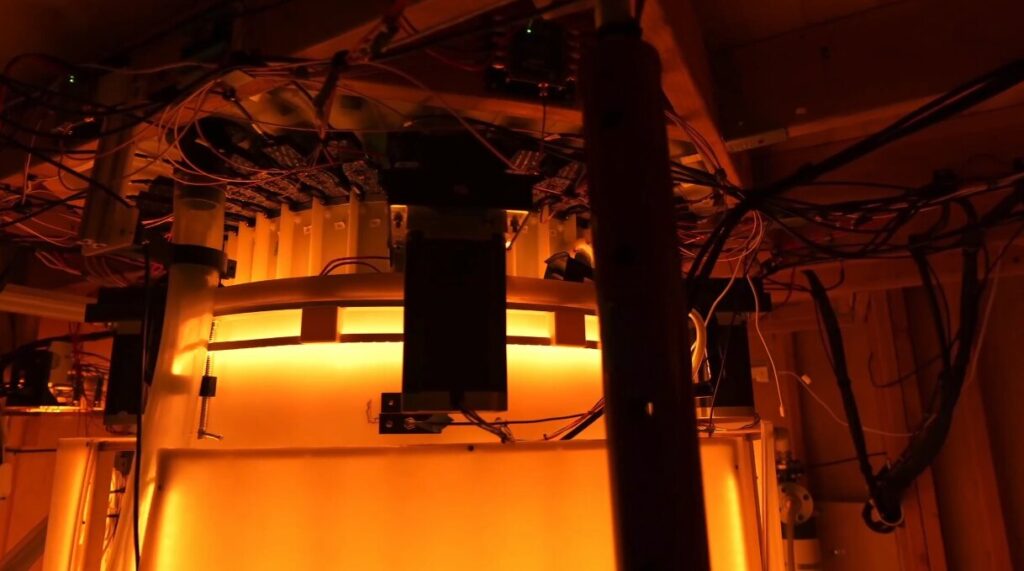
This figure appears repeatedly in coverage of their June 2026 announcement and technical briefings. The current prototype is still data-transfer limited (scans take closer to 20 minutes rather than the 60-second target). The 2 PF is the compute they say is needed once the data pipeline catches up.
Compute for 50,000 scanners
If every scanner had its own dedicated 2-petaflop cluster running continuously
50,000 scanners × 2 PF = 100,000 petaflops = 100 exaflops.
Several dozen to a couple of hundred such Megapods could theoretically cover the full 50k-scanner fleet, again assuming good utilization and software optimization. The level of compute needed for the 50,000 clinics would not tax the power of a lot of GPUs.
Single Rubin GPU is ~50 PFLOPS sparse NVFP4 inference (headline figure; dense/training numbers are lower, around 35 PF NVFP4).
Vera Rubin NVL72 rack (72 Rubin GPUs + 36 Vera CPUs) has ~3.6 exaflops (3,600 PF) NVFP4 inference. Thirty racks would handle all of the compute for 50,000 proposed midjourney clinics.




Brian Wang is a Futurist Thought Leader and a popular Science blogger with 1 million readers per month. His blog Nextbigfuture.com is ranked #1 Science News Blog. It covers many disruptive technology and trends including Space, Robotics, Artificial Intelligence, Medicine, Anti-aging Biotechnology, and Nanotechnology.
Known for identifying cutting edge technologies, he is currently a Co-Founder of a startup and fundraiser for high potential early-stage companies. He is the Head of Research for Allocations for deep technology investments and an Angel Investor at Space Angels.
A frequent speaker at corporations, he has been a TEDx speaker, a Singularity University speaker and guest at numerous interviews for radio and podcasts. He is open to public speaking and advising engagements.