

— The gunman may be gone but the people who fueled him remain in charge
by Anonymous
August 11, 2026
• 4 min read
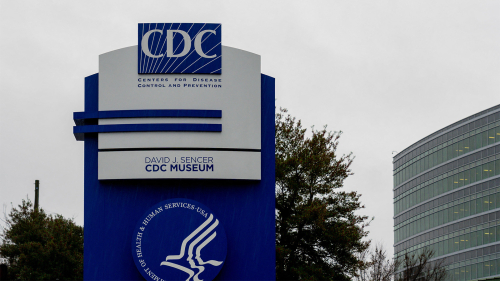
A year ago, a gunman fired 500 rounds at the CDC campus, killing DeKalb County Police Officer David Rose. I was inside the building during the attack. Authorities said the shooter was radicalized by the anti-vaccine conspiracy theories and misinformation that had been amplified for years, including by the man who leads our health department. Even now, I can still see the bullet marks in the facade outside my office window. They haven’t been repaired.
Robert F. Kennedy Jr. is still secretary of HHS. He is still the man CDC answers to. Yesterday, I sat in the Emergency Operations Center and watched him walk through the room; I shook his hand. I expected to feel rage, but mostly I felt despair and exhaustion.
Along with more than 500 of my colleagues, I have been supporting CDC’s response to the Ebola outbreak in the Democratic Republic of the Congo. It is bad, and it is getting worse. This Ebola outbreak is now the largest in Congo’s history, surpassing the devastating 2018-2020 epidemic, and it is the second-largest ever recorded globally. Congo has passed 4,000 confirmed cases, with over 2,000 deaths. Cases and deaths are climbing every day. Containment is essentially at zero with unprecedented acceleration; at this pace, the outbreak is on track to surpass the 2014-2016 West Africa outbreak, which killed more than 11,000 people. Many Americans have no idea this is happening.
Here is what keeps me up at night: rather than focusing on fighting the outbreak at the source, significant U.S. time and effort has been spent on domestic measures that do nothing to protect Americans. The Trump administration issued an order to keep both foreign nationals and U.S. citizens out of the country for 21 days if they’d been anywhere in the Congo, even if they didn’t have symptoms.
These policies do not make Americans safer. What they do is send a clear signal to the aid workers, physicians, and humanitarian staff we desperately need in the Congo: don’t go, and if you do, your country doesn’t have your back. You’ll have to go to another country that will take you for 21 days before you can come home — often at your own cost. And if you get Ebola, we aren’t bringing you home to treat you as we have in prior Ebola outbreaks, despite the tens of millions of dollars we’ve invested in building and maintaining 13 state-of-the-art biocontainment units and 55 designated treatment facilities around the U.S. That is not a public health strategy. It is an obstacle to offering the support and resources needed to end the outbreak.
Meanwhile, the rest of the house is on fire too. Measles cases this year have already surpassed last year’s total in just over 7 months and are now the highest they’ve been since 1991. Many independent experts emphasize the likely loss of our elimination status in the fall, a status the U.S. has maintained since 2000. With continued confusion over national immunization recommendations, more vaccine preventable disease outbreaks and unnecessary deaths can be expected. We are in the middle of one of the largest Cyclospora outbreaks CDC has ever tracked, tied to contaminated lettuce, with thousands of cases reported across 47 states. New World screwworm, a flesh-eating parasite we haven’t had to seriously worry about domestically in decades, is moving north.
This is what happens when you dismantle public health infrastructure: everything we’re supposed to be watching out for arrives at once, and we have fewer people watching.
That last part is not an exaggeration: our agency has lost a quarter of its workforce over the last 18 months. We do not have enough staff to keep up with our regular work, let alone to staff four emergency responses simultaneously. And yet, nearly 300 CDC employees remain on paid administrative leave, sidelined, unable to work, more than a year after they were first notified their jobs were being eliminated in spring 2025. These are trained epidemiologists, public health leaders, and program staff. They are a passionate, highly skilled, and dedicated workforce we could have back at their desks tomorrow if the secretary decided it mattered. He hasn’t.
This week, Erica Schwartz, MD, MPH, starts as CDC’s first Senate-confirmed director in nearly a year. I want to believe she can turn some of this around. I hope she will. But she reports to the same secretary who fired her predecessor within a month for resisting political interference in vaccine policy; the same secretary whose rhetoric helped fuel the man who attacked CDC. I doubt she will have much room to actually lead.
A year ago, I thought the shooting was our low point after months of chaos and destruction to our workforce. But we are still sinking. Last year’s cuts didn’t just cost us people; they exposed the fragility of our public health system. CDC’s staff are still showing up. We are still doing the work: tracking the outbreak in the Congo, fighting measles and Cyclospora and New World screwworm, trying to hold down the fort. But our passion is no substitute for competent leadership. We need leadership that will rebuild our public health infrastructure, not continue to undermine it.