
The proposed platform could enable stakeholders to share information seamlessly, reducing compliance burdens on businesses, particularly MSMEs. Summary
The platform could enable stakeholders to share information seamlessly, reducing compliance burdens on businesses, particularly micro, small and medium enterprises (MSMEs), and facilitating the efficient movement of goods.
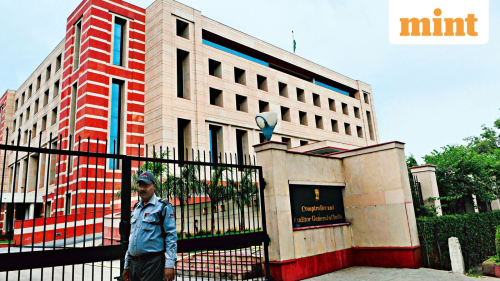
New Delhi: The Comptroller and Auditor General of India (CAG), in a draft report, has proposed a common digital platform to integrate key transport modes, including road, rail and shipping, to improve coordination across the country’s logistics ecosystem, two government officials aware of the matter said. The platform could enable stakeholders to share information seamlessly, reducing compliance burdens on businesses, particularly micro, small and medium enterprises (MSMEs), and facilitating the efficient movement of goods. “A common digital platform could allow stakeholders across transport modes and government departments to talk to each other and have real-time access information on a consignment’s movement, including the nature of goods being shipped, their destination, the mode and their expected time of arrival at a depot, port or other destination,” said the first of the two persons cited above, both speaking on condition of anonymity. This visibility would allow the next stakeholder in the logistics chain to make arrangements in advance for containers, trucks, loading and unloading facilities, handling equipment and other logistics services, this official added. The suggestion follows the CAG’s observation that long waiting and turnaround times at different points in the logistics chain add to costs for transporters and shippers. The draft report has also flagged delays in loading and unloading as a factor that can increase shipment time and raise logistics costs.
The CAG has also proposed a dedicated regulator for the multimodal logistics ecosystem, aimed at improving coordination among different transport modes and stakeholders and fixing accountability across the logistics chain. “The intent behind suggesting a regulator is to fix accountability and responsibility across the logistics ecosystem, ensuring that each stakeholder is clearly responsible for its role and that gaps in coordination can be addressed,” said the second official. Queries sent to the ministries of road transport and highways, ports, shipping and waterways, and railways, as well as the CAG, remained unanswered till press time. Framework with precedents Such an institutional framework has precedents in other economies. France has an independent transport regulator called the Autorité de régulation des transports (ART), which has a multimodal transport remit covering areas including rail, intercity road transport, motorways, the channel tunnel and airport charges. Singapore, meanwhile, has a dedicated Multimodal Transport Act, 2021, under which the Land Transport Authority serves as the country’s competent national body for the ASEAN Framework Agreement on Multimodal Transport and maintains a registry of multimodal transport operators. India already has the Multimodal Transportation of Goods Act, 1993, which provides for the regulation and registration of multimodal transport operators.
It also has the National Logistics Policy, 2022, an overarching framework for the logistics sector. However, the existing legal framework does not provide for a single, comprehensive regulatory architecture covering the wider logistics ecosystem, according to the Directorate General of Maritime Administration. The CAG’s proposal follows a study of international multimodal logistics practices, including systems in countries such as Singapore, France, Germany and the Netherlands. According to a National Council of Applied Economic Research (NCAER) study released in September 2025, India’s logistics costs stood at 7.97% of gross domestic product in FY24, while logistics costs for MSMEs were substantially higher at 16.9%, reflecting structural inefficiencies in transport and warehousing. “We have one of the highest logistics costs for the MSME sector, at around 17%, even though MSMEs account for about 45% of India’s exports. Structural changes in the logistics ecosystem can have a significant impact and help bring down logistics costs to below 10%,” said Vinod Kumar, president, India SME Forum.

“Checkpoints at different levels remain one of the major bottlenecks even after the implementation of GST. We need to work in tandem across all modes of transport to ensure the seamless movement of cargo and bring down logistics costs. There are several challenges at the ground level, but these can be addressed with an open mind and political will,” said Naveen Kumar Gupta, secretary general of the All India Motor Transport Congress, a national association representing 9.5 million road transport operators. The CAG’s draft report has also highlighted GST-related complications in multimodal transport arising from differences in GST rates and input-tax-credit treatment across transport modes. About the Author Dhirendra Kumar
Dhirendra Kumar is a seasoned policy reporter with about 20 years of experience in deep, on-ground reporting across key economic and governance sectors. His work spans finance, public expenditure, disinvestment, public sector enterprises, textiles, trade, consumer affairs, and agriculture, with a strong focus on uncovering structural policy shifts and their real-world impact. Kumar has been awarded the Chaudhary Charan Singh Award for Excellence in Journalism in Agricultural Research and Development, recognising his contribution to reporting on critical issues in the farm sector.
He has also been a recipient of a fellowship in international trade from the National Press Foundation, which has further strengthened his coverage of global trade dynamics and their implications for India. Kumar is known for breaking complex policy developments into clear, accessible stories. His reporting focuses on uncovering under-reported trends, explaining policy shifts, and helping readers stay informed about developments that shape India’s economic landscape.