

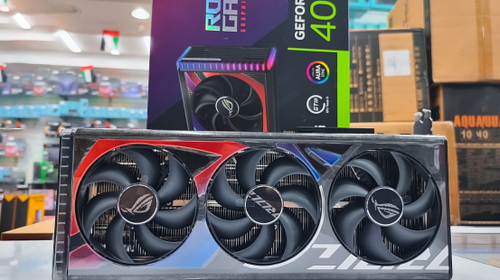
Adnan Ahmad Ali/Getty Images
Buying an Nvidia GPU is a safe choice, especially for anyone who wants high performance, since the company makes some of the best graphics cards on the market. Whether for gaming or professional work, features like DLSS, ray tracing, and a mature software ecosystem help explain this preference. Still, even though it is an excellent purchase, some users regret it after a few months of use.
Part of these regrets comes from the price. Nvidia cards occupy a premium price segment, and the rising cost of powerful graphics cards explains part of users’ regrets. In some ranges, paying more means buying features you may never use, but cheaper options usually don’t make up for it at their current price.
Some regrets also appear over time, such as discovering that to keep up with the desktop, you will need other hardware upgrades. Even though this doesn’t mean an Nvidia GPU is bad, we separated some complaints that highlight issues to watch out for before buying one.
You paid extra for Nvidia features you barely use
Evolf/Shutterstock
One of the most common regrets after buying an Nvidia GPU is realizing that part of what you paid is tied to features that don’t always make a difference. Technologies like DLSS, ray tracing, and Reflex can be excellent in compatible games, but if your focus is on older or competitive titles, these functions can disappoint.
This weighs even more on the company’s most powerful graphics cards. Although these models offer impressive performance, cheaper Nvidia GPUs can make more sense than flagship models, especially if you do not want the highest performance possible or play at high resolutions. In this case, users may not notice they paid too much until later.
If DLSS, ray tracing, or content creation features rarely come into play for these users, the extra value may seem less justified. For this profile, a more accessible Nvidia GPU, or even a competing alternative, could meet the same needs and offer reasonable performance for a fraction of the price.
You wish you had bought an Nvidia GPU with more VRAM
Veni Vidi…shoot/Getty Images
Another common regret among people who buy Nvidia graphics cards is their low VRAM. While this isn’t a problem on flagships, entry-level models usually have only 8GB of memory, which is enough for many games. However, if you want to play at higher resolutions, with textures at maximum and ray tracing, this usually increases the card’s memory consumption quickly. So, over time, you may need to reduce game quality to play stably.
This makes some owners look at models with more memory and think they should have spent a little more from the start. The RTX 5060 Ti 8 GB is one example of a graphics card with poor value because its VRAM can limit more demanding games. So, in the same way that it is possible to regret paying a lot for a GPU with features you will not use, the opposite can also happen, since depending on how you want to play, saving on features does not pay off.
Your Nvidia GPU forced you to upgrade the rest of your PC
Dikushin/Getty Images
Buying an Nvidia GPU is a major investment, but many users regret it when they realize they still need to upgrade other desktop parts. Depending on your previous build, the new card may require a larger case, better cooling, or even a new power supply to support its full power draw. Individually, many of these upgrades do not seem scary, but that changes when you buy them right after an expensive purchase.
Several affordable PC upgrades cost less than replacing major components, but needing to buy two or three of them at the same time, right after investing in a graphics card, can turn a GPU upgrade into a full PC overhaul. That is where some users regret not checking power requirements, dimensions, and compatibility before choosing the GPU. The card may even deliver the promised performance for the price, but you may still need extra upgrades to extract maximum performance.
A bad Nvidia driver update can create problems you never had before
Nwz/Shutterstock
Driver updates can also affect how your Nvidia card works, since a GPU can spend months working perfectly but start having problems as soon as you decide to update its drivers. In these cases, reports include black screens, crashes, stuttering, or strange behavior in some games. For anyone who bought one of these cards expecting stability, having to investigate whether the problem really came from the hardware or software can change the experience.
This is also a complicated situation because keeping graphics card drivers updated remains important. This is the only way to receive important fixes and support for new games. However, if you ignore updates and miss these optimizations, installing a buggy version can also create issues that didn’t exist before.
In many cases, the solution is to roll back to a previous driver version. But this doesn’t mean every user will experience instability; those who do feel some regret, since paying a lot for a card expecting reliability wasn’t enough.
Your Nvidia GPU uses more power and creates more heat than you expected
Ogeday çelik/Getty Images
Another regret can appear when the user realizes that the extra performance also comes with higher power consumption and heat production. This is very common in high-performance models, such as the RTX 5090 or similar cards, which can demand a lot from the power supply and raise the case’s internal temperature during heavier games. So, if you wanted a more compact or even quiet PC, one of these GPUs can ruin the plan.
More heat inside the case can make other fans work harder, increasing overall system noise. Depending on your build, you can even solve part of this problem by adjusting fan curves, undervolting, or improving airflow inside the case to keep temperature and noise stable.
For some users, this behavior makes a less powerful GPU seem like a better choice after some time. The performance loss could be acceptable in exchange for lower consumption, lower temperatures, and a quieter computer.