
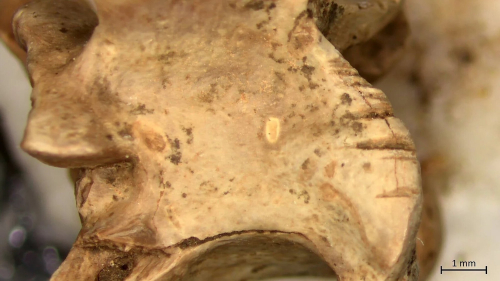
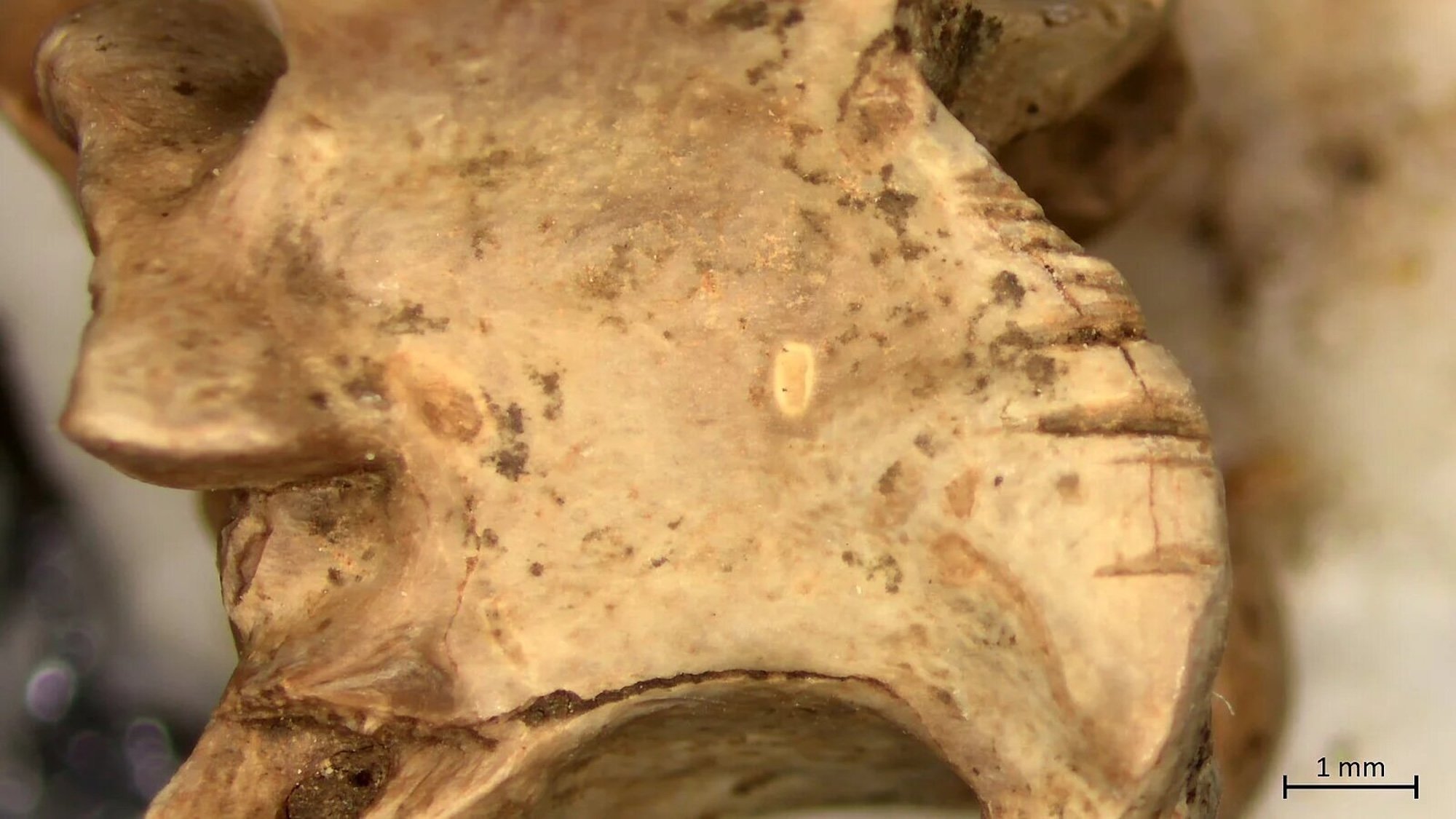
Microscopic image of bone from a large whip snake (Dolichophis jugularis) showing cut marks.
Credit: Maayan Lev
Get the Popular Science daily newsletter💡
Breakthroughs, discoveries, and DIY tips sent six days a week.
By signing up, you confirm you are 16+, will receive newsletters and promotional content and agree to our Terms of Use and acknowledge the data practices in our Privacy Policy. You may unsubscribe at any time.
The desert is a harsh environment, even if you’re equipped with the latest tools, protective clothing, and resources. But 15,000 years ago, a group of hunter-gatherers known as the Natufian culture living in the southern Levant did more than eke out an existence. Unlike other prehistoric communities, Natufians abandoned nomadic life across present-day Jordan, Palestine, and Israel for smaller, permanent settlements before they even developed agriculture.
A major key to their survival? They weren’t picky eaters. Based on ancient bones discovered in the Nahal Me’arot Nature Reserve on Mount Carmel, Natufian diets were heavy on lizards, snakes, and other desert reptiles. The evidence is laid out in a recent study published in the journal Proceedings of the National Academy of Sciences.
“We were then able to distinguish reptile remains that died naturally at the site or were preyed upon by mammals and birds from those that served as food for humans,” Maayan Lev, study co-author and an archaeologist at Germany’s Kiel University, said in a statement.
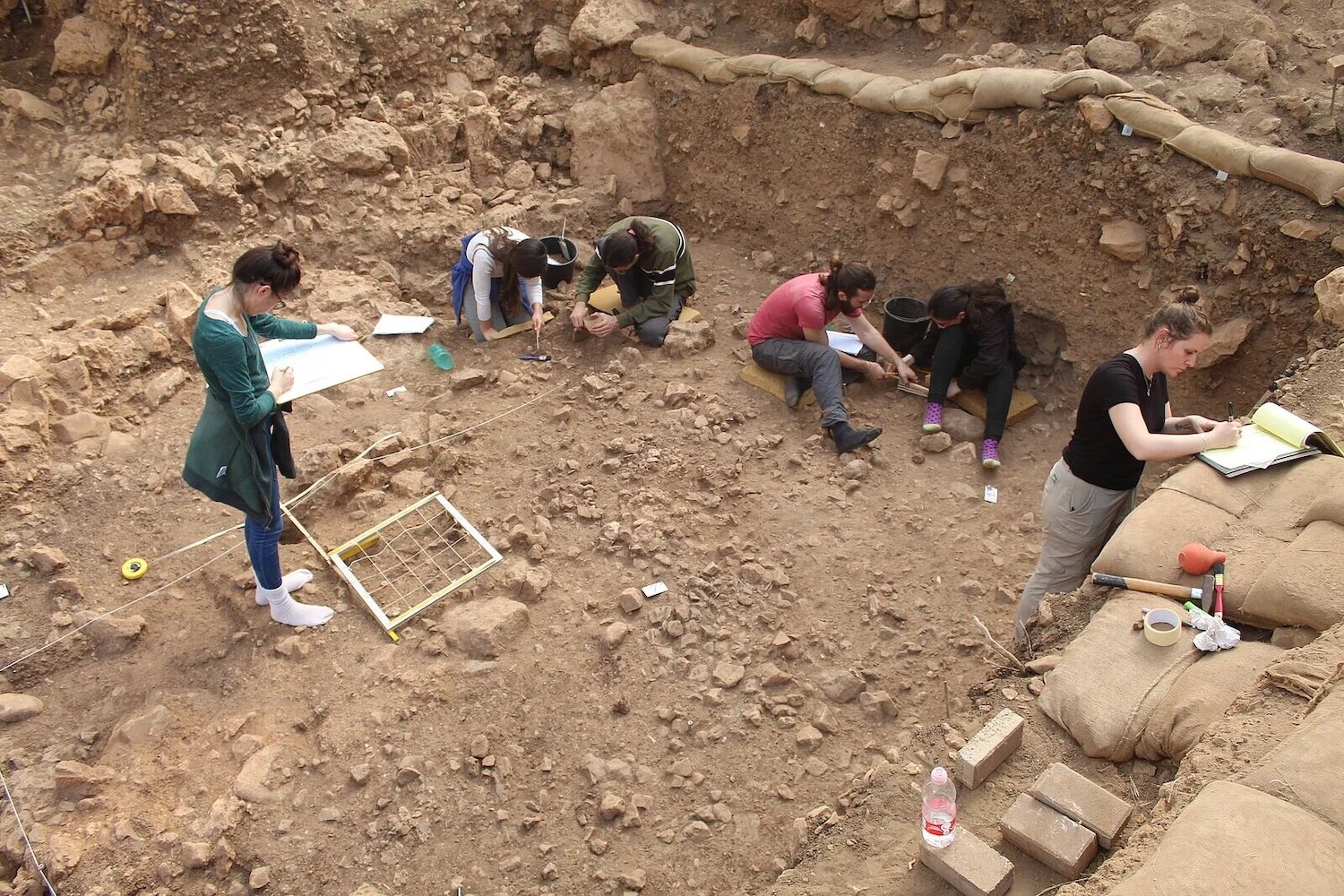
Lev’s team is focused on the el-wad Terrace, a 20-layer archaeological site that contains multiple human settlements, with the oldest beginning about 15,000 years ago. Researchers have identified thousands of snakes and lizards in this geological record, many of which became meals for local predators. But microscopic skeletal details also revealed a decent percentage of these reptiles didn’t only succumb to the food chain. Cut marks and scrapes made by flint knives at consistent locations on the bones indicate local humans butchered many of them for meals.
The choices weren’t simply whatever Natufians could catch. A large portion of the prepared reptiles included the large whip snake (Dolichophis jugularis) and the eastern Montpellier snake (Malpolon insignitus). Indirect signs also suggest the proto-Neolithic community also dined on the European glass lizard (Pseudopus apodus), which featured tough scales that necessitated a completely different type of butchering. According to Lev, these selections were likely intentional.
“Our hypothesis is that the Natufian people preferred to catch reptiles that were relatively large, relatively slow and not dangerous,” she said.
This made the glass lizard a particularly attractive target, but comparatively harmless snakes would also do in a pinch. “Venomous snakes such as vipers, on the other hand, were rarely caught,” added Lev.
Apart from widening archaeologists’ understanding of the Natufian palette, the findings highlight how humanity’s resourcefulness and adaptive abilities stretch back thousands of years. Even before permanent communities became commonplace around the world, some groups were already learning to thrive in seemingly inhospitable conditions.

2026 Popular Science Home of the Future Awards
39 products that will improve your everyday life.