
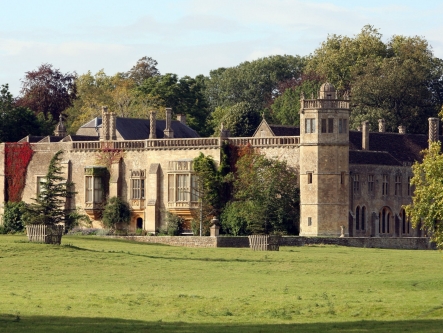
The National Trust has decided to deprive polluting fossil fuel companies of a precious commodity: the capital which fuels their destructive activities.
The charity has announced it will no longer invest in any of them, tightening a previous stance that demanded that it only avoid directly investing in companies deriving more than 10 per cent of their turnovers from the extraction of thermal coal or oil from sands.
“The impacts of climate change pose the biggest long-term threat to the land and properties we care for and tackling this is a huge challenge for the whole nation,” said director general Hilary McGrady.
We’ll tell you what’s true. You can form your own view.
From
15p
€0.18
$0.18
USD 0.27
a day, more exclusives, analysis and extras.
“We know our members and supporters are eager to see us do everything we can to protect and nurture the natural environment for future generations. This change is part of our ongoing commitment.”
Hear, hear. But cynics will doubtless note that only 4 per cent of the trust’s £1bn portfolio, the returns from which help fund its activities, is actually invested in fossil fuel (a fact that its announcement makes clear). To a BP or a Shell, the £40m that will be moved out of the sector through the charity selling up barely represents a rounding error in their quarterly results.
It’s also a lot easier for an organisation like the trust to take this step than it is for investors with rather larger portfolios. Then there are the commercial fund managers running index tracker funds, a popular product among small investors because they’re a cheaper and more effective means of getting into the market than most actively managed products. For them, such a choice is impossible. If you’re going to track the index you have to be invested in its biggest constituents. That means, you’ve guessed it, Shell, BP and other fossil fuel companies.
So, beyond the (still useful) noise it has made, is the step the trust taken meaningful?
When taken together with what others are doing as part of a multi-pronged approach, it could be.
I recently highlighted the example of Legal & General (L&G), which last month publicly called out 11 companies over their record on climate change.
They’ve been banned from its £5bn Future World range of funds, while the L&G funds that remain invested in them will vote against company motions. L&G has £1tn under management. Companies hate it when investors with that sort of clout start voting against their bosses.
A combination of investors such as the trust and the Church of England, which has made a similar move, depriving polluters of capital while others bring pressure to bear through their voting clout, could prove highly effective.
There is another step both type of investor can and should take, regardless of the approach they choose to follow. It is to engage with public policy; to put pressure on governments to introduce reforms to help them further effect change.
1/10 No deal, no tariffs
The government has announced that it would slash almost all tariffs in the event of a no-deal Brexit. Notable exceptions include cars and meat, which will see tariffs in place to protect British farmers
Getty
2/10 Fingerprint payment
NatWest is trialling a new bank card that will allow people to touch their hand to the card when paying rather than typing in a PIN number. The card will work by recognising the user’s fingerprint
NatWest/PA Wire
3/10 Mahabis bust
High-end slipper retailer Mahabis has gone into administration. 2 Jan 2019
Mahabis
4/10 Costa Cola
Coca-Cola has paid £3.9bn for Costa Coffee. A cafe chain is a new venture for the global soft drinks giant
PA
5/10 RIP Payday Loans
A funeral procession for payday loans was held in London on September 2. The future of pay day lenders is in doubt after Wonga, Britain’s biggest, went into administration on August 30
PA
6/10 Musk irks investors and directors
Elon Musk has concluded that Tesla will remain public. Investors and company directors were angry at Musk for tweeting unexpectedly that he was considering taking Tesla private and share prices had taken a tumble in the following weeks
Getty
7/10 Jaguar warning
Iconic British car maker Jaguar Land Rover warned on July 5, 2018 that a “bad” Brexit deal could jeopardise planned investment of more than $100 billion, upping corporate pressure as the government heads into crucial talks
AFP/Getty
8/10 Spotif-IPO
Spotify traded publically for the first time on the New York Stock Exchange on Tuesday. However, the company isn’t issuing shares, but rather, shares held by Spotify’s private investors will be sold
AFP/Getty
9/10 French blue passports
The deadline to award a contract to make blue British passports after Brexit has been extended by two weeks following a request by bidder De La Rue. The move comes after anger at the announcement British passports would be produced by Franco-Dutch firm Gemalto when De La Rue’s contract ends in July.
The British firm said Gemalto was chosen only because it undercut the competition, but the UK company also admitted that it was not the cheapest choice in the tendering process.
10/10 Beast from the east economic impact
The Beast from the East wiped £4m off of Flybe’s revenues due to flight cancellations, airport closures and delays, according to the budget airline’s estimates. Flybe said it cancelled 994 flights in the three months to 31 March, compared to 372 in the same period last year.
1/10 No deal, no tariffs
The government has announced that it would slash almost all tariffs in the event of a no-deal Brexit. Notable exceptions include cars and meat, which will see tariffs in place to protect British farmers
Getty
2/10 Fingerprint payment
NatWest is trialling a new bank card that will allow people to touch their hand to the card when paying rather than typing in a PIN number. The card will work by recognising the user’s fingerprint
NatWest/PA Wire
3/10 Mahabis bust
High-end slipper retailer Mahabis has gone into administration. 2 Jan 2019
Mahabis
4/10 Costa Cola
Coca-Cola has paid £3.9bn for Costa Coffee. A cafe chain is a new venture for the global soft drinks giant
PA
5/10 RIP Payday Loans
A funeral procession for payday loans was held in London on September 2. The future of pay day lenders is in doubt after Wonga, Britain’s biggest, went into administration on August 30
PA
6/10 Musk irks investors and directors
Elon Musk has concluded that Tesla will remain public. Investors and company directors were angry at Musk for tweeting unexpectedly that he was considering taking Tesla private and share prices had taken a tumble in the following weeks
Getty
7/10 Jaguar warning
Iconic British car maker Jaguar Land Rover warned on July 5, 2018 that a “bad” Brexit deal could jeopardise planned investment of more than $100 billion, upping corporate pressure as the government heads into crucial talks
AFP/Getty
8/10 Spotif-IPO
Spotify traded publically for the first time on the New York Stock Exchange on Tuesday. However, the company isn’t issuing shares, but rather, shares held by Spotify’s private investors will be sold
AFP/Getty
9/10 French blue passports
The deadline to award a contract to make blue British passports after Brexit has been extended by two weeks following a request by bidder De La Rue. The move comes after anger at the announcement British passports would be produced by Franco-Dutch firm Gemalto when De La Rue’s contract ends in July.
The British firm said Gemalto was chosen only because it undercut the competition, but the UK company also admitted that it was not the cheapest choice in the tendering process.
10/10 Beast from the east economic impact
The Beast from the East wiped £4m off of Flybe’s revenues due to flight cancellations, airport closures and delays, according to the budget airline’s estimates. Flybe said it cancelled 994 flights in the three months to 31 March, compared to 372 in the same period last year.
Government has the power to set the rules and shape the way the market as a whole operates in a way individuals investors don’t. One thing it could do, for example, would be to demand that companies listing in London improve disclosure of their record on climate change and their targets and policies. Investors could then hold the poor performers to account.
To get Westminster and Whitehall to move just takes a bit of prodding.
In the meantime, the trust has pledged to seek out and invest in green start-ups. The way the renewable energy sector has developed in recent years suggests it ought to do quite well out of that.