
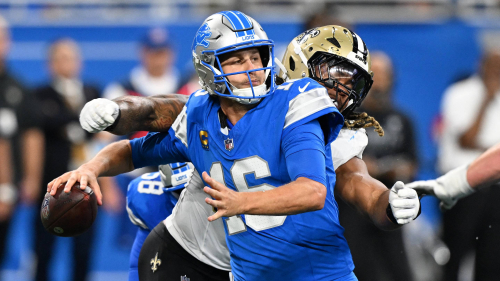
Week 1 has seen a lot of big storylines emerge, but one of the most impactful ones may come from Detroit. The Lions beat the New Orleans Saints 31-30 in a thriller, but one aspect of the contest that could have massive ramifications going forward came from a replay review. The controversial play came early in the second quarter, when Lions’ quarterback Jared Goff was whacked from behind as he was winding up to throw. The football ended up flying backwards, which should have been a fumble recovery for the Saints since the quarterback’s arm was not going forward, a terminology fans have gotten used to since we learned about the existence of the “tuck rule” in the 2001 playoffs. The turnover was automatically reviewed and the ruling was reversed, giving the football back to Detroit and denying the Saints a prime scoring opportunity. The explanation from . replay expert Mike Pereira, which you can see below, seemed to change the interpretation of how the tuck rule is applied. — . Sports: NFL (@NFLonFOX) September 13, 2026 According to Pereira, the officials determined that Goff demonstrated an intent to throw the ball as a forward pass before he got hit by a Saints’ defender, which put the tuck rule into play.
The fact that the football went backwards was irrelevant as Goff’s intent overrode the actual motion of the ball. What the controversial replay reversal says for the NFL season New Orleans Saints head coach Kellen Moore | IMAGN IMAGES via Reuters Connect
While this isn’t the first time that the Saints have been hosed by bad officiating decisions in recent memory, the stakes from this call could have lasting ramifications. It felt like we haven’t had to debate the tuck rule for a while, but this ruling could be referenced for years every time a quarterback gets involved in a potential strip sack scenario. Our understanding of the tuck rule had relied on the fact that if the quarterback’s arm is going forward and the ball comes loose it will be ruled an incomplete pass. Now the NFL is trying to tell everyone that the quarterback’s arm doesn’t even need to go forward but rather demonstrate an intent to complete a forward pass. There should be more freeze-frame debates that determine whether or not a quarterback was trying to pass, pitch the football or tuck it back into his body, which is the last thing the NFL needs right now. This questionable reversal opened a whole new can of worms in the tuck rule conversation, which should lead to a lot of headaches for football fans and coaches the rest of the way.
Add us as a preferred source on Google
Follow