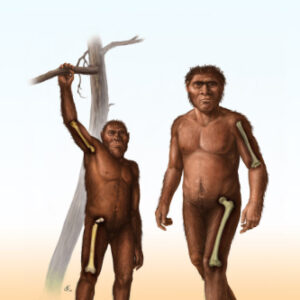


Thomas Sowell has made many deep insights into humanity and the history of society. Thomas Sowell, born 1930, is an economist trained at Chicago. He was a Marxist until his mid-twenties, and cured of it not by theory but by a summer working inside the U.S. Department of Labor. He watched the agency’s institutional interest quietly override its stated mission. It explains the shape of everything he wrote afterward. He looks not at the stated purpose of an institution or policy but what incentives they actually face. Look at what they produce over the long term and not what they say.
His most durable contribution is reversals of the questions that turn out to be unusually productive.
The first inversion: crime doesn’t need explaining. Restraint does.
The standard framing treats antisocial behavior as a deviation demanding causal explanation. Something went wrong. There was poverty, trauma, neglect, discrimination, alienation. Find the cause, remove it, and the behavior recedes.
Sowell reverses the arrow. Predation is cheap. Taking is easier than making. Violence requires no training, no capital, and no coordination. Free-riding is available to anyone at any time. If these paths are permanently open and permanently profitable in the short run, then the phenomenon requiring explanation is not the people who take them but the overwhelming majority who don’t. Restraint is the anomaly. And restraint is expensive.
Civilization is a thin, recently-applied crust. Every generation is an invasion of barbarians who must be civilized before they’re 20. The transmission is not automatic and can fail in a single generation.
The same logic applied to wealth. Poverty is the default condition of the human species and requires no explanation whatsoever. It is what happens when nothing in particular happens. Wealth is the deviation — historically rare, geographically concentrated, and dependent on a specific and fragile bundle of institutions and habits. Asking “why are these people poor” is the wrong question. The productive question is “why is anyone rich, and what precisely did those places do?”
Parents, schools, churches, workplaces, and peer norms are all needed to establish the new generation. All of which can weaken. It can fail in a single generation, because it must be re-accomplished from zero in every single generation. There is no genetic memory of civility.
Angus Maddison’s long-run GDP-per-capita estimates show essentially flat living standards for the great majority of human history, then a near-vertical rise starting in a with the Industrial Revolution.
IF AI Replaces or Displaces work then it is not just about the money.
Work is not primarily an income-delivery system.
It is among the largest restraint-and-structure-delivery institutions humans have ever constructed, and it delivers things that have nothing to do with money.
1. Temporal structure. A reason to get up, a shape to the day, a distinction between weekday and weekend, a sense of time as ordered rather than undifferentiated.
2. Enforced contact with non-chosen others. You must cooperate with people you did not select and may not like. This is the primary adult training ground for tolerance and negotiated compromise — arguably the single most under-appreciated function.
3. Hierarchy and external standards. Someone else judges your output against a criterion you did not set. This is unpleasant and it is also how competence is transmitted.
4. Deferred gratification, continuously rehearsed. Effort now, payment later, repeated thousands of times until it becomes character rather than decision.
5. Obligation to strangers. Your absence costs someone. You are needed by people who are not your family.
A legible identity. A short, socially recognized answer to “what are you?” that places you in the order of things.
Notice that a check in the mail delivers exactly zero of these six.
So the question raised by an AI-abundant future is not “will people have income without jobs.” In a genuinely abundant scenario this is easily solve. The question are what installs restraint, structure, and purpose when the necessity that used to install them is gone?
Great Goals
The Apollo put twelve people on the Moon and employed roughly 400,000. The ratio was 1:33,000. The purpose wasn’t distributed by watching the astronauts. It was distributed by the welders, the seamstresses who sewed the suits, the trajectory computers, the contractors in Huntsville and Downey. Those people had schedules, bosses, standards, colleagues they didn’t pick, and an answer to what they were for.
Boldly Going and Boldly Building
If AI solves money for our world, we can still collectively pursue colonizing the solar system and building up for interstellar missions.
The frontier would be purpose and voluntary employer. Frontier would also be spectacle but a smaller part. The version where a few explore and everyone else watches on a feed is the failure mode. The Colosseum of ancient Rome was bad. It solved the purpose problem for a non-working urban population with transfers and spectacle.
There should be many small ladders and not just one large one. We want many local, plural, non-comparable status economies with genuine standards and real membership costs — craft guilds, amateur leagues, volunteer societies, restoration societies, competitive hobbyist scenes. You can be good enough and locally known, rather than globally ranked and invisible.
Guilds, apprenticeships, local masters of competitions (like chess).
Awards for those being the best at personal charity. Helping and organizing to help others.
Brian Wang is a Futurist Thought Leader and a popular Science blogger with 1 million readers per month. His blog Nextbigfuture.com is ranked #1 Science News Blog. It covers many disruptive technology and trends including Space, Robotics, Artificial Intelligence, Medicine, Anti-aging Biotechnology, and Nanotechnology.
Known for identifying cutting edge technologies, he is currently a Co-Founder of a startup and fundraiser for high potential early-stage companies. He is the Head of Research for Allocations for deep technology investments and an Angel Investor at Space Angels.
A frequent speaker at corporations, he has been a TEDx speaker, a Singularity University speaker and guest at numerous interviews for radio and podcasts. He is open to public speaking and advising engagements.