

Sina Schuldt/picture alliance via Getty Images
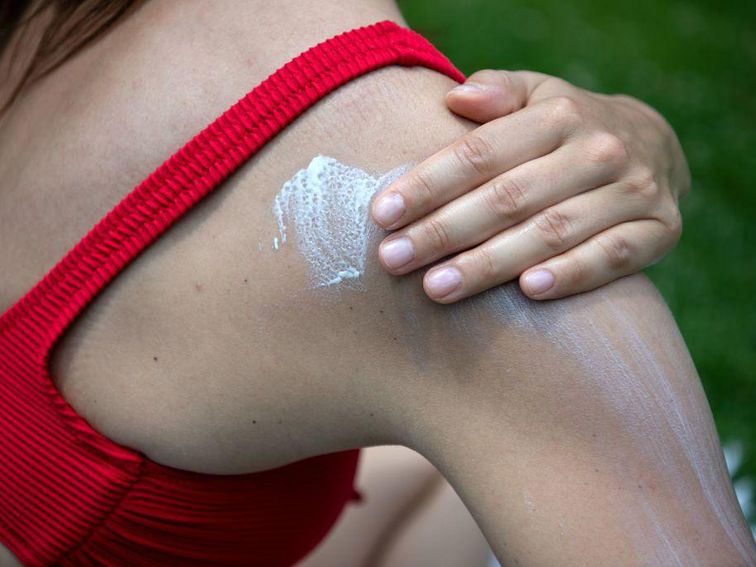
Any doctor will tell you that sunscreen is the secret to great skin. Not only does sunscreen help prevent skin cancer, it also stops the sun’s rays from breaking down the collagen in your skin, which leads to wrinkles and sagging.
More than ever before, companies have finally started making sunscreens that you’ll actually want to use. I’m talking facial sunscreens that apply and blend like makeup primer, spray sunscreens you can reapply to your kids right after they jump out of the pool and lightweight lotions you’ll reach for every day.
There are now so many brands and great options that finding the best sunscreens available is a big task. The list below scratches the surface, highlighting some of the best-selling sunscreens on Amazon, plus a few formulas that make sunscreen much more palatable to wear.

Now playing:
Watch this:
I got my face professionally scanned for wrinkles and…
5:36
How to choose the right sunscreen
Sunscreen is a contentious product because there’s often a lot of disagreement on which sunscreen chemicals are safe, what SPF is appropriate and whether sunscreen harms coral reefs or not.
Here’s what you should know about sunscreen in 2019:
1. Everyone should wear sunscreen, regardless of your skin color.
2. Sunscreen protects against UV damage and wrinkles.
3. Both chemical and physical sunscreens are considered effective and safe.
4. Physical sunscreens — with zinc oxide, titanium dioxide or both — are good for those with sensitive skin, and new formulas are much easier to blend than earlier, chalky versions.
5. The American Academy of Dermatology recommends using broad-spectrum SPF 30 sunscreen, which blocks UVA and UVB rays.
6. No sunscreen can block 100% of UV rays. SPF 30 sunscreens block 97% of UVB rays, and at SPFs above that, the increased protection is negligible.
7. All sunscreens, regardless of SPF, rub off or break down on your skin in the course of 2 hours — even faster if you’re swimming or sweating.
8. The state of Hawaii; Key West, Florida; and a few island nations have banned sunscreens with oxybenzone because a scientific study found that it can kill coral. Currently, none of these bans are in effect — the two in the US start in 2021. Some companies are selling “reef-safe” sunscreens that abide by the ban.
These products and services are independently chosen by our editors. Bioreports may get a share of the revenue if you buy anything featured on our site. The prices are accurate as of publishing time, but may change.
The best sunscreens for 2019

Hawaiian Tropic
Best everyday body sunscreen
Hawaiian Tropic Sheer Touch Ultra Radiance Sunscreen Lotion SPF 30
This is the sunscreen I currently have and use because it feels lightweight and rubs in easily. It’s like putting on lotion, and it moisturizes like lotion because it has shea butter. Be forewarned this has a subtle shimmer to it, so you’ll look ever-so-slightly glittery.
Hate any and all glitter? Try Banana Boat’s Sun Comfort Broad Spectrum Sunscreen Lotion (SPF 50, $10.06 at Amazon) for a similar hydrating option.
Best sunscreen for kids

Neutrogena
Neutrogena Wet Skin Kids Sunscreen Spray
Kids rarely want to sit still long enough for you to apply (and reapply) sunscreen. But this formula goes on quickly and is meant to work on wet skin. The spray cuts through water to adhere to skin, so your kids stay protected even as they spend all day getting in and out of the pool.

Supergoop
Best facial sunscreen
Supergoop Smooth and Poreless Matte Mineral Sunscreen SPF 40
If you have ever struggled to rub in the white cast mineral sunscreens create only to end up looking like a ghost, this is your new sunscreen. In recent years, Supergoop has been cranking out new formulas for any need — like powder sunscreen you can swipe on over your makeup during the day or a sunscreen oil that holds in moisture on your skin.
I picked up the brand’s Smooth and Poreless at Sephora on a whim, and it’s what I currently use on my face. Of any facial sunscreen I’ve used, I’ve loved this the most because it feels like a primer and blurs my pores. It’s not definitely not cheap, but it’s worth the cost for me. For a cheaper facial sunscreen, check out the Asian sunscreen pick below.
Best facial sunscreen for sensitive skin
EltaMD UV Clear Broad-Spectrum SPF 46

EltaMD
This EltaMD sunscreen is well-loved because despite the fact that it uses zinc oxide, it goes on clear and blends into your skin without leaving a white cast. I’ve tried it firsthand and it glides on so well, you don’t feel like you’re wearing sunscreen.
Just be careful when shopping to make sure you buy it directly from Amazon, not a third-party seller, because there are Amazon shoppers who’ve reported receiving counterfeit products. (Shown is the SPF 40 version, but I’ve linked to the SPF 46 version.)
Best sunscreen for babies
Blue Lizard Australian Baby Sunscreen SPF 30+

Blue Lizard
Doctors recommend that you limit your baby’s sun exposure with hats, clothing and shade and that you not to use sunscreen on infants under six months. Once they reach the six-month milestone, you can use sunscreen, but stick to formulas that are free of dyes and scents and that use minerals (zinc oxide and titanium dioxide) for sun protection.
This Blue Lizard formula checks all of those boxes and the bottle turns pink in the sun, to give you a nudge to reapply.
Best sport sunscreen

Neutrogena
Neutrogena Beach Defense (Spray, Lotion or Stick)
Sport and water-resistant sunscreens can feel thick and greasy, but I like Neutrogena’s Beach Defense line because it’s more lightweight and smells like a tropical beverage (it has notes of piña colada if I remember correctly). The spray is easy to apply, is water- and sweat-resistant for up to 80 minutes and comes in SPF 70.
If you want or need something without a scent, try Banana Boat’s Simply Protect Sports sunscreen, which doesn’t have any added fragrance.
Best Asian sunscreen
Biore UV Aqua Rich Watery Essence Sunscreen SPF 50

Biore
Okay, if you are a skin care nerd like I am, prepare to fall down the Asian sunscreen rabbit hole. South Korean and Japanese skin care brands have become well known for sunscreens that use different chemicals than what’s approved by the FDA in order to provide superior protection.
One of the most wildly popular Asian sunscreens is Biore’s, which is a thin, light formula that blends in easily. While you can’t find it in US stores — because of the FDA — they are readily available on Amazon and other retailers, like YesStyle. Just know that these products will ship from Asia, and have to go through customs, so they will almost certainly not arrive within the two-day Prime window.
Another great option is the COSRX Aloe Soothing Sun Cream SPF50 PA+++ ($12.86) because it applies like a lightweight moisturizer and provides hydration too.