
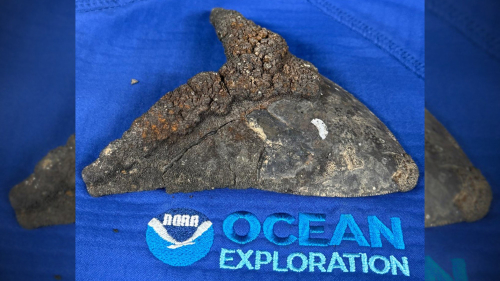
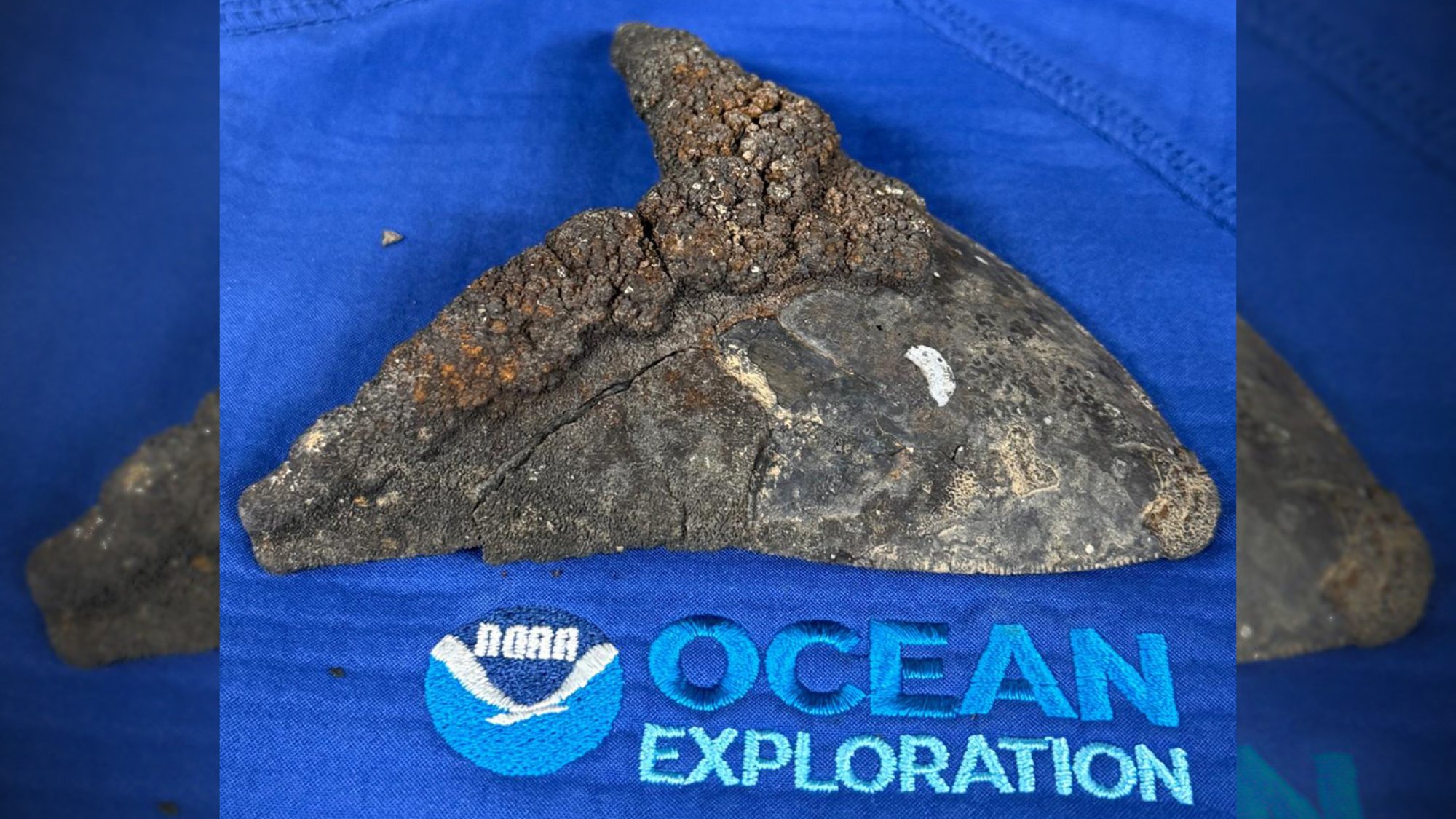
Fossilized megalodon teeth absorb rare earth elements and minerals from the ocean waters.
Credit: NOAA Ocean Exploration, 2026 Cook Islands ROV Exploration
Get the Popular Science daily newsletter💡
Breakthroughs, discoveries, and DIY tips sent six days a week.
By signing up, you confirm you are 16+, will receive newsletters and promotional content and agree to our Terms of Use and acknowledge the data practices in our Privacy Policy. You may unsubscribe at any time.
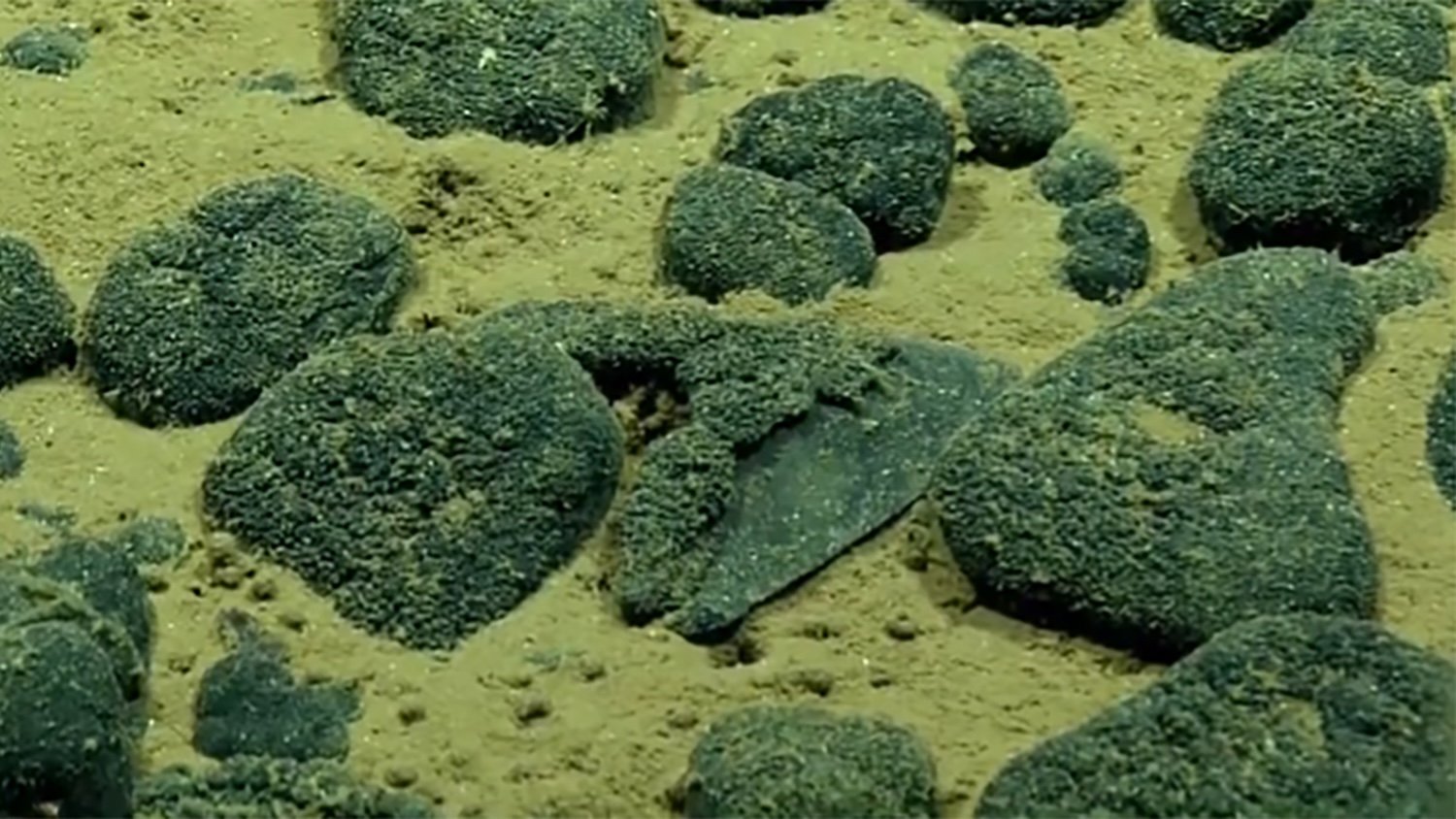
The National Oceanic and Atmospheric Administration (NOAA) is a little over halfway through a nearly month-long deep sea survey of the South Pacific near the Cook Islands. Its remotely operated vehicles (ROVs) have already amassed hours of footage, while onboard equipment is collecting valuable samples and sensor data along the abyssal plain. Much of this data will help the Cook Islands plan ways to utilize natural ocean resources like polymetallic nodules, masses along the seabed containing valuable rare earth materials.
Much more than metals and minerals are locked inside these nodules, however. As NOAA recently highlighted on their expedition’s website, the formations often contain the teeth from one of the most famous prehistoric apex predators.
“Based on their size, with many measuring over seven centimeters (three inches) in length, the teeth likely belonged to megalodon sharks,” NOAA researchers explained.
Thanks to a skeleton composed primarily of cartilage and connective tissues, sharks don’t leave much behind after they die. This makes it hard enough to recover and study the remains of recently deceased ocean hunters, much less their ancient evolutionary ancestors. Thankfully, sharks leave behind plenty of teeth, many of which fossilize over millions of years. Palm-sized teeth from megalodon (Otodus megalodon) are so common along the coasts of Maryland that the massive deep-sea stalker is the first official state shark.
Megalodon went extinct over three million years ago, allowing plenty of time for their teeth to sink to the ocean floor. Once there, they began to fossilize while also drawing and absorbing rare earth elements (REEs) from the ambient water column and sediment. Over the ensuing millenia, REEs like neodymium along with minerals such as iron and manganese slowly layered atop the teeth.
“Analyzing the concentration of REEs such as neodymium trapped in the teeth can serve as a tool for tracking past ocean circulation patterns,” NOAA wrote.
The crew’s next ROV 3.5-mile-deep dive is scheduled to launch on August 4 at 2:30 p.m. EDT, then arrive on the seafloor about three hours later. From there, it will survey the abyssal plain near the Cook Islands’ northern border with American Samoa for about four hours. All expedition times are subject to change, depending on technical and weather issues. But regardless of when the ROVs return, the ancient megalodon teeth will be there waiting for them.

2026 Popular Science Home of the Future Awards
39 products that will improve your everyday life.