


Alessandra Dowling always wanted a big family. As one of four siblings, she hoped for three little ones of her own. When she found out she was pregnant in December 2022, after months of struggling with fertility, she was thrilled—she pictured sharing the news with family, meeting her baby and bringing her newborn home.
Then, in January 2023, she miscarried. “I was devastated,” Dowling, now age 33, recalls. “I told myself it was probably just bad luck because miscarriages are unfortunately common.” Indeed, around one in five pregnancies end in miscarriage. She still wanted a big family.
After a second miscarriage, “everything changed,” Dowling says. She stopped trusting her body. Every subsequent pregnancy test became associated with fear, not excitement. “I wasn’t just worried about getting pregnant anymore. I was terrified of losing another pregnancy,” she says.
On supporting science journalism
If you’re enjoying this article, consider supporting our award-winning journalism by subscribing. By purchasing a subscription you are helping to ensure the future of impactful stories about the discoveries and ideas shaping our world today.
Shortly after, she and her husband decided to turn to in vitro fertilization (IVF), a technique in which eggs are fertilized by sperm in a lab and then transferred to the uterus.
Dowling’s first egg retrieval was in March 2023; it was the beginning of what would be a long—and expensive—process. Insurance generally doesn’t cover IVF. Dowling and her husband paid out-of-pocket for most of their IVF procedures, as well as several “add-on” treatments that would supposedly boost her chances of delivering a baby. These included preimplantation genetic testing for aneuploidy (PGT-A) to detect any abnormalities in the embryos’ chromosomes; injections of human growth hormone to stimulate the ovaries; ozone therapy, an experimental treatment advertised as improving the odds of pregnancy; and medications to prevent blood clots and regulate her immune system. Dowling also received—and paid for—acupuncture before and throughout her IVF experience.
In all, she estimates she has spent close to $200,000 on fertility-related treatments.
Dowling’s experience isn’t unusual. In the U.S., IVF often costs individuals tens of thousands of dollars. And add-ons like the ones Dowling used are common; surveys conducted in the U.K. and Australia indicate that at least three quarters of IVF patients have tried them at one point or another in the course of their treatment. Yet in many cases, these treatments just aren’t backed by science.
A recent meta-analysis of 10 popular add-on treatments found that three treatments—endometrial receptivity testing (basically, testing of the uterine lining), corticosteroids (a category of immune system drugs) and PGT-A—had little to no impact on the odds of a live birth. Four add-ons—acupuncture, intralipid infusion (fat injections intended to regulate the immune system) and platelet-rich-plasma (PRP), or blood injections, in the uterus and ovaries—had either mixed evidence or low quality data backing them up.
Just three procedures had any evidence of a possible benefit, according to the review: endometrial scratching, a procedure similar to a biopsy, physiological intracytoplasmic sperm injection (PICSI), a method of selecting sperm, and EmbryoGlue, a type of treatment to help embryos attach to the uterus.
While the results don’t prove the treatments are ineffective, they reveal how many products are on the market with little to no evidence of helping people actually give birth to a baby. “Most add-ons are not proven to benefit patients going through IVF,” the study authors concluded.
That conclusion is no surprise to Dowling. She knew that many of the add-ons she used weren’t guaranteed to improve her chances of pregnancy or birth. Both she, a lawyer, and her husband, a physician, are data-oriented individuals, she says. They sifted through research repositories such as PubMed looking for clinical trials, consulted fertility experts and talked to other people who’d gone through the IVF process. Her doctors were transparent that some add-ons might help some people, while others, inexplicably, might see no benefit.
But as she struggled with her fertility, Dowling’s logic shifted. Turning down something that might help, even if the odds were low or unknowable, felt “impossible,” she says.
The add-ons helped her feel that she had “left no stone unturned,” she recalls. “By that point, I was very desperate to have a baby. We were willing to do anything and everything that might improve our chances.”
The reason why so many unproven treatments are available in the U.S. to begin with is murky. For one thing, the U.S. National Institutes of Health has historically restricted studies on IVF, particularly anything to do with the embryo, says Marcelle Cedars, director of the Center for Reproductive Health at the University of California, San Francisco. As a result, research is being done outside of academia, where investigators rely on federal funding, and in an environment “much more driven by market forces,” she says.
That means IVF treatment may be motivated by profit, with clinics being forced to compete over their fertility offerings. And because IVF is generally not covered by insurance, patients aren’t necessarily eager to spend time signing up for clinical trials to test new treatments. Instead they want to pursue the “best” course of action, even if doctors aren’t sure what that looks like, Cedars says.
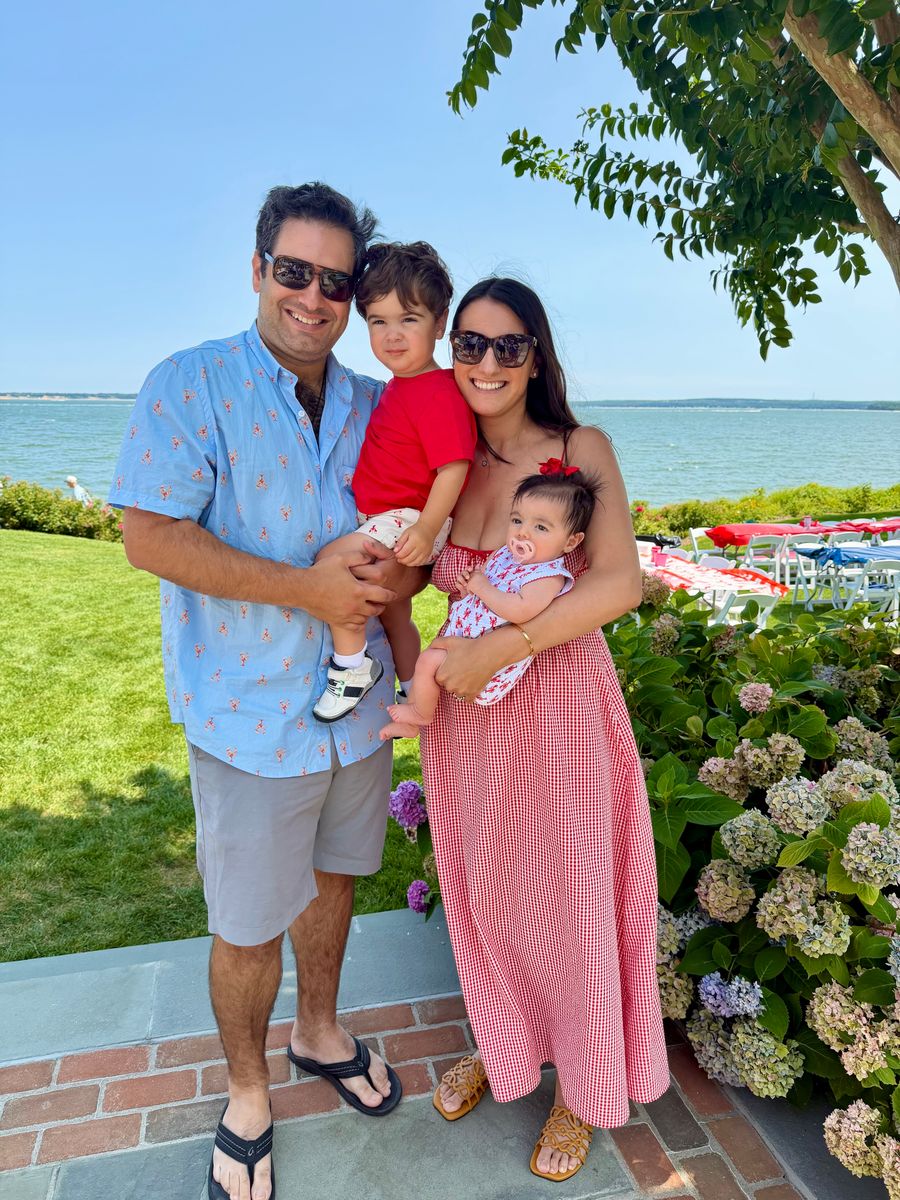
Alessandra Dowling and her family.
Courtesy of Alessandra Dowling
Dowling had her first child, her son Joey, in August 2024 via IVF.
Before that fateful round, she had consulted a reproductive immunologist and discovered that she had lupus anticoagulant, an antibody associated with abnormal blood clotting and recurrent pregnancy loss. Thinking this may be related to her fertility struggles, Dowling opted to add three medications to her IVF protocol: Lovenox to help reduce abnormal blood clotting; prednisone, a corticosteroid to suppress a negative immune response to an embryo; and an immune regulation medication called Neupogen. Doctors also discovered, and removed, excess tissue in her uterus called a uterine septum.
The round of IVF worked—although Dowling isn’t entirely sure why. Less than a year after her son’s birth, Dowling tried to get pregnant again, opting for the same add-ons as before—with no luck. “Maybe it was the embryo itself,” she says, referring to her successful pregnancy. “Maybe it was simply chance. There’s just no way to know.”
After that unsuccessful round, Dowling found herself considering new add-ons, including platelet-rich plasma and EmbryoGlue, for the next time. Then she got pregnant, conceiving spontaneously without IVF. Her daughter, Gemma, was born in April 2026.
Being a mom is better than Dowling hoped it would be. “It’s exhausting, but it is something that gives me so much happiness,” she says. “It was worth everything and then some.”
Dowling still dreams about having a third baby. For now, she plans to try to get pregnant without assistance. If she returns to IVF, she has two embryos left. If those don’t work, she says, she’s prepared to put IVF behind her. The process has been financially, physically and emotionally draining, she says. “It’s been years of this.”
She also doesn’t regret her add-on treatments. On one level, it didn’t matter whether they’d been vetted or not. At the time, they offered something she needed: peace of mind.
“You’re not necessarily paying for certainty,” she says. “You’re paying for hope. And when you’ve spent years trying to have a child, hope can be incredibly powerful and moving.”