

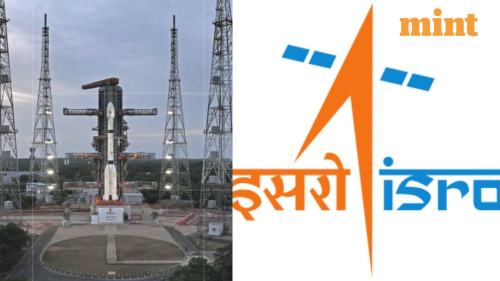
For the first time since the Indian government opened the space sector to private industry, nine employee bodies that represent the staff at ISRO centres have formally raised concerns over the direction and basis of the transition. In a joint representation dated September 4, the bodies are seeking a written clarification from the chairman of the Space Commission in the matter. ISRO staff representation to chairman: Report “Private participation in defined commercial activities can coexist with a strong, publicly owned ISRO. What cannot be accepted without debate is a policy that reduces ISRO to a residual R&D boutique while the realisation of the nation’s launch vehicles and the operation of its launch infrastructure pass out of public hands,” the representation reads, as quoted by a report of the Times of India.
The employee bodies called the technology developed by ISRO a national asset. It said that the organisation’s transfer must be transparent and accountable. “…Serving employees have an earned right to be informed, consulted and protected.
Natural justice and good administration require that policy of this magnitude be explained to the workforce by the Department itself,” the representation read. The joint representation was reportedly signed by the ISRO Staff Association, SHAR Employees Association, ISAC Employees Association, ISRO Staff Association-LPSC, ISRO Staff Association-BBU, NRSA Employees Union, Space Employees Association-BBU, ISRO Staff Association-IPRC and SAC Employees Welfare Association. What are the demands? The bodies referred to a statement reportedly made by IN-SPACe chairman Pawan Goenka on ISRO eventually “not manufacturing any launch vehicles” and asked for clarity on whether his remark “represents an approved decision of the Govt of India, Space Commission or DoS.” If yes, the bodies are also seeking further details around its approval, authority and more. The employees via the bodies also sought clarity on the future role of ISRO, asking, “What will be the future mandated role of ISRO — specifically, whether design, development, realisation, integration, testing and launch of PSLV, LVM-3, SSLV and successor vehicles will continue as ISRO functions or will cease. Whether any decision has been taken to exclude PSUs from the proposed transfer of PSLV/LVM-3 production, and the justification for such exclusion.”
More written details of the institutional framework under which publicly developed technology, test facilities, launch complexes and know-how built using taxpayer funds and the work of generations of ISRO employees are being opened to private operators are also sought. “ISRO built with public funds, public purpose and public workforce” Apart from these, clarity on the respective roles of NSIL and IN-SPACe in such transfers was also demanded.
“ISRO was built as a national scientific institution with public funds, public purpose and a public workforce. Launch-vehicle design, realisation, integration, testing and launch operations are not merely ‘manufacturing contracts’. They are the core competence, institutional memory and strategic capability of the organisation,” the representation reads. The employee representative said they feared that a gradual withdrawal of ISRO from launch-vehicle and satellite realisation could affect work opportunities as well. “Existing employees may be rendered surplus, or redeployed, or left without meaningful work while the same tasks are performed by private contractors using publicly developed technology…Regular recruitment to Group A, B and C posts — already constrained by vacancies and attrition — will further decline, denying opportunity to meritorious youth who look to Isro as a public career of honour, not as a private contractor’s workforce,” the letter also reads.

In the closing comments, reportedly the letter congratulated ISRO on the success of the GSLV-F17/EOS-05 mission. “We submit this in a constructive and democratic spirit,” it concluded.
The bodies are expected to take action as per the written response. About the Author Sneha Biswas
Sneha Biswas specialises in covering entertainment and pop culture, with a specialisation on Bollywood, Hollywood, OTT platforms, K-pop, K-dramas, and major developments in the US entertainment industry. She believes in telling stories that balance speed with substance, and in making entertainment journalism contextual, culturally aware, and reader-first rather than purely reactive.

With over six years of experience in digital media, Sneha currently serves as a Deputy Chief Content Producer at Live Mint. She has spent more than three and a half years with the HT Group and returned to the organisation in February 2025, joining Live Mint to uplift the entertainment section.
Over the past year, she has been closely involved in entertainment coverage including breaking news, explainers, trend reporting, box office reports and analysis for the audience. Sneha is Google News certified, having completed training focused on newsroom best practices, digital reporting, and SEO-driven content strategies. Her work reflects a strong understanding of audience behaviour, search trends, and the evolving consumption patterns of entertainment news across formats. Prior to her current role, Sneha has worked across multiple content and editorial functions within digital newsrooms, building expertise in content planning, editing, and real-time coverage. Her professional interests lie at the intersection of entertainment, internet culture, and global pop trends. Working for the National city team, Biswas closely follows global entertainment movements while maintaining a strong pulse on what is happening in India.
Stay updated with the latest Trending, India, World and US news. Home News IndiaISRO bodies seek clarity on privatisation role, launch vehicles, future roles and more amid private space push: Report
More