

For many, the iPhone 18 Pro is arguably the iPhone Duo’s strongest rival and boasts a surprising number of strengths.
Even though Apple would probably like to see this happen, virtually no one is going to buy both a new iPhone 18 Pro and an iPhone Duo. But is the new, expensive iPhone Duo superior in every respect? Let’s take a look at Apple’s two new iPhones and see how they stack up and which is the best model to buy.
Design
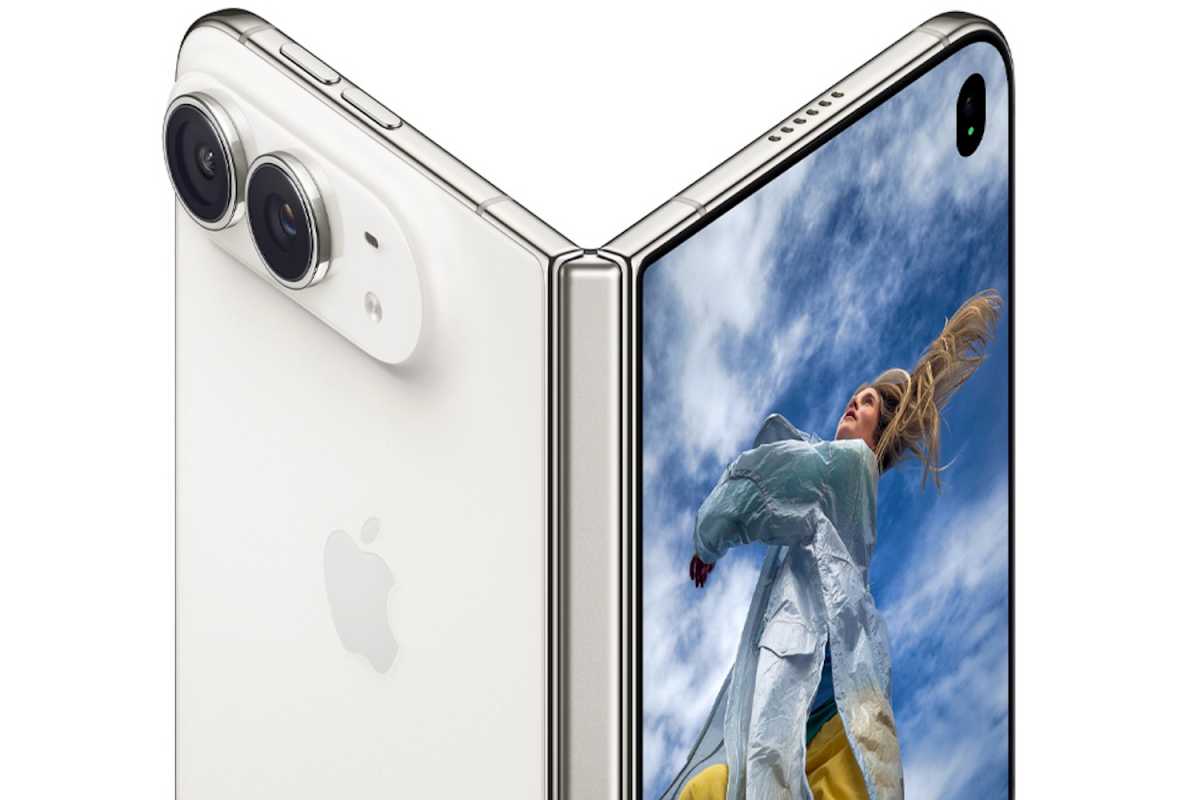
Visually, the iPhone 18 Pro is the spitting image of its predecessor. With the iPhone Duo, on the other hand, you get a truly new iPhone with an ingenious design and a completely new operating concept. The look and feel is strongly reminiscent of the iPhone Air; Apple has opted for a significantly different design for the Duo compared to the Pro models. In my opinion, the proportions are more successful than on the Air. When folded, the new Duo offers an elegant, notebook-like silhouette with two cameras on the back.
While the iPhone 18 Pro looks almost old-fashioned next to the Duo, despite its bright colors, you’re getting a completely new device with cool new features. There’s a true Black option again, silver, a new Burgundy (dark red), and the color Glacier, a chic light blue. For the Duo, the only options are Star White and Night Sky. In other words, light and dark.

Screenshot
Apple
Dimensions
The dimensions of the devices vary considerably, of course: at 117.8 millimeters high and 84.1 millimeters wide, the Duo is much shorter and wider than the iPhone 18 Pro. The latter is 150 millimeters tall, while the Pro Max measures 163 millimeters. Most notably, when folded, the Duo is 11.3 millimeters thick, thicker than any previous iPhone. When unfolded, at 5.3 millimeters, it is actually thinner than an iPhone Air.
The new iPhone 18 Pro model weighs 211 grams, whilst the Pro Max weighs 249 grams, making it just five grams lighter than the iPhone Duo. In terms of weight, the difference is smaller than one might expect. But when it comes to fitting in a pants pocket, the iPhone 18 Pro still has the edge.
Screenshot
Apple
Display
With the Duo, you need to consider two displays. The outer display, which is 5.4 inches, and the inner display, which is 7.6 inches. The ingenious trick here is that the aspect ratio is the same on the inner display and the outer display. Both are 1.4:1, or 7:5, so the outside display is exactly half of the inside display.
The iPhone Pro Max’s display measures 6.9 inches in the portrait orientation typical of smartphones. For many uses, such as watching videos, working with multiple apps, or using complex apps, the Duo’s display offers a much better aspect ratio.
This does not change the fact that the iPhone Duo’s outer display is quite small. In many situations, you will mainly use the outer display – for quick messages, phone calls, or quick photos – as there is no need to unfold the device.
The quality of the displays, on the other hand, is almost identical. All displays are very bright, up to 3,000 nits, and offer a wide color gamut. Apple has opted for a matte nano-textured surface on the Duo’s inner display, partly to conceal the central crease, but this is also excellent for reducing glare.
The glossy screens on the Pro models are very popular with users, as images and videos appear particularly high-contrast and sharp on this surface. This is largely a matter of personal preference.
Screenshot
Apple
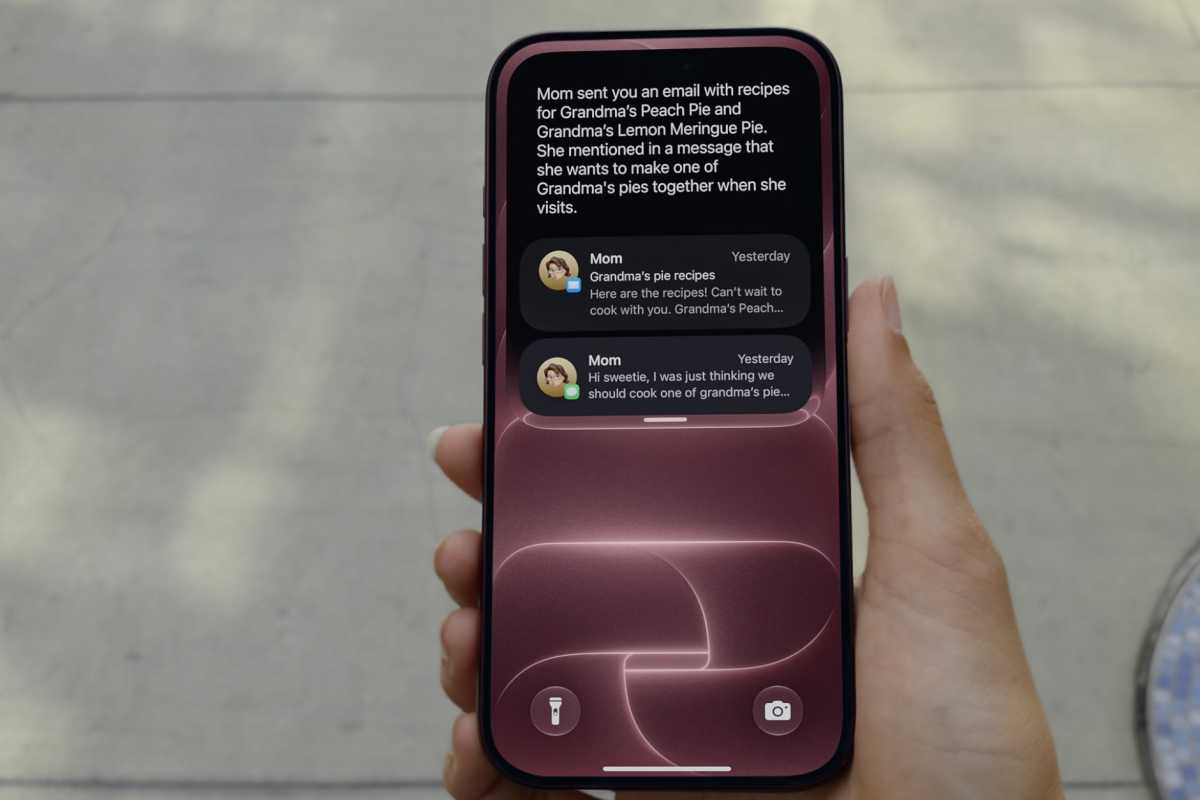
Another difference: the Duo is also set to support the Apple Pencil later this year. With a Pro model, you’ll have to do without this potentially useful feature.
New A20 Pro
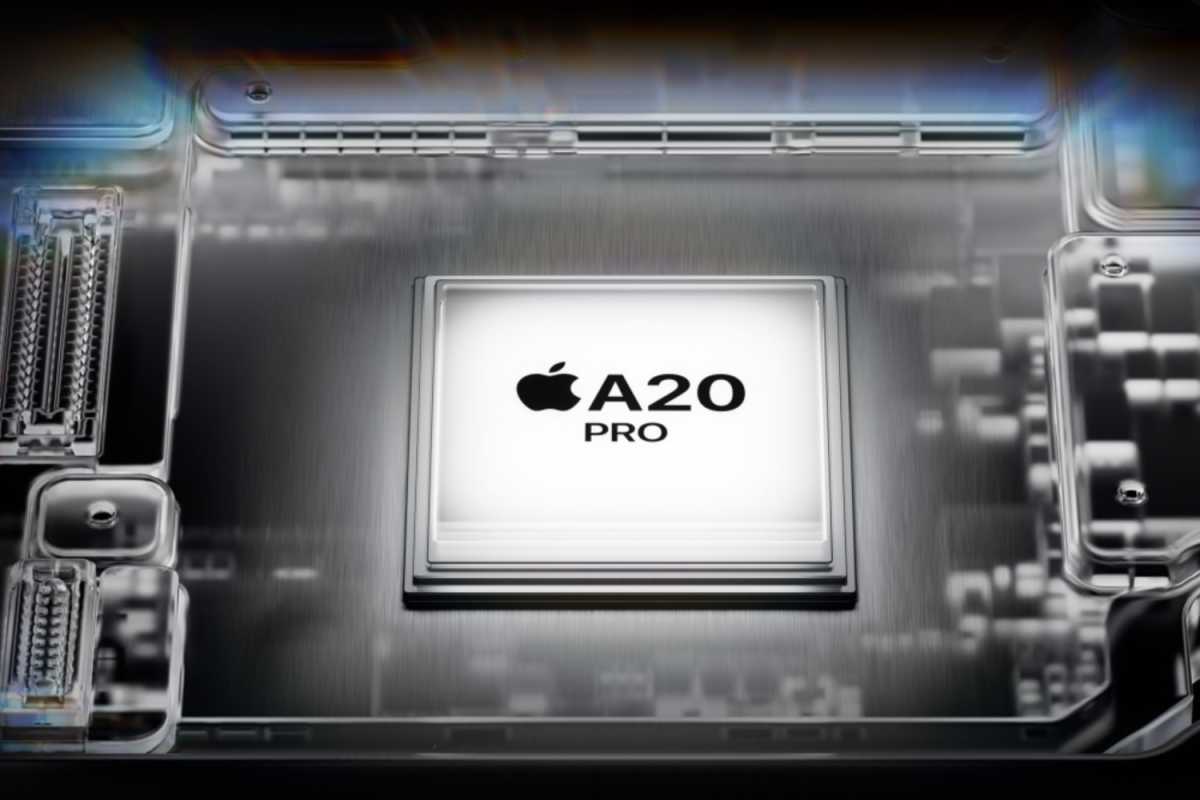
Performance is expected to be nearly identical and very high, as all devices use the same new A20 Pro. Like the new M6 chip in the Mac Mini, the new chip is based on a 2nm manufacturing process, which promises higher performance with lower power consumption. Compared to the A19 Pro, CPU performance is said to be up to 20% faster. Graphics performance has seen a significantly greater increase: with 7 GPU cores (up from 6) and 50 percent more memory bandwidth, GPU performance may be up to 40 percent higher.
All models also feature a special vapour chamber cooling system. However, there could still be differences under prolonged use. The more effective the cooling, the better the performance under sustained load. Only extensive testing will reveal just how efficiently this works in the slim iPhone Duo.
Apple
Battery life
A new battery design and a more efficient chip are set to improve the battery life of the iPhone 18 Pro compared to the iPhone 17 Pro. The iPhone 18 Pro Max offers up to 43 hours of video playback, whilst the iPhone 18 Pro lasts for 34 hours on this task.
Comparing the two models is complicated. Battery performance depends on whether you use the small external display or the large internal one on the Duo. The small display lasts even longer than the iPhone Pro Max, with up to 44 hours of video playback, while the internal display only manages 31 hours.
Cameras
When it comes to the camera system, the iPhone Pro is clearly superior. Apple was apparently only able to fit two rear cameras due to space constraints: a main wide camera and an ultrawide camera. The Duo lacks a proper telephoto lens. The iPhone 18 Pro is fitted with the same telephoto camera as the iPhone 17 Pro, which offers first-class performance.
With the iPhone 18 Pro, the Pro range has become even more of a photographer’s iPhone. The biggest innovation in the 18 Pro is a new main camera with a variable aperture. This is still exceptional for a smartphone and offers professionals more creative possibilities.
You can choose between four aperture settings, either automatically or manually: f/1.48, f/1.8, f/2.8 and f/4.0. With an aperture of f/1.48, the new model lets in even more light than the iPhone 17 Pro, which only offers the smaller f/1.7 aperture. Apple promises up to 50% better performance in photos and night mode compared to the iPhone 17 Pro. The Duo has a f/1.6 aperture. Image stabilization is also more advanced on the iPhone 18 Pro, and you’ll have to do without the action button on the Duo, though camera controls are available on all models.

Apple
The Duo seemingly uses a slightly smaller camera sensor, closer to the one found in the iPhone 17e. Only the Pro model also has access to a ring of four microphones for audio recordings.
But the iPhone 18 Pro is also superior in terms of features: only the Pro supports ProRAW and spatial photos, and the new Apple Reference Image. The Duo also doesn’t offer the professional video formats ProRes RAW, Apple Log2, and Genlock.
Front camera
The Duo has two selfie cameras: the FaceTime camera on the inner display has been moved beneath the screen and apparently only supports HD, and the second “Center Stage” camera on the outer display also only supports 12MP, compared to 18MP on the Pro. At least the Duo offers additional features for taking group photos with Duo Preview, Kid Cue, and Smart Take.
For most users, the image quality is probably adequate, though some users accustomed to the iPhone Pro might be disappointed by the image quality. ProRes is also not supported, whereas it is on the iPhone Pro.
Security
There’s a good reason why Face ID has been introduced on all iPhones—the system is very secure and clearly superior to Touch ID in most situations. For technical reasons, Apple had to find a different solution for the iPhone Duo and has reintroduced Touch ID here, just like on an iPad. For most users, though, this shouldn’t be a real problem. Unlocking the device is also straightforward; you can even use an Apple Watch to do so.
Which is the smarter purchase?
The iPhone Duo is clearly the more attractive model; the iPhone 18 Pro has little new to offer. The Duo is, after all, finally another brilliant new iPhone with a cool design and unquestionably high practical value. Viewed objectively, the iPhone 18 Pro is simply better in some areas. The main weakness of the slim Duo is primarily the camera system. Whilst it’s not bad, the iPhone 18 Pro is clearly superior, even when it comes to the front-facing camera.
Battery life is also somewhat shorter than on the iPhone 18 Pro Max when using the large internal display. And, incidentally, the iPhone Duo is significantly thicker and heavier than the smaller iPhone Pro model. You should also bear in mind with the Duo that you only have a 5.4-inch display available on the front. However, you won’t want to, or be able to, open the display at every opportunity.
In fact, this might not even be relevant to you: When you buy an iPhone 18 Pro, you’ll simply get what you expected, whereas with the iPhone Duo, you’ll get a completely new device with entirely new features. It’s not out of the question that you might soon regret not having tried the iPhone Duo first!
| iPhone 18 Pro | iPhone 18 Pro Max | iPhone Duo | |
|---|---|---|---|
| Price (256 GB) | $1,199 | $1,299 | $1,999 |
| Price (512 GB) | $1,399 | $1,499 | $2,199 |
| Price (1 TB) | $1,799 | $1,899 | $2,599 |
| Price (2 TB) | $2,399 | $2,499 | $3,199 |
| Display | 6.3-inch Super Retina XDR display | 6.9-inch Super Retina XDR display | 5.4-inch/7.6-inch Super Retina XDR display, nano-texture (inner display) |
| Pixels | 2622 x 1206 | 2868 x 1320 | 1,398 x 2,034 (closed); 1,878 x 2,670 (open) |
| Resolution | 460 ppi | 460 ppi | 460 ppi (closed), 430 ppi (open) |
| Display technology | OLED, HDR, refresh rate up to 120 Hz, Always On, Dynamic Island | OLED, HDR, refresh rate up to 120 Hz, Always On, Dynamic Island | OLED, HDR, refresh rate up to 120 Hz, Always On, Dynamic Island |
| Colour gamut | Wide colour gamut (P3), True Tone | Wide colour gamut (P3), True Tone | Wide colour gamut (P3), True Tone |
| Brightness | 1,000 nits; 1,600 nits HDR, 3,000 nits outdoors, 1 nit minimum brightness | 1,000 nits; 1,600 nits HDR, 3,000 nits outdoors, 1 nit minimum brightness | 1,000 nits; 1,600 nits HDR, 3,000 nits outdoors, 1 nit minimum brightness |
| Chip | A20 Pro | A20 Pro | A20 Pro |
| Cores | 6-core CPU (2 super-cores, 4 efficiency cores), 7-core GPU with neural accelerators, dual 16-core neural engine | 6-core CPU (2 Super-cores, 4 Efficiency cores), 7-core GPU with Neural Accelerators, dual 16-core Neural Engine | 6-core CPU (2 Super Cores, 4 Efficiency Cores), 7-core GPU with Neural Accelerators, Dual 16-core Neural Engine |
| Storage capacity | 256 / 512GB /1TB / 2TB | 256 / 512GB /1TB / 2TB | 256 / 512GB /1TB / 2TB |
| Cameras | 48 MP Fusion main camera: 24 mm with variable aperture (ƒ/1.48, ƒ/1.8, ƒ/2.8 and ƒ/4.0); 48 MP Fusion ultra-wide-angle: 13 mm, ƒ/2.2 aperture; 48 MP Fusion telephoto: 100 mm (4x), ƒ/2.8 aperture | 48 MP Fusion main camera: 24 mm with variable aperture (ƒ/1.48, ƒ/1.8, ƒ/2.8 and ƒ/4.0); 48 MP Fusion ultra-wide-angle: 13 mm, ƒ/2.2 aperture; 48 MP Fusion telephoto: 100 mm (4x), ƒ/2.8 aperture | 48 MP Fusion main camera: 26 mm, ƒ/1.6; 48 MP Fusion ultra-wide-angle: 13 mm, ƒ/2.2 |
| Optical stabilisation | Sensor shift | Sensor shift | Sensor shift |
| Front camera | Centre Stage camera, 18 MP, ƒ/1.9 | Centre Stage camera, 18 MP, ƒ/1.9 | Centre Stage camera, 12 MP, ƒ/2.2 (rear); FaceTime camera under the display, ƒ/1.8 (front) |
| Speaker, microphone | Stereo speakers, 4 microphones | Stereo speakers, 4 microphones | Stereo speakers, 3 microphones |
| Buttons | Side button, volume, Action Button, camera controls | Side button, volume, Action Button, camera controls | Side button, volume, camera control |
| Sensors | Face ID, LiDAR scanner, barometer, gyroscope, high-g accelerometer, proximity sensor, two ambient light sensors | Face ID, LiDAR scanner, barometer, gyroscope, high-g accelerometer, proximity sensor, two ambient light sensors | Touch ID fingerprint sensor, barometer, gyroscope, high-g accelerometer, proximity sensor, four ambient light sensors |
| Safety | Crash detection, SOS emergency call, ‘Find My’ via satellite | Crash Detection, SOS Emergency Call, ‘Find My’ via satellite | SOS emergency call via satellite, crash detection, ‘Find My’ via satellite |
| Ports | USB-C, supports USB 3 (up to 10 Gbit/s) | USB-C, supports USB 3 (up to 10 Gbit/s) | USB-C, supports USB 3 (up to 10 Gbit/s) |
| Wi-Fi | Wi-Fi 7 (802.11be) with 2×2 MIMO | Wi-Fi 7 (802.11be) with 2×2 MIMO | Wi-Fi 7 (802.11be) with 2×2 MIMO |
| Wireless chips | Apple C2 (mobile) and Apple N1 (Wi-Fi and Bluetooth) | Qualcomm Snapdragon (in North America) and Apple N1 (Wi-Fi and Bluetooth) | Apple C2 (mobile) and Apple N1 (Wi-Fi and Bluetooth) |
| Mobile data | 5G/LTE/UMTS/HSDPA/EDGE/GSM | 5G/LTE/UMTS/HSDPA/EDGE/GSM | 5G/LTE/UMTS/HSDPA/EDGE/GSM |
| Location | GPS, GLONASS, Galileo, QZSS, BeiDou and NavIC | GPS, GLONASS, Galileo, QZSS, BeiDou and NavIC | Dual-frequency GPS (GPS, GLONASS, Galileo, QZSS, BeiDou and NavIC) |
| SIM card | Nano SIM, eSIM | Nano SIM, eSIM | Dual eSIM |
| Bluetooth | 6 | 6 | 6 |
| Body material | Aluminium, front: Ceramic Shield 2, back: Ceramic Shield | Aluminium, front: Ceramic Shield 2, back: Ceramic Shield | Titanium, front: Ceramic Shield 2, back: Ceramic Shield |
| Colours | Black, Silver, Polar, Burgundy | Black, Silver, Polar, Burgundy | Night Sky, Star White |
| Battery | Lithium-ion battery, wireless charging (Qi2 and MagSafe) | Lithium-ion battery, wireless charging (Qi2 and MagSafe) | Lithium-ion battery, wireless charging (Qi2 and MagSafe) |
| Video playback | Up to 36 hours | Up to 43 hours | Up to 44 hours (outer display), up to 31 hours (inner display) |
| Dimensions (W/H/D) in mm | 71.9/150/8.75 | 78/163.4/8.75 | 84.1/117.8/11.3 (closed); 164.6/117.8/5.2 (open) |
| Weight in grams | 211 | 249 | 254 |
| Water and dust resistance | IP68 (30 minutes at depths of up to 6 meters) | IP68 (30 minutes at depths of up to 6 meters) | IP68 (30 minutes at depths of up to 6 meters) |
| Contents | USB-C cable | USB-C cable | USB-C cable |
Note: This article was machine-translated from the original German article on Macwelt.de and then edited by Jason Cross.
This article originally appeared on our sister publication Macwelt and was translated and localized from German.