
Meredith Dietz
Senior Staff Writer
Experience
Meredith is a marathon runner and stand-up comedian. As Lifehacker’s Senior Staff Writer, she covers personal fitness tech, home gym equipment, and more.
Add as a preferred source on Google

Credit: Beth Skwarecki
Key Takeaways
- The Google Health app just got an update that lets it send data to Apple Health.
- Support for synching with Apple Health has been long-awaited by Fitbit fans.
Table of Contents
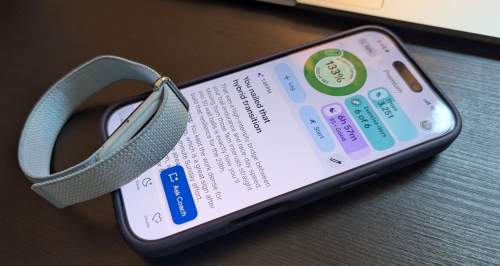
While Fitbits are a favorite option for go-to fitness trackers—they’re thin, unobtrusive, and cheap—its app, Google Health, has always had its problems. However, things might be turning around. The Google Health app has finally received an update that lets it send data to Apple Health.
Google Health (formerly known as the Fitbit app) could always pull in fitness, sleep, and wellness stats directly from devices like Fitbit trackers. However, Fitbit devices have historically lacked any built-in way to sync directly with Apple Health. To get around that limitation, anyone who wanted their data to flow both ways had to turn to third-party tools or manual workarounds. This latest Google Health update finally allows metrics like step counts, distance, heart rate, and sleep data to flow into Apple’s health platform, too. This means the metrics on your phone will more seamlessly reflect what your Fitbit has been tracking.
How to set up Fitbit/Apple Health syncing
To start syncing your Fitbit data to Apple Health, you’ll first need to update your Google Health app. Open the Apple App Store, go to your updates list, and select Update next to the app. Once you have the latest version downloaded, open the Google Health app, tap “Connections” in the top left, select “Apps and services,” and then add Apple Health. If you don’t see the syncing option right away, try closing and refreshing the app.
Unfortunately, as of this writing, the update isn’t perfect: Some users on Reddit have pointed out that certain metrics, like heart rate variability, aren’t included in the transfer—or at least, not yet. Time will tell if another update fixes these missing metrics. And if missing HRV stats is a dealbreaker for you, check out the iPhone app Bevel, which can be a decent all-around replacement for the Google Health app.

Lifehacker has been a go-to source of tech help and life advice since 2005. Our mission is to offer reliable tech help and credible, practical, science-based life advice to help you live better.
© 2001-2026 Ziff Davis, LLC., A ZIFF DAVIS COMPANY. ALL RIGHTS RESERVED.
Lifehacker is a federally registered trademark of Ziff Davis and may not be used by third parties without explicit permission. The display of third-party trademarks and trade names on this site does not necessarily indicate
any affiliation or the
endorsement of Lifehacker. If you click an affiliate link and buy a product or service, we may be paid a fee by that merchant.