

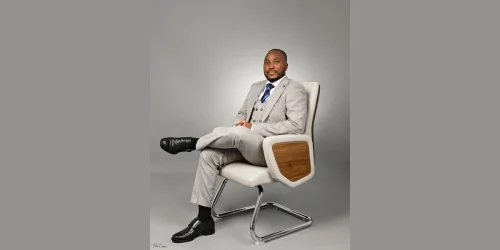
Every enduring institution’s defining story is rarely written in seasons of prosperity. It is forged in uncertainty, when leadership must choose between what is expedient and what is right. For GodMade Homes Limited (GMH Luxury), that defining moment came not with a landmark development or its eleventh anniversary, but in boardroom deliberations during one of Nigeria’s most turbulent economic periods: the floating of the naira. The anniversary, then, is more than a milestone. It affirms a philosophy the company has held since 2015: that real estate is, above all, a business of trust.
Through developments across Gbagada, Lekki and Ikoyi, GMH has pursued premium living balancing design, investment value and disciplined execution, but its distinctive strength lies in treating reputation not as the outcome of success, but as its foundation. That culture faced its greatest test in 2023. GMH had eight major off-plan developments underway, built on client commitments made before the naira’s sharp devaluation.
As the currency fell, imported material costs surged and budgets once thought prudent became detached from reality, a challenge felt across Nigeria’s entire real estate industry. The question: who should bear the cost of a crisis nobody had anticipated? GMH’s leadership faced two paths.
The pragmatic one, asking existing clients to absorb part of the added costs, was financially compelling and increasingly common across the industry. But it would have shifted the burden of a national economic shock onto customers who had acted in good faith, undermining a decade of trust for the sake of short-term financial performance.
GMH chose the harder path. Clients who had completed payments had their investments protected despite the altered economics of construction. Those still mid-payment were offered something almost unprecedented: a full refund if they chose not to continue under the new realities. The cost was significant. Between 2023 and 2025, GMH refunded more than ₦4 billion to clients who opted out of their payment plans. Capital that would have accelerated construction was redirected to these obligations, and the company borrowed, not to expand, but to honor commitments others in its position might have renegotiated. Sourcing fresh capital grew harder in a market where many developers were slowing projects or quietly retreating from earlier promises.

What sustained GMH was the confidence it had already earned. Long-standing investors and partners who had watched the company choose the difficult path over the easy one continued to back it, proof that integrity, though costly short-term, is often a sound long-term investment. As Managing Director and CEO Ayoolanrewaju J.
Kuyebi puts it: “It’s in the moment that you face your deepest weakness that you receive the chance to forge your greatest strength.”
Every one of the eight affected developments remained active, and, critically, none saw its quality standards diminished. Where compromise proved unavoidable, GMH chose to let it fall on delivery timelines rather than on construction quality, reasoning that schedules can be recovered but reputation cannot. Today, two flagship developments in Lekki and Ikoyi are being delivered to the standards originally envisioned, tangible proof of a decision made years earlier: to protect promises before margins. Beyond crisis response, GMH’s eleven-year growth reflects disciplined market judgment, identifying opportunities where genuine demand meets long-term investment potential, and treating innovation as a tool for transparency and trust rather than a fashionable add-on. As Kuyebi says: “Buildings are temporary achievements.
More Read

Trust is the permanent foundation upon which every enduring institution is built.”
That ethos runs through the wider team, architects, engineers, project managers and finance professionals, whose collective discipline carried the company through one of Nigeria’s most demanding economic periods without losing client, partner or investor confidence. As GMH enters its second decade, its most valuable asset remains neither its land bank nor its balance sheet, but the reputation built through decisions that placed long-term trust above short-term convenience. Eleven years have produced impressive buildings and thriving communities, but more rare, they’ve produced the quiet confidence that a promise, once made, will be honoured.