
Get the Popular Science daily newsletter💡
Breakthroughs, discoveries, and DIY tips sent six days a week.
By signing up, you confirm you are 16+, will receive newsletters and promotional content and agree to our Terms of Use and acknowledge the data practices in our Privacy Policy. You may unsubscribe at any time.
Week after week, like clockwork, your trash seems to vanish into thin air: Set the bin on the curb before bed and, by morning, it’s empty. In reality, an entire fleet of garbage trucks is crisscrossing the city, whisking away waste and keeping communities clean—often without anyone giving them a second thought.
These large, boxy vehicles might seem simple. But they’re sophisticated, highly engineered machines designed to repeatedly lift, crush, and haul tons of garbage. These heavy-duty trucks are equipped with hydraulic systems, compaction equipment, electronic controls, cameras, safety systems, automated lifting mechanisms, and braking and suspension systems designed for frequent stops. But how exactly do these high-tech machines on wheels do it? How do garbage trucks actually work?
“They’re built for one of the toughest jobs imaginable—stopping every few houses, lifting heavy loads hundreds of times a day, operating in all kinds of weather, and lasting for years under constant use, for eight to 12 hours per day,” Ryan Brettell, owner of Reliable Sanitation & Recycling in Raleigh, North Carolina, tells Popular Science.
Meet the workhorses of waste collection
Garbage trucks come in a variety of designs and configurations. But in today’s residential neighborhoods, two types do most of the heavy lifting (pun intended): rear-load and side-load trucks.
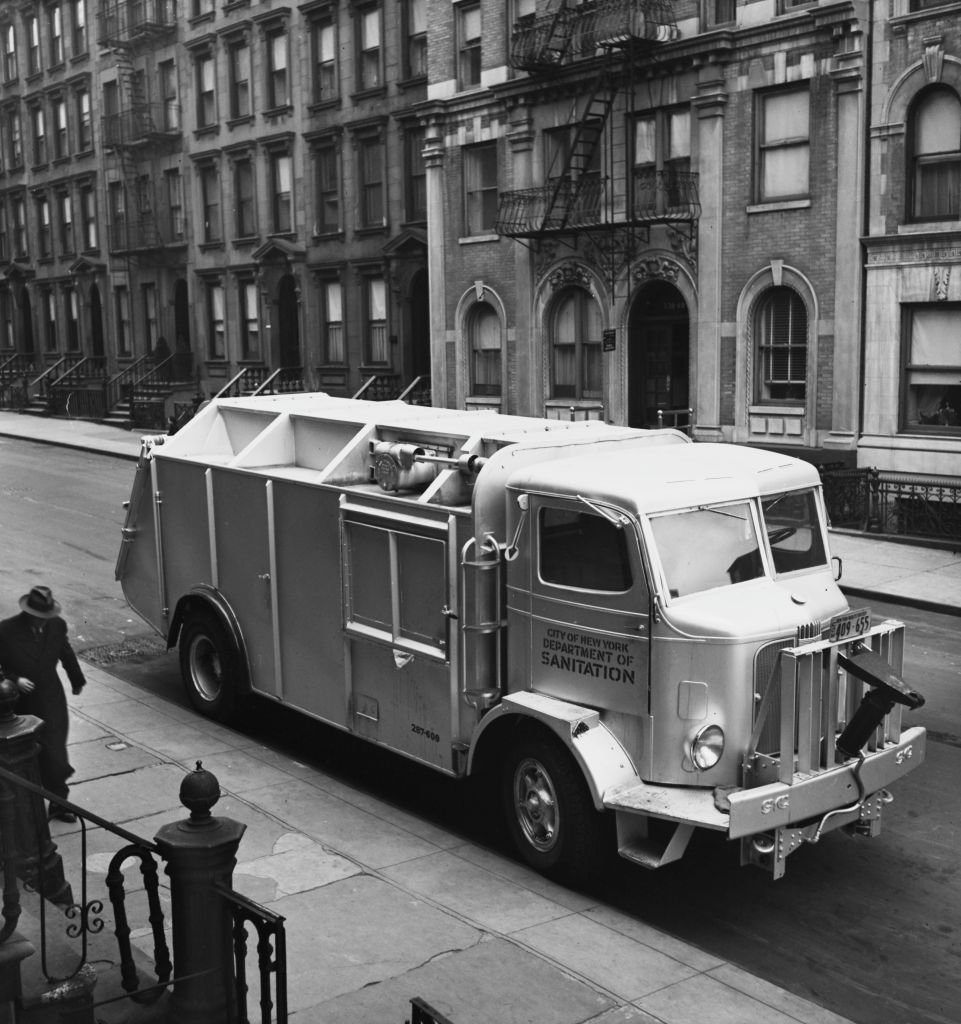
Rear-loaders are the classic garbage trucks most people picture, with workers grabbing and tossing trash bags into the back by hand or using a mechanical tipper to lift and empty curbside bins. Since catching on in the late 1920s and early ‘30s, they’ve been a staple of residential collection for decades and remain a practical, cost-effective option in many neighborhoods.
However, in recent years, side-loaders have increasingly replaced rear-load trucks in cities across the country, according to Ralph Sauceda, vice president of fleet and asset management for Republic Services.
Many side-load trucks are equipped with a hydraulic-powered robotic arm, usually positioned on the passenger’s side, that extends from the truck to lift, empty, and return curbside bins. Some side-loaders are outfitted with sensors that automatically pinpoint the location of the bin and align the robotic arm, says Sauceda. But, in others, the driver uses a joystick to manually align the arm. Overall, this design has made trash pick-up both safer and more efficient, since it requires just one employee, a driver, who doesn’t have to leave the cab, Sauceda says.
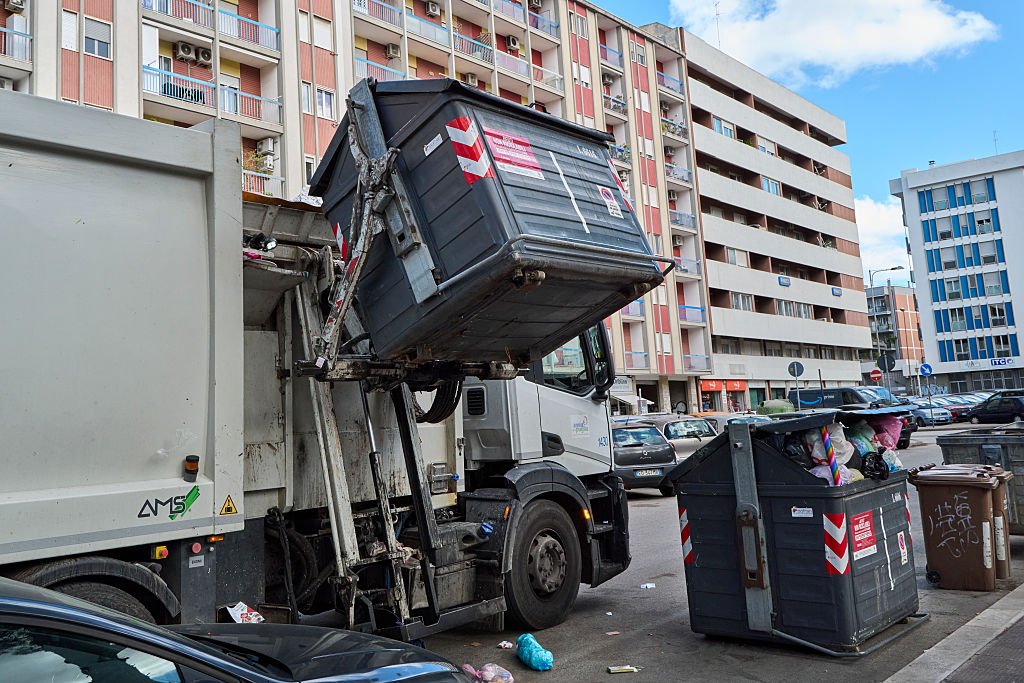
Scottsdale, Arizona, introduced the world’s first automated side loader in August 1969. Affectionately nicknamed “Godzilla,” the truck was the brainchild of Marc Stragier, then Scottsdale’s public works director, who sought to mechanize residential garbage collection in a city where summer temperatures in alleys often exceeded 120 degrees. The early design needed extensive tweaking—with subsequent models given names like “Son of Godzilla,” “Litter Pig,” and “Trash Hog”—but by the late 1970s, automated side loaders took off.
“[Side-loaders] are very common in residential neighborhoods today,” says Brettell.
With both rear-loaders and side-loaders, once the trash is collected, a powerful packing blade pushes it deeper into the truck’s cavernous body, which is known as the hopper. These hydraulic compactors “dramatically” increase how much trash each truck can carry before needing to unload, which helps reduce fuel use and operating costs, says Brettell. “Without compaction, trucks would fill up after only a small portion of their route,” he adds.
The entire pick up, dump, and compress process gets repeated “hundreds of times,” Brettell says, until the hopper is full. Then, the driver heads to a landfill, transfer station, recycling center, or waste processing facility, where a hydraulic ejector panel—essentially, a movable metal wall inside the truck—pushes the compacted waste out the back in one large mass. The vehicle is then ready for another route.
The people and technologies behind the trucks
Beyond these core trash collecting components, many modern garbage trucks also feature a suite of onboard technologies—from cameras and mirrors to GPS and onboard diagnostics systems.
Behind the scenes, garbage companies often use optimization systems to plot the most efficient routes for their trucks, taking into account the capacity of each vehicle, the anticipated traffic, the number of homes, the estimated trash amount, the offload location, and other factors, Sauceda says. Most of Republic Service’s side-load trucks, for instance, can hold between 12 and 14 tons of trash, he says, and the average household produces about 140 pounds of waste—across trash, recycling, and composting—per week.
Some companies, including Republic Services, are also incorporating electric garbage trucks into their fleets. They’re equipped with the same hydraulic systems, they’re just powered by batteries and electric motors instead of internal combustion engines, Sauceda says.
And while the driver may be the face of the operation, a much larger team—including dispatchers, maintenance technicians, environmental professionals, and operations staff—works behind the scenes to keep the process running safely and efficiently.
“Everone who is new to the industry has almost the exact same thought, which is, ‘How hard can it be? It’s just trash,’” says Sauceda. “Oh no, it’s a lot more complex than just trash.”
The unsung heroes of public health
Garbage trucks may not be glamorous. But, without these 40,000- to 60,000-pound behemoths rumbling through the streets each week, our cities would undoubtedly be a lot dirtier, more dangerous, and less functional.
“The industry doesn’t always receive much attention, but its impact on quality of life is enormous,” says Brettell, adding that removing trash protects public health by minimizing pests, diseases, and environmental hazards. “Waste management is one of those services that’s almost invisible when everything works well—but everyone notices immediately when it stops.”
In Ask Us Anything, Popular Science answers your most outlandish, mind-burning questions, from the everyday things you’ve always wondered to the bizarre things you never thought to ask. Have something you’ve always wanted to know? Ask us.
Related ‘Ask Us Anything’ Stories

2026 Popular Science Home of the Future Awards
39 products that will improve your everyday life.