

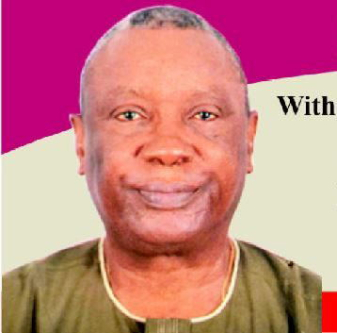
This week, we continue the series on why the House of Chiefs should be considered by the National Assembly.
He was labour officer, Federal Ministry of Labour, Lagos, 1962–1963; lecturer, University of Nigeria, Nsukka, 1963–1965; assistant professor of political science, California, 1969–1971; associate professor of African Studies, University of Maryland, Baltimore, Maryland, USA, 1972–1974; dean of studies, Institute of Management and Technology, Enugu, 1974–1976; and appointed director, National Policy Development Centre, May 1976. Mazi Samuel Goomsu Ikoku was a Nigerian trade unionist and politician. As a student at the University of Southampton, Ikoku supported Nigeria’s independence movement, writing articles printed by the West African Pilot.
After his degree, he joined the radical arm of the independence movement, working as an adviser to the Nigerian Federation of Labour led by Michael Imoudu and later co-founding the United Working People’s Party in 1952. A year later, the party was officially disbanded by the government after being branded subversive and communist. Ikoku later began a relationship with the Action Group (AG) that spanned the majority of the First Republic.
Mazi Ikoku sometimes spoke on national issues with a sense of candor; this style led to him being called a controversial figure by former Science and Technology Minister Sam Momah. Ikoku graduated from Achimota College and later studied at University College, Southampton. Beginning in 1946, Ikoku took interest in the independence movement led by Nnamdi Azikiwe. He began writing articles in Azikiwe’s West African Pilot criticizing the Legislative Council, in which his father was a nominated member, arguing against the council as an imposed government and aligning with Azikiwe’s ideas about immediate independence. While studying he met his future spouse, Eileen. He returned to Nigeria in 1949 and joined the civil service; during this time, he took up advisory roles with trade unions in the country. He left government work in 1951 to dedicate his time to the Nigerian Federation of Labour, which was seeking affiliation with the World Federation of Trade Unions.
Mazi Ikoku also joined a group of young socialists to form a short-lived political organization, the United Working People’s Party, independent of prominent individuals. During this time, he began publishing a journal with editorials supporting Stalinist ideas. Both the journal and the paper were disbanded by colonial authorities.
In the 1950s, Mazi Ikoku joined one of the mainstream parties when he became a member of the Action Group, which then had a strong organizational structure. Ikoku was immediately given the position of organizing secretary. In 1957, he won a regional House of Assembly election; in the assembly he represented the AG and served as the leader of the opposition. During the campaigns preceding the election, Ikoku’s father was contesting the same seat under the United National Independent Party.
Mazi Ikoku was a member of the Action Group’s socialist faction. This faction was to focus on ideology as a political campaign tool and believed in imperialism as a pressing danger.
In 1960, the party adopted democratic socialism as an ideology, but the party’s national executive and the Western regional premier leaned towards capitalism. In 1962, he traveled to Ghana days before the factional crisis engulfed the Western Region House of Assembly, leading to a state of emergency. Some factional members of the Action Group were later charged with treason.
In Ghana, Ikoku organized a branch of the party and also worked as a lecturer at Nkrumah’s Ideological Institute and as an editor for the Spark magazine, published in Ghana. During the Nigerian Civil War, Mazi Ikoku did not support secession. He was briefly detained after his return from Ghana but was later appointed commissioner for Economic Development and later Health in the East Central State. Mazi Ikoku broke ranks with former Action Group members and joined Aminu Kano’s People’s Redemption Party during the Second Republic. He was appointed Secretary-General of the party, which believed in the emancipation of the talakawa. He was Aminu Kano’s running mate in the 1979 presidential election, which was won by Shehu Shagari.
However, beginning during the twilight of the republic, Ikoku began to shift away from his socialist ideas. He left the PRP and became an adviser to Shehu Shagari of the National Party of Nigeria. He spoke of elongating the role of the military in Nigeria’s political affairs during the administration of Ibrahim Babangida and later served as deputy chairman of the Transition Implementation Committee during Sani Abacha’s regime. As deputy chairman, Mazi Ikoku argued that Abacha was free to succeed himself if the political parties agreed to draft him as their presidential candidate. He died in 1997. Mazi Ikoku was the stepfather of Patti Boulaye.
Professor Godwin Anibeze Odenigwe was born on December 12, 1925. He had his education at the Central School, Umabi, 1931–1932; St. Patrick’s School, Amokwe, 1937–1940; St. Thomas School, Udi, 1941; St. Charles Teacher Training College, Onitsha, 1942–1945; Morehouse College, Atlanta, Georgia, USA, 1950–1953; Clark University, Worcester, Massachusetts, USA, 1953–1957; University of London, England; called to the bar, Gray’s Inn, London, 1958; senior lecturer and head, Department of Government and Administration, Nigerian College of Arts, Science and Technology, Ibadan; senior lecturer and head, Department of Political Science, University of Nigeria, Nsukka; reader in political science, later professor of political science, University of Nigeria; and special adviser to the President for Political Affairs, 1979–1983.