

— Trial data showed significant increases in durable hemoglobin responses versus placebo
by Ian Ingram, Managing Editor, MedPage Today
August 25, 2026
• 2 min read
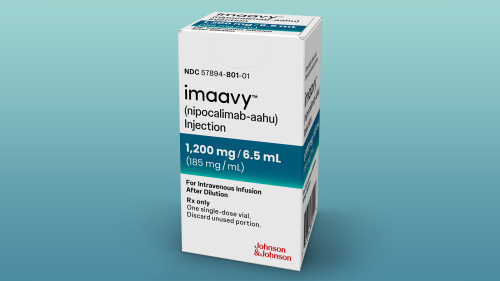
The FDA approved nipocalimab (Imaavy) as the first treatment for warm autoimmune hemolytic anemia (wAIHA), the most common form of autoimmune hemolytic anemia.
Approval of the immunoselective neonatal Fc receptor (FcRn) blocker stipulates use in adult and pediatric patients ages 12 years and up who have received corticosteroids or were previously treated with them.
Until now, standard treatments for wAIHA have included corticosteroids and immunosuppressants, which don’t target the underlying cause of the disease — the immunoglobulin G (IgG) autoantibodies that flag red blood cells for destruction by the immune system. Severe anemia and its sequelae follow, increasing the risks for morbidity and mortality. Nipocalimab reduces pathogenic IgG autoantibodies but preserves B-cell function.
Unlike in cold agglutinin disease — another rare hemolytic anemia — hemolysis in wAIHA occurs at normal temperatures or above, hence the “warm” moniker.
The approval was supported by ENERGY, a placebo-controlled phase II/III trial that enrolled wAIHA patients with low hemoglobin (Hgb) levels (<10 g/dL), evidence of hemolysis, and a positive direct antiglobulin test. Patients could stay on background medications for wAIHA.
At 24 weeks, a greater number of patients in the 30 mg/kg nipocalimab arm (delivered intravenously every 4 weeks) achieved a durable Hgb response versus the placebo arm (24% vs 8%, respectively), with responses defined as an Hgb concentration of at least 10 g/dL plus an increase of 2 g/dL or more from baseline for at least 28 days. Some improvements in fatigue were also associated with nipocalimab treatment.
“The phase II/III ENERGY study demonstrates that targeting pathogenic IgG can meaningfully change the treatment paradigm for wAIHA,” said David Kuter, MD, DPhil, of Harvard Medical School in Boston, in a statement from drugmaker Johnson & Johnson. “For patients, this approval means that they now have a therapy with a proven safety profile that targets the disease-driving autoantibodies in wAIHA.”
According to the labeling, common adverse events in wAIHA trials of nipocalimab included peripheral edema, diarrhea, and pyrexia — each occurring in at least 10% of patients. The warnings and precautions section also notes potential risks for infections, hypersensitivity reactions, and infusion-related reactions such as influenza-like illness, chills, or nausea.
Nipocalimab was first approved last year for generalized myasthenia gravis.