
Get the Popular Science daily newsletter💡
Breakthroughs, discoveries, and DIY tips sent six days a week.
By signing up, you confirm you are 16+, will receive newsletters and promotional content and agree to our Terms of Use and acknowledge the data practices in our Privacy Policy. You may unsubscribe at any time.
Any tourists driving the remote coasts of Wester Ross in the northwest Scottish Highlands would be forgiven for overlooking Gruinard Island. After all, this low, featureless hump has nothing on the dramatic sweep of the Summer Isles, with impressive peaks like Beinn Ghobhlach (“the forked mountain” in Scottish Gaelic) grabbing all the attention.
But this unassuming island holds decades of secrets in its soil. It has been the site of secret bioweapon tests, bioactivist plots, and a 50-year quarantine that sealed the island off for nearly half a century. This is the story of Anthrax Island.
The search for a World War II bioweapon
In 1942, British Prime Minister Winston Churchill dispatched a team of military scientists from the Porton Down military research facility to the northwest Highlands. He was afraid that the Nazis were planning to unleash a biological bomb. Eager not to be outdone, Churchill asked the scientists to test whether they could create a bioweapon for Britain using the bacterium Bacillus anthracis.
B. anthracis is a soil-dwelling bacterium that, for being only a few micrometers long, causes a lot of trouble. When the bacterium senses starvation, it forms specialized cells called spores, which can withstand radiation, heat, cold, and chemical disinfectants. These spores are also packed with toxins that cause anthrax in humans and other animal species.
The horrors of anthrax
This disease is no joke. In animals like cattle, there’s little outward sign of illness until the infected suddenly drop dead, says George C. Stewart, a retired microbiologist at the University of Missouri.
“At that point, they’re hemorrhaging out of all of their orifices, out of the mouth, the anus, any sort of lesions in the skin,” says Stewart. The thick, blackish blood that leaks out of these dying animals pours into the ground, infecting it with spores.
Humans are usually infected through contact with animals. Spores can enter through a cut in the skin or be inhaled or ingested. Each type of infection causes different symptoms, but can include black, swollen blisters, chest pain, fever, and chills.
Any infection can progress to a systemic disease that poisons the blood and body. Cutaneous anthrax, which enters the body through cuts or other breaks in the skin, is the least deadly form of the disease. But it still kills one in five people who become sick with it. However, a pre-exposure vaccine can provide protection.
Enter a remote Scottish island
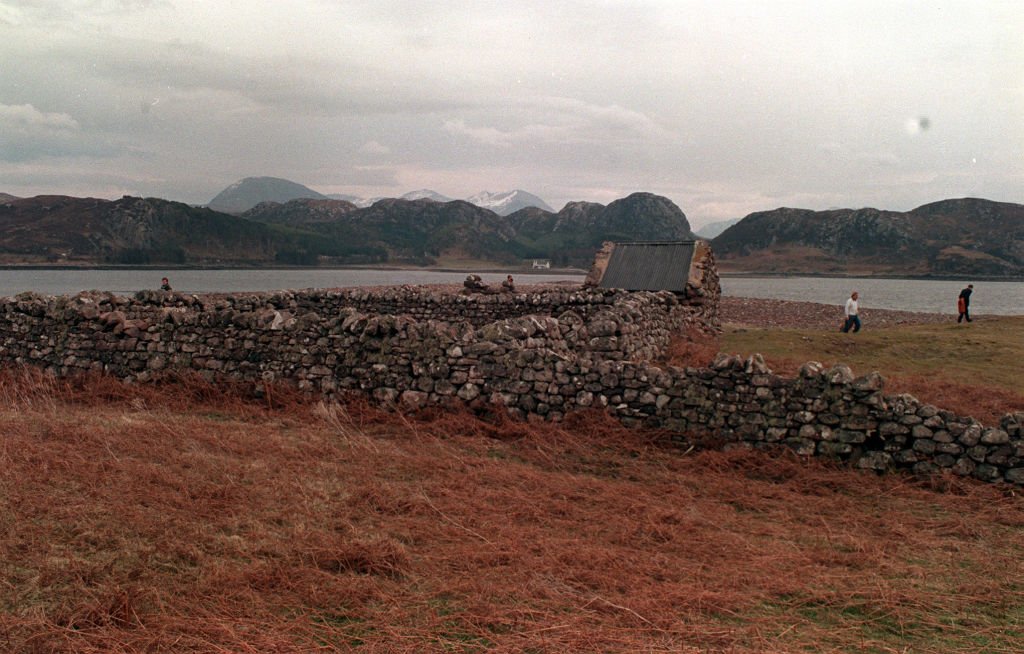
The British Ministry of Defense identified Gruinard Island as a viable site for testing the bacterium’s impact. It was uninhabited and separated from the mainland, but still accessible through a short boat trip. The scientists told locals nothing about what they were doing.
The details only really emerged 50 years later, when the Ministry of Defense released a video showing some of the experiments they had been conducting. In the grainy footage, containers filled with B. anthracis are placed facing a herd of sheep browsing on Gruinard’s low grasses, unaware of the danger.
The government had bought or borrowed sheep from the mainland, and shipped them over to the island. Needless to say, the sheep all died. Their corpses were burned or buried. The tests had worked, but arguably too well.
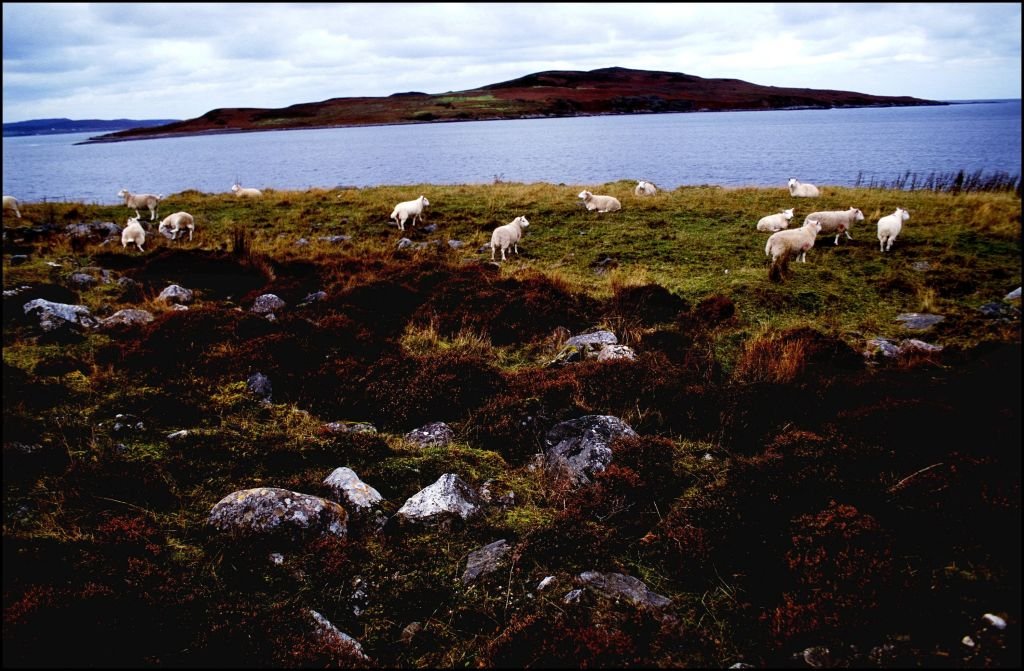
“Back in the early days of the war, there weren’t many studies, if any, talking about persistence of spores in [the] soil.” says Stewart. On Gruinard, the hardy spores hunkered down, waiting for a new host to infect—even decades later.
After killing the sheep, the government compensated locals for their dead animals, lying about how the sheep had died. They told locals the sheep had perished after they were exposed to a toxin released from a nearby Greek shipwreck.
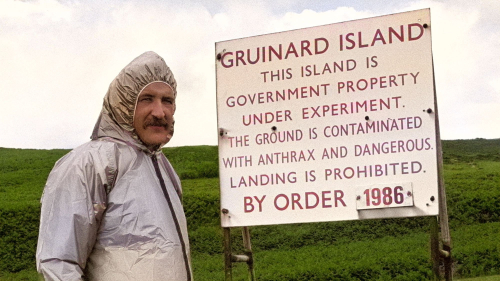
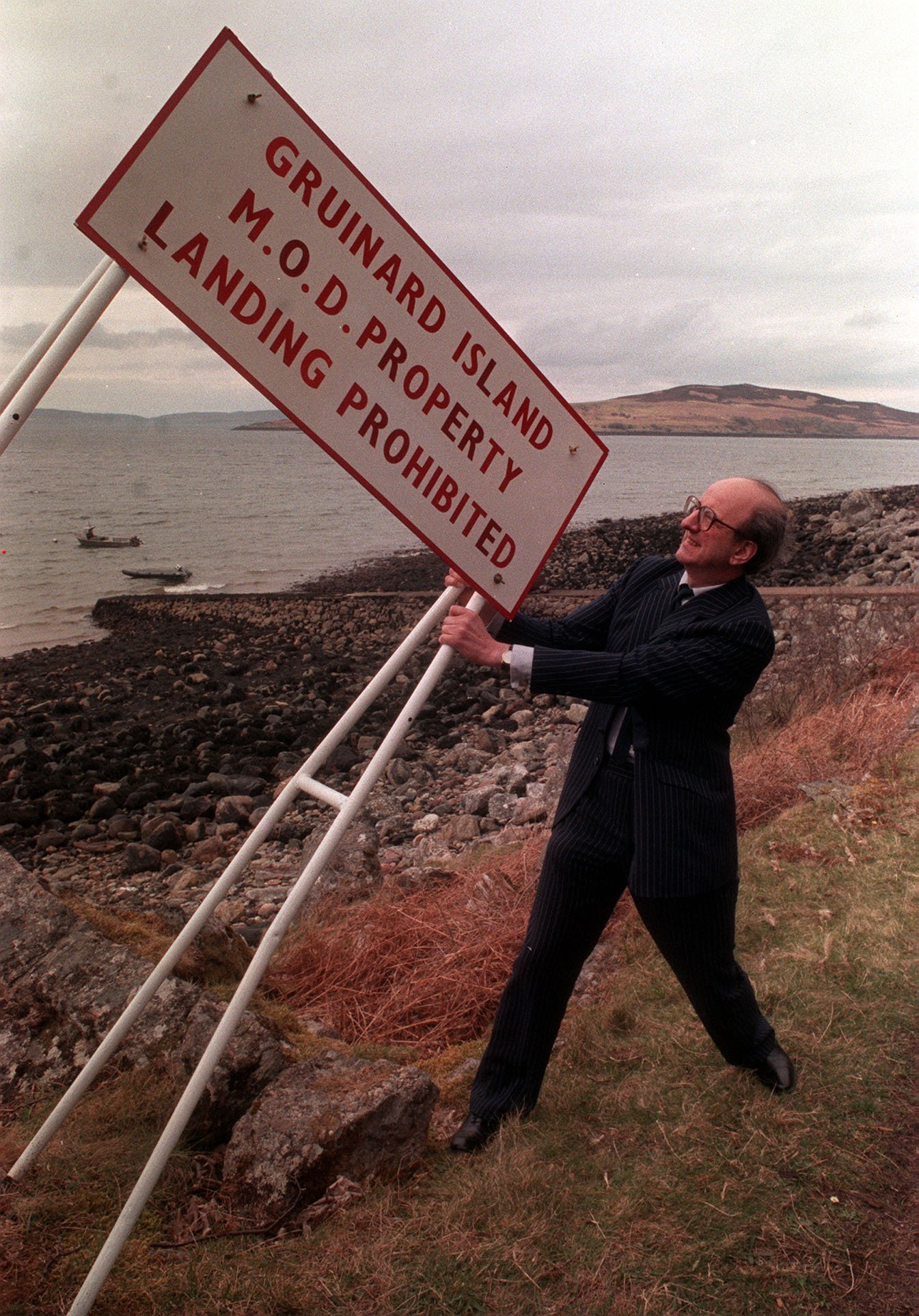
The British government then sealed the island off for the next 40 years. Incredibly, warning signs telling locals not to visit the island didn’t even mention the presence of a deadly bioweapon until the late 1960s.
An activist campaign reveals Gruinard’s secrets
Other scientists from the Porton Down military research complex revisited the island over the decades, finding that efforts to burn the bacteria had failed. In the mid-1980s, an activist group called the Dark Harvest Commandos decided they had had enough of the government’s indifference. They decided to put a spotlight on the contaminated island.
Dark Harvest sailed to Gruinard and dug up soil samples. Even decades later, anthrax spores can survive in these conditions, says Monika Ehling-Schulz, a microbiologist at the University of Veterinary Medicine Vienna.
“The spores allow the organisms to sleep for many, many years,” she says. Her team has dug up living anthrax samples that may have been dormant for 80 years in previous research.
The activists sent a letter to The Glasgow Herald newspaper. “By the time you read this, the campaign will have started in earnest. The first delivery will have been made—and where better to send the seeds of death than to the place from whence they came?”
The activist Commandos struck first at Porton Down. Outside the facility, researchers found a bucket of anthrax-infected soil. A few days later, another soil sample was left at the Blackpool Tower, where the ruling Conservative Party’s conference was being held.
Investigators who tried to unmask Dark Harvest scoured the local Highland communities, but got nowhere in their inquiries.
Then, the guerilla activists left a final letter pinned to the door of a government office later that year, stating that their aims had been met. Gruinard’s contamination was now headline news, and just a few years later, the government sent a major taskforce to the Highlands to tackle the islands’ unwelcome visitors once and for all.
Stewart explains that the scientists carted off the island’s entire topsoil layer. “Then they mixed formaldehyde with seawater and flooded the island several times.”
This approach isn’t a specialized technique for anthrax spores, says Ehling-Schulz. “Formaldehyde is going to kill everything,” she adds.
The strategy worked. By 1990, the government had declared Gruinard anthrax-free and removed the final warning signs prohibiting visits.
Now, visitors can travel to the island freely, and the bay surrounding it is a popular spot for kayakers who cut through the unusually blue waters. Even considering the persistence and peril of anthrax, Stewart reckons that the British government did properly decontaminate the island. It’s just a shame it took them nearly 50 years.
In That Time When, Popular Science tells the weirdest, surprising, and little-known stories that shaped science, engineering, and innovation.
Related ‘That Time When’ Stories

2026 Popular Science Home of the Future Awards
39 products that will improve your everyday life.