

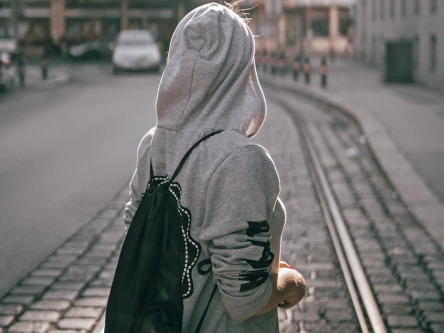
Children as young as seven are being exploited by brutal “county lines” drug dealers in the UK, a new report warns today.
Research by the Children’s Society found “alarming evidence” of primary school children being targeted by gangs who traffic drugs from urban to rural areas.
Police have previously found children as young as 10 linked to the 2,000 drug-dealing county lines estimated to be operating in the UK, but a new report found younger victims may be overlooked because they are below the age of criminal responsibility.
We’ll tell you what’s true. You can form your own view.
From
15p
€0.18
$0.18
USD 0.27
a day, more exclusives, analysis and extras.
They are being forced or coerced into moving drugs across the country, they work in cannabis factories, shoplift, pickpocket or act as enforcers, according to the report “Children are being cynically exploited with the promise of money, drugs, status and affection,” said Nick Roseveare, CEO of the Children’s Society.
“They are then controlled using threats, violence and sexual abuse, leaving them traumatised and living in fear.”
1/13
NCA has launched a touring photographic exhibition which aims to portray the signs of slavery and exploitation. Entitled ‘Invisible People’, the exhibition will tour the country as part of the National Crime Agency’s campaign to raise awareness of modern slavery and human trafficking.
National Crime Agency
2/13 Child trafficking
Child trafficking for sexual exploitation
Traffickers use grooming techniques to gain the trust of a child, family or community. The children
are recruited, transported and then sold for sex, often returning to their homes immediately afterwards, only to be picked up by the same people again. This is happening here in the UK, to migrant and British-born children.
Spot the signs of child trafficking:
Often, children won’t be sure which country, city or town they’re in.
They may be orphaned or living apart from their family, in unregulated private foster care, or in substandard accommodation. They may possess unaccounted-for money or goods or repeatedly have new, unexplained injuries.
National Crime Agency
3/13 Agriculture
Some workers in the farming sector, harvesting grains or root vegetables, tending livestock or fruit picking, are being exploited every day in the UK.
Victims of this crime in the agricultural sector are often Eastern European men and women, who were promised a job by traffickers, or they could be individuals on the fringes of society, homeless or destitute. Through threats, violence, coercion or forced drug and alcohol dependency, they’re enslaved, working for little or no money, living in squalid conditions having had their identity documents taken from them.
Spot the signs of exploitative labour in agriculture:
Agricultural slaves often have their wages paid into the same bank account, meaning an illegal gangmaster is likely collecting all their wages.
Exploited agriculture workers often don’t have suitable protective equipment, working instead in cheap sports clothing and trainers, and don’t have a different change of clothes from day-to-day.
National Crime Agency
4/13 Food processing
Polish or Slovakian men are brought to the UK with the offer of employment and, after arrival, gangmasters seize documents, opening multiple bank and utility accounts in their names – but
refuse to handover access to the accounts or bank cards. Hours are long and the work is gruelling and dangerous. Workers are abused and are controlled by threats of harm to their families at home.
Spot the signs:
Those exploited wear inappropriate clothes and often no safety gear – despite working with dangerous and life-threatening equipment. They may often have untreated injuries and be refused medical attention, and will live and work in agricultural outhouses.
National Crime Agency
5/13 Construction
Labour-intensive sectors like construction, where temporary and irregular work are common, are high-risk sectors for forced labour. With new homes, offices and buildings being constructed or upgraded in great quantity, labour exploitation is the second most common type of modern slavery, after sexual exploitation.
Spot the signs of exploitative labour in construction:
Exploited workers are often not provided with protective clothing or equipment, and may show signs of abuse or carry old untreated injuries.
Slave workers are also likely to work extremely long work hours for six or seven days a week without any leave.
Photographer Rory Carnegie, said: “I wanted this image to communicate that despite being forced to live, eat, wash and sleep – where they’re working, in cramped and unhygienic conditions, that there is a human instinct to domesticate. I wanted to show how there is still hope and dignity in the most squalid and difficult of circumstances.”
National Crime Agency
6/13 Maritime
In the tough maritime industry young men, often Filipino or Indian, Eastern European or African, are promised a better life, but instead find themselves in a cycle of debt and exploitation.
Unable to read, they are offered a job, given papers to sign and begin working on a trial-basis, only to be told they have failed and owe money, and have to work more to settle the debt. They may be forced to work for long hours in intense, hazardous and difficult conditions.
Photographer Rory Carnegie, said: “In the 80s, Chris Killip published a series of images called In Flagrante, and these images were at the forefront of my mind while composing this shot. I wanted to show the utter desperation of these men – how passed their limit they are. The broken floats and the entire decaying environment around him, I saw as a metaphor for his existence.”
Rory Carnegie/National Crime Agency
7/13 Forced prostitution
Each year, women from across Eastern Europe and West Africa are lured to the UK by the dream of a better life. Whether by fake migration services or unscrupulous individuals who befriend and then betray them, women fall into a dark spiral of sexual exploitation and forced, unpaid prostitution, unable to escape.
Photographer Rory Carnegie, said: “What I really wanted for this image, was to depict how women are used as commodities, the complete control slavery has over them – the helplessness of having to sit and wait for man after man, until no more men arrive. I wanted the image to show how lonely and eventually numbing that experience is, and for that ugliness to be contrasted against the bright blue of the wig – a fancy dress item that we would usually associate with a fun event – but here is used as a disguise, perhaps of her own identity to herself – to further emphasise how unjust the situation is.”
NCA
8/13 Cannabis farming
The cannabis industry hides a dark secret in the house next door. Gangs bring young boys to the UK from countries like Vietnam and deliver them to a house where, once in, they won’t be able to leave. Forced to tend cannabis plants that fill specially rigged houses, the boys are often locked in and forced to work, sleep and eat in one confined and dirty room. The chemicals used on the cannabis are poisonous, and often victims don’t know where they are or how to get help if they do escape. The eyes, ears and compassion of the local community are essential.
Spot the signs:
Aside from the strong and prolonged smell of cannabis, have you noticed a house that looks unusual? Are the windows covered or usual entry points blocked? Buildings might be over-heated – in very cold weather is the roof without frost, because the house is being kept warm to grow plants
National Crime Agency
9/13 Agriculture
Some workers in the farming sector, harvesting grains or root vegetables, tending livestock or fruit picking, are being exploited every day in the UK.
Victims of this crime in the agricultural sector are often Eastern European men and women, who were promised a job by traffickers, or they could be individuals on the fringes of society, homeless or destitute. Through threats, violence, coercion or forced drug and alcohol dependency, they’re enslaved, working for little or no money, living in squalid conditions having had their identity documents taken from them.
Spot the signs of exploitative labour in agriculture:
Agricultural slaves often have their wages paid into the same bank account, meaning an illegal gangmaster is likely collecting all their wages.
Exploited agriculture workers often don’t have suitable protective equipment, working instead in cheap sports clothing and trainers, and don’t have a different change of clothes from day-to-day
National Crime Agency
10/13 Forced prostitution
Spot the signs of forced prostitution:
Victims of this type of crime might appear withdrawn or scared, avoid eye contact, and be untrusting. Poor English language skills could indicate exploitation because it suggests someone else must be arranging the work. A brothel is likely to be an average house on a normal looking street, but may have curtains which are usually closed and many different men coming and going frequently.
National Crime Agency
11/13 Maritime
Spot the signs of exploitative labour in the maritime sector:
Victims might appear withdrawn or frightened, often unable to answer questions directed at them or speak for themselves,. They might be afraid of authorities like police, immigration or the tax office, and may perceive themselves to be in debt to someone else. They may not have been given proper protective equipment so can suffer illness or injury.
Photographer Rory Carnegie, said: “Throughout the series of images, I wanted to juxtapose the harshness of the lives of slaves against bright primary colours – colours we traditionally associate with happiness or a feeling of wellbeing – to provoke a reaction. The image, as rich as it is, communicates how completely uncomfortable this person is. I wanted to show how his body is not his own, and how he has no right to avoid hardship, avoid the ice, or wear better shoes, he is utterly controlled.”
Rory Carnegie/National Crime Agency
12/13 Food processing
Photographer Rory Carnegie, said: “This image communicates utter exhaustion and dejection. We can see how dire his situation is. He has no protective gear on, and we can see the extreme tiredness that leads him to a place of anxiety and distraction, where he doesn’t care about whether he’s operating machinery safely, or putting himself at risk.”
National Crime Agency
13/13
The exhibition comprises a series of large, freestanding cubes displaying images capturing snapshots of life within different types of modern slavery – in agriculture, construction, maritime, cannabis farming and food processing, child trafficking for sexual exploitation and forced prostitution.
Each image comes with written commentary describing what the viewer is seeing, and information about signs which may indicate someone is a victim.
National Crime Agency
1/13
NCA has launched a touring photographic exhibition which aims to portray the signs of slavery and exploitation. Entitled ‘Invisible People’, the exhibition will tour the country as part of the National Crime Agency’s campaign to raise awareness of modern slavery and human trafficking.
National Crime Agency
2/13 Child trafficking
Child trafficking for sexual exploitation
Traffickers use grooming techniques to gain the trust of a child, family or community. The children
are recruited, transported and then sold for sex, often returning to their homes immediately afterwards, only to be picked up by the same people again. This is happening here in the UK, to migrant and British-born children.
Spot the signs of child trafficking:
Often, children won’t be sure which country, city or town they’re in.
They may be orphaned or living apart from their family, in unregulated private foster care, or in substandard accommodation. They may possess unaccounted-for money or goods or repeatedly have new, unexplained injuries.
National Crime Agency
3/13 Agriculture
Some workers in the farming sector, harvesting grains or root vegetables, tending livestock or fruit picking, are being exploited every day in the UK.
Victims of this crime in the agricultural sector are often Eastern European men and women, who were promised a job by traffickers, or they could be individuals on the fringes of society, homeless or destitute. Through threats, violence, coercion or forced drug and alcohol dependency, they’re enslaved, working for little or no money, living in squalid conditions having had their identity documents taken from them.
Spot the signs of exploitative labour in agriculture:
Agricultural slaves often have their wages paid into the same bank account, meaning an illegal gangmaster is likely collecting all their wages.
Exploited agriculture workers often don’t have suitable protective equipment, working instead in cheap sports clothing and trainers, and don’t have a different change of clothes from day-to-day.
National Crime Agency
4/13 Food processing
Polish or Slovakian men are brought to the UK with the offer of employment and, after arrival, gangmasters seize documents, opening multiple bank and utility accounts in their names – but
refuse to handover access to the accounts or bank cards. Hours are long and the work is gruelling and dangerous. Workers are abused and are controlled by threats of harm to their families at home.
Spot the signs:
Those exploited wear inappropriate clothes and often no safety gear – despite working with dangerous and life-threatening equipment. They may often have untreated injuries and be refused medical attention, and will live and work in agricultural outhouses.
National Crime Agency
5/13 Construction
Labour-intensive sectors like construction, where temporary and irregular work are common, are high-risk sectors for forced labour. With new homes, offices and buildings being constructed or upgraded in great quantity, labour exploitation is the second most common type of modern slavery, after sexual exploitation.
Spot the signs of exploitative labour in construction:
Exploited workers are often not provided with protective clothing or equipment, and may show signs of abuse or carry old untreated injuries.
Slave workers are also likely to work extremely long work hours for six or seven days a week without any leave.
Photographer Rory Carnegie, said: “I wanted this image to communicate that despite being forced to live, eat, wash and sleep – where they’re working, in cramped and unhygienic conditions, that there is a human instinct to domesticate. I wanted to show how there is still hope and dignity in the most squalid and difficult of circumstances.”
National Crime Agency
6/13 Maritime
In the tough maritime industry young men, often Filipino or Indian, Eastern European or African, are promised a better life, but instead find themselves in a cycle of debt and exploitation.
Unable to read, they are offered a job, given papers to sign and begin working on a trial-basis, only to be told they have failed and owe money, and have to work more to settle the debt. They may be forced to work for long hours in intense, hazardous and difficult conditions.
Photographer Rory Carnegie, said: “In the 80s, Chris Killip published a series of images called In Flagrante, and these images were at the forefront of my mind while composing this shot. I wanted to show the utter desperation of these men – how passed their limit they are. The broken floats and the entire decaying environment around him, I saw as a metaphor for his existence.”
Rory Carnegie/National Crime Agency
7/13 Forced prostitution
Each year, women from across Eastern Europe and West Africa are lured to the UK by the dream of a better life. Whether by fake migration services or unscrupulous individuals who befriend and then betray them, women fall into a dark spiral of sexual exploitation and forced, unpaid prostitution, unable to escape.
Photographer Rory Carnegie, said: “What I really wanted for this image, was to depict how women are used as commodities, the complete control slavery has over them – the helplessness of having to sit and wait for man after man, until no more men arrive. I wanted the image to show how lonely and eventually numbing that experience is, and for that ugliness to be contrasted against the bright blue of the wig – a fancy dress item that we would usually associate with a fun event – but here is used as a disguise, perhaps of her own identity to herself – to further emphasise how unjust the situation is.”
NCA
8/13 Cannabis farming
The cannabis industry hides a dark secret in the house next door. Gangs bring young boys to the UK from countries like Vietnam and deliver them to a house where, once in, they won’t be able to leave. Forced to tend cannabis plants that fill specially rigged houses, the boys are often locked in and forced to work, sleep and eat in one confined and dirty room. The chemicals used on the cannabis are poisonous, and often victims don’t know where they are or how to get help if they do escape. The eyes, ears and compassion of the local community are essential.
Spot the signs:
Aside from the strong and prolonged smell of cannabis, have you noticed a house that looks unusual? Are the windows covered or usual entry points blocked? Buildings might be over-heated – in very cold weather is the roof without frost, because the house is being kept warm to grow plants
National Crime Agency
9/13 Agriculture
Some workers in the farming sector, harvesting grains or root vegetables, tending livestock or fruit picking, are being exploited every day in the UK.
Victims of this crime in the agricultural sector are often Eastern European men and women, who were promised a job by traffickers, or they could be individuals on the fringes of society, homeless or destitute. Through threats, violence, coercion or forced drug and alcohol dependency, they’re enslaved, working for little or no money, living in squalid conditions having had their identity documents taken from them.
Spot the signs of exploitative labour in agriculture:
Agricultural slaves often have their wages paid into the same bank account, meaning an illegal gangmaster is likely collecting all their wages.
Exploited agriculture workers often don’t have suitable protective equipment, working instead in cheap sports clothing and trainers, and don’t have a different change of clothes from day-to-day
National Crime Agency
10/13 Forced prostitution
Spot the signs of forced prostitution:
Victims of this type of crime might appear withdrawn or scared, avoid eye contact, and be untrusting. Poor English language skills could indicate exploitation because it suggests someone else must be arranging the work. A brothel is likely to be an average house on a normal looking street, but may have curtains which are usually closed and many different men coming and going frequently.
National Crime Agency
11/13 Maritime
Spot the signs of exploitative labour in the maritime sector:
Victims might appear withdrawn or frightened, often unable to answer questions directed at them or speak for themselves,. They might be afraid of authorities like police, immigration or the tax office, and may perceive themselves to be in debt to someone else. They may not have been given proper protective equipment so can suffer illness or injury.
Photographer Rory Carnegie, said: “Throughout the series of images, I wanted to juxtapose the harshness of the lives of slaves against bright primary colours – colours we traditionally associate with happiness or a feeling of wellbeing – to provoke a reaction. The image, as rich as it is, communicates how completely uncomfortable this person is. I wanted to show how his body is not his own, and how he has no right to avoid hardship, avoid the ice, or wear better shoes, he is utterly controlled.”
Rory Carnegie/National Crime Agency
12/13 Food processing
Photographer Rory Carnegie, said: “This image communicates utter exhaustion and dejection. We can see how dire his situation is. He has no protective gear on, and we can see the extreme tiredness that leads him to a place of anxiety and distraction, where he doesn’t care about whether he’s operating machinery safely, or putting himself at risk.”
National Crime Agency
13/13
The exhibition comprises a series of large, freestanding cubes displaying images capturing snapshots of life within different types of modern slavery – in agriculture, construction, maritime, cannabis farming and food processing, child trafficking for sexual exploitation and forced prostitution.
Each image comes with written commentary describing what the viewer is seeing, and information about signs which may indicate someone is a victim.
National Crime Agency
The report found that teenagers aged between 14 and 17 are most likely to be exploited by criminal gangs but children of all ages were at risk.
Because victims are frequently armed to protect their stash of drugs, the practice has been linked with rising knife crime across the country.
The deputy head of a primary school in Manchester told of a “web of exploitation” where exploited teenagers abuse younger children. “There are a couple of children we know of who are 10 and younger who have been caught up in this,” they said.
“I once saw one of the 10-year-olds taking free fruit from the local supermarket and giving it to the older boys outside. This was a test of loyalty and an exercise in seeing what the boy was prepared to do for them – that’s how it starts. They’re easy targets as they’re seen as sweet and small, and because of this they don’t get caught or end up in as much trouble as older children.”
In another area of the UK, a youth worker said that when they challenged an eight-year-old boy’s mother about his “grafting”, she replied: “Well, we need money.” The report warned that because 10 is the age of criminal responsibility, there was a “lack of recognition” of younger children’s roles.
For older children, researchers said attitudes they were “complicit” in their own exploitation persisted despite police increasingly referring them for support as modern slaves.
“The professionals we spoke to reported increasing concerns with perpetrators targeting primary school children,” the Children’s Society said. “Perpetrators observe and scout for children perceived as being ‘naughty’ – those children who are already pushing societal expectations and boundaries like throwing stones through windows, or who are perceived to be ‘easily convinced’.”
The report found that children were being groomed by perpetrators using “unmet needs”, such as money, friendship or protection, to gain power. Those affected by family breakdown, living in poverty or excluded from school may be deliberately targeted, the report said, as well as those who want to “fit in” or make money.
Researchers said young children can be drawn in because of family connections to older siblings involved with county lines gangs, or parents with drug additions. The grooming process may start with children being persuaded to “keep watch”, then escalate with requests to stash drugs, weapons or money and finally to become couriers.
The report documented rape threats towards the sisters of child victims; threats using knives and guns; family homes being vandalised and perpetrators committing violence in front of children so they “know what that person is capable of”. The Children’s Society warned of a “significant overlap” between criminal and sexual exploitation, which is believed to be under-reported for boys linked to county lines gangs.
Researchers found they may be abused either as a method of control by leaders, or for “commercial purposes”. “[Boys] will be forced to touch someone, threatened with violence or be pictured kissing one of their friends or something, and that will be used then as a way to control them,” a charity worker said.
The report warned that authorities predominantly consider girls involved in county lines gangs under sexual exploitation protocols, and boys under criminal exploitation protocols, despite there being “elements of both forms experienced by children of all genders”. Sexual violence can also include the forcing of victims to conceal drugs inside their bodies, presenting serious health risks.
The research warned that criminals are adapting their tactics to avoid detection, such as by using children to carry drugs in their home areas and on “shifts” to avoid missing persons’ alerts. The Children’s Society called for police forces and councils to improve how they record data on exploited children, and to ensure they are referred to the National Referral Mechanism for modern slavery, rather than treated as criminals.
“The response from statutory agencies is too often haphazard and comes too late, and a national strategy is needed to help improve responses to child criminal exploitation,” Mr Roseveare said. “This should mean better early help for children and training for professionals, access to an advocate to ensure all children are supported as victims, and a greater focus on disrupting and bringing to justice the perpetrators who are exploiting them.”
The government has been rolling out independent child trafficking advocates who support children who have no parents or guardians, and is considering a “public health approach” to violence. But it has refused calls for blanket immunity for children involved in county lines, saying that prosecutions must be considered on a case-by-case basis.
A Home Office spokesperson said: “Tackling county lines is a key government priority and we are determined to disrupt the gangs that are devastating our communities, and put an end to the violence and exploitation of vulnerable children.
“Our Serious Violence Strategy includes a range of actions to crack down on county lines, and through this we have provided £3.6m to establish the National County Lines Co-ordination Centre which has resulted in 1,600 arrests and the safeguarding of 2,100 individuals since its launch in September 2018.
“We are clear that multi-agency working is at the heart of our approach, and are committed to ensuring children and young people exploited through county lines receive the help and support they need, as well as investing over £220m to support early intervention projects.”