
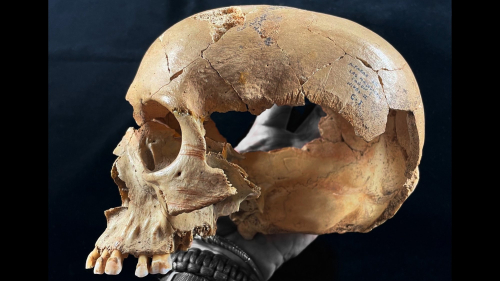
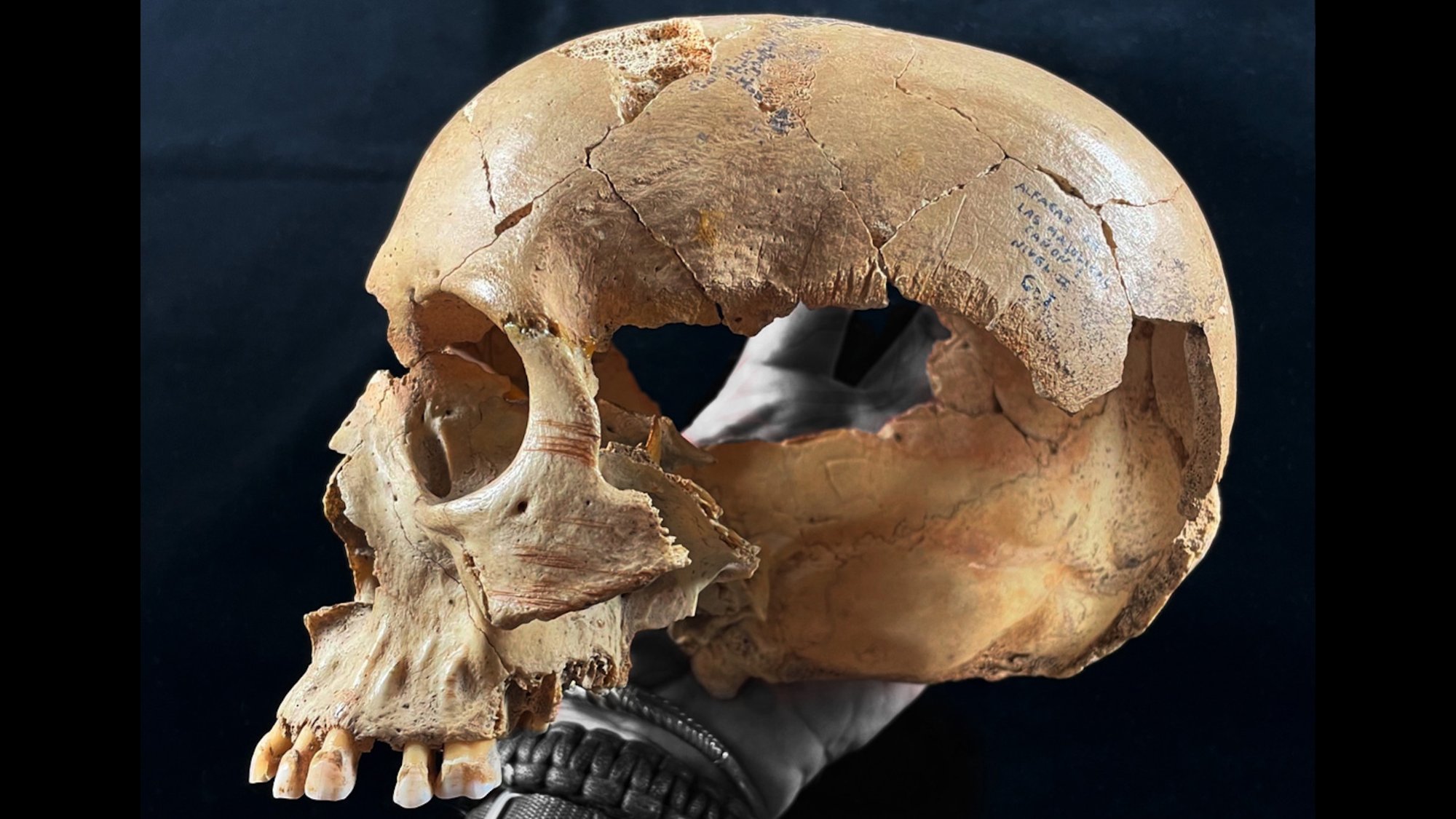
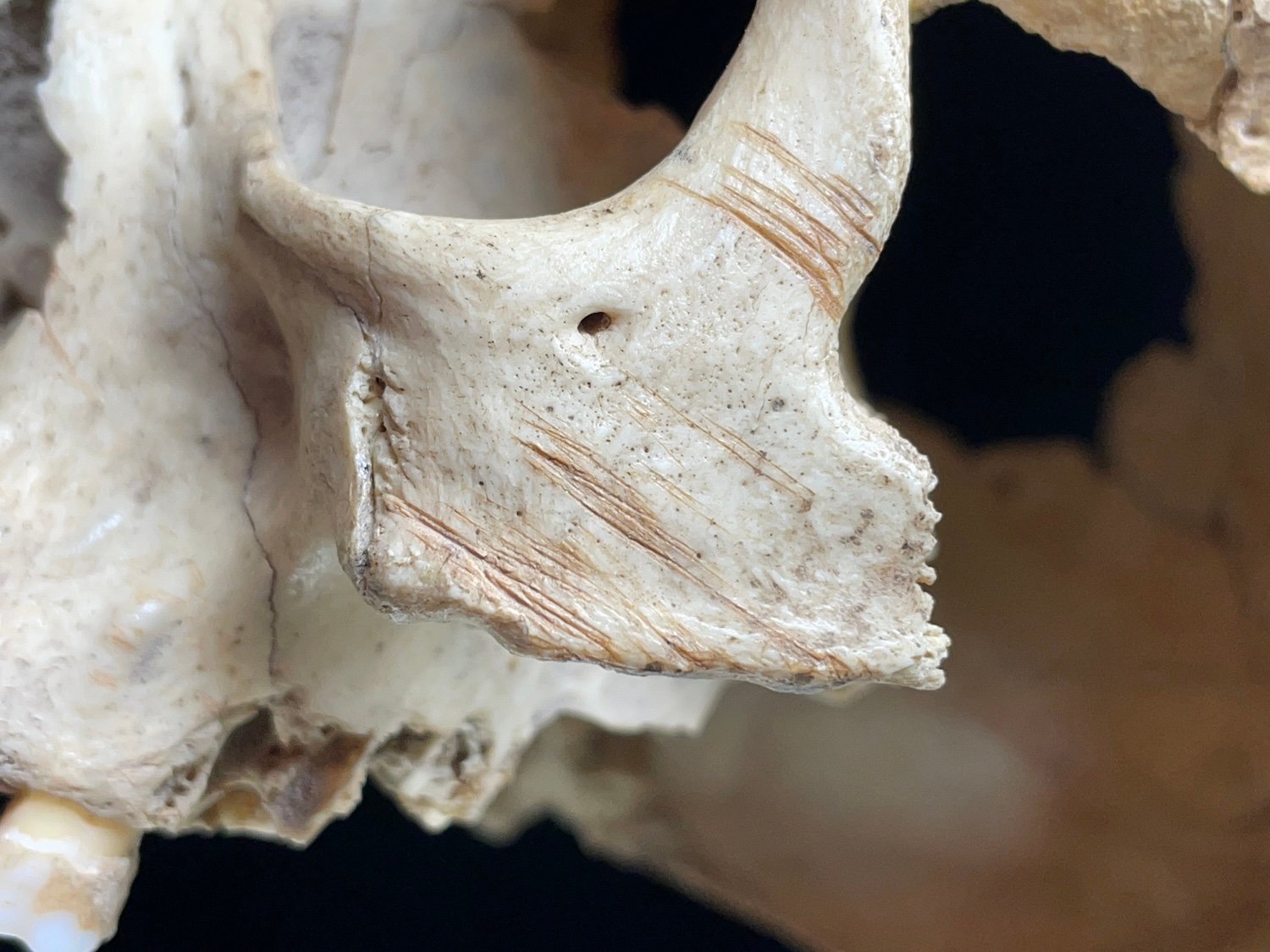
An adult Neolithic skull from Majolicas cave shows cut marks from butchering.
Credit: Antonio Rodríguez-
Hidalgo / IAM-CSIC
Get the Popular Science daily newsletter💡
Breakthroughs, discoveries, and DIY tips sent six days a week.
By signing up, you confirm you are 16+, will receive newsletters and promotional content and agree to our Terms of Use and acknowledge the data practices in our Privacy Policy. You may unsubscribe at any time.
Cannibalism is understandably frowned upon today,but humans haven’t always been so adverse to the idea of eating our own. Across Europe, multiple archaeological sites indicate at least some Neolithic communities routinely consumed unlucky victims as far back as 5000 BCE. But inside three caves in present-day Spain, ancient skeletal remains vividly illustrate that prehistoric groups never adopted a “one-size-fits-all” approach to their cannibalism. As researchers explained in a study recently published in the Journal of Archaeological Science, a range of methods and motivations for cannibalism existed among Neolithic peoples prior to the Bronze Age.
“For decades, prehistoric cannibalism has tended to be interpreted as a single type of behavior,” Antonio Rodríguez-Hidalgo, a study co-author and archaeologist at the Institute of Archaeology of Mérida, explained in a statement. “Our work shows that it is not possible to speak of a single form of ‘Neolithic cannibalism’, because similar archaeological evidence may conceal very different social realities.”
Hidalgo / IAM-CSIC Antonio Rodríguez-Hidalgo
The latest evidence originated inside Malalmuerzo, Carigüela, and Majolicas,a trio of caves located in the Grenada region of southern Spain. Archaeologists first discovered the Neolithic gathering spots over 50 years ago, and the caverns have since become famous examples of prehistoric cannibalism. Rodríguez-Hidalgo’s team re-examined almost 1,000 bones excavated from the caves, then combined their observations with statistical analysis and machine learning programs to classify the various types of damage exhibited on every fragment. These markings included fractures, cuts, blunt impacts, and even teeth marks. They also determined each subject’s estimated age based on skeletal and dental development.
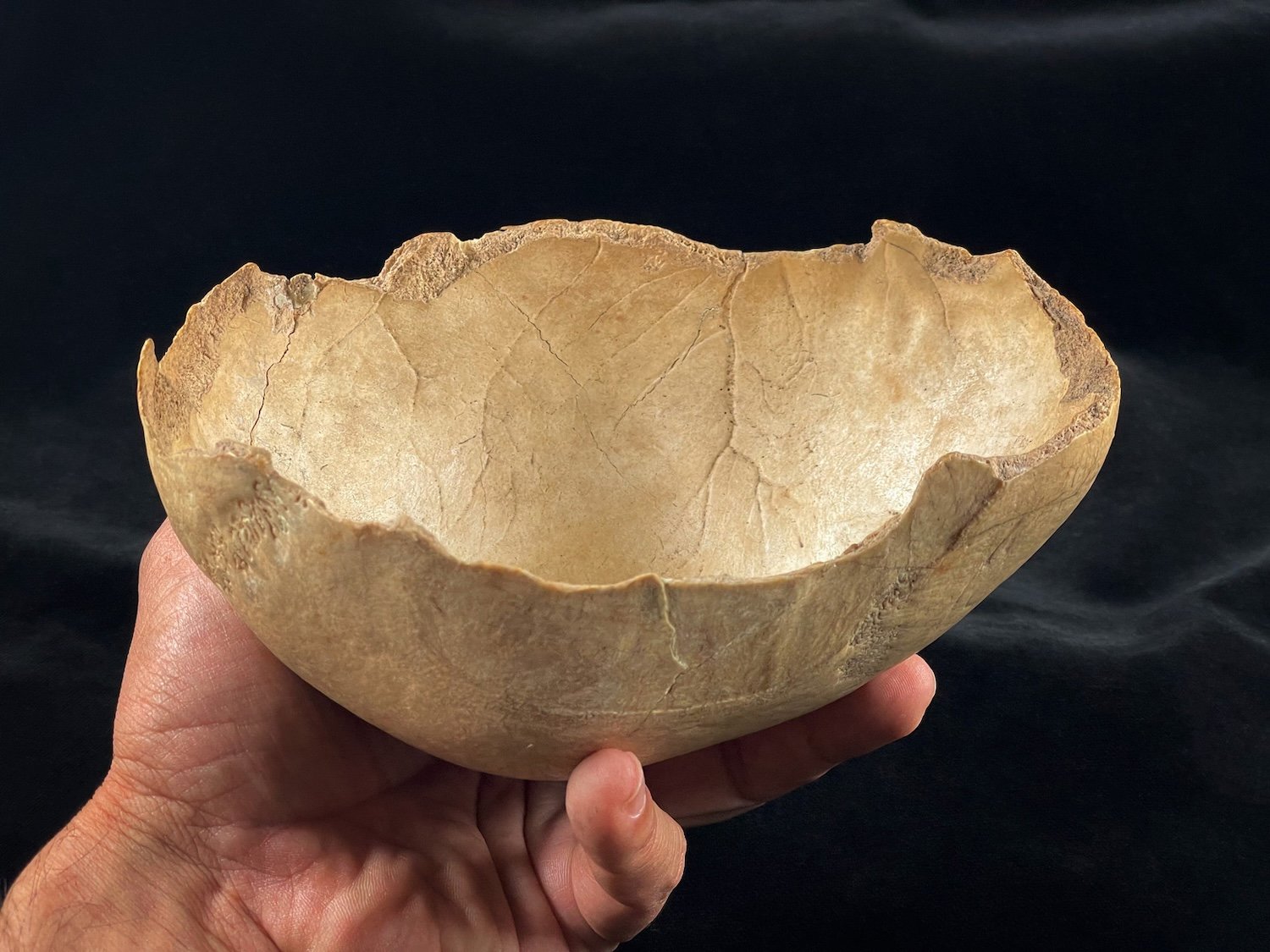
Although many bones show similar butchering techniques and boiling preparations, each cave’s specimens highlighted different practices and contexts. At Malalmuerzo, it appears that a single, brutal act of collective violence involving victims across many age groups took place about 5000 BCE. However, the remains at Carigüela span multiple Neolithic time periods, and even include a pair of skulls fashioned into drinking cups. The most recent cannibalism occurred in Majolicas around 3800 BCE, but doesn’t appear directly tied to violence. Instead, some of the bones are stained red—likely using a rare mineral called cinnabar—which points to ritualistic or funerary motives.
Combined with other archaeological findings, it now appears that cannibalism during the European Neolithic historically occurred in three eras:the late sixth millennium BCE, the middle fifth millennium BCE, and the end of the third millennium BCE. Although traceable to these periods, it still remains unclear why the communities engaged in the practices and rituals.
“We cannot say that all these episodes had a common cause, but we can say that throughout the Neolithic… there was a context of conflict and/or manipulation of human remains,” added archaeologist and study co-author Palmira Saladié.

2026 Popular Science Home of the Future Awards
39 products that will improve your everyday life.