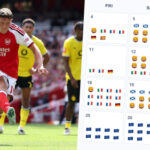


Researchers found over 5,500 overtly racist messages directed at members of the Three Lions squad from a sample of 300,000 posts on X during the 2026 World Cup. The findings show that while racial slurs made up one-to-two per cent of sampled tournament posts, abusive content doubled to between four-and-five per cent on match days. The volume of racist posts then escalated significantly following England’s semi-final loss to Argentina.
Online racial abuse of England players at World Cup peaked after semi-final defeat
England were knocked out by old foes Argentina in the last four (Image credit: Julian Finney – FIFA/FIFA via Getty Images) Online hostility was concentrated on specific players and driven by high-profile viral accounts. Jude Bellingham received the highest overall volume of racist posts, while Kobbie Mainoo – who did not play a single minute – and Bukayo Saka experienced the highest proportion of racial abuse relative to total mentions. Defender Djed Spence was also subjected to anti-Muslim abuse. Bukayo Saka and England teammate Marcus Rashford suffered similar abuse following their missed penalties in the Euro 2020 Final (Image credit: Getty Images) Campaigners argue that standard remedies, such as blocking individual accounts or restricting platform access for under-16s, fails to address the core problem: algorithms engineered to maximise platform traffic and advertising revenue prioritise controversy and outrage. “Our research shows that hate targeting footballers follows a clear and predictable pattern,” said Patrik Hermansson, senior researcher at HOPE not hate.
“It focuses on specific players and is, to a significant degree, driven by a small number of high-profile actors who benefit from the anger and attention they generate. The best features, fun and footballing quizzes, straight to your inbox every week. “This is not new or unexpected, and platforms should no longer be able to treat it as such.”
Taylor Gese from the Future of Tech Institute has accused regulators of failing to enforce existing powers, noting that social media firms do not deploy available safety features because ‘outrage drives engagement, and hate sells.’
More Read
Ahead of the new domestic season, advocacy groups are urging media regulator Ofcom and the UK government to classify major fixtures as high-risk events and to ensure tech platforms no longer amplify outrage, viral hate and mass harassment.