
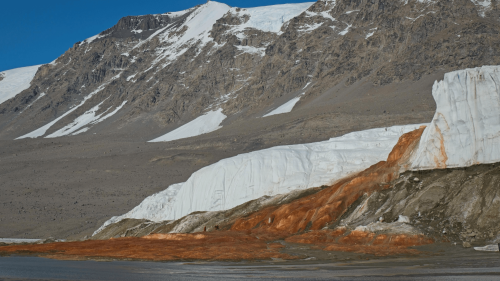
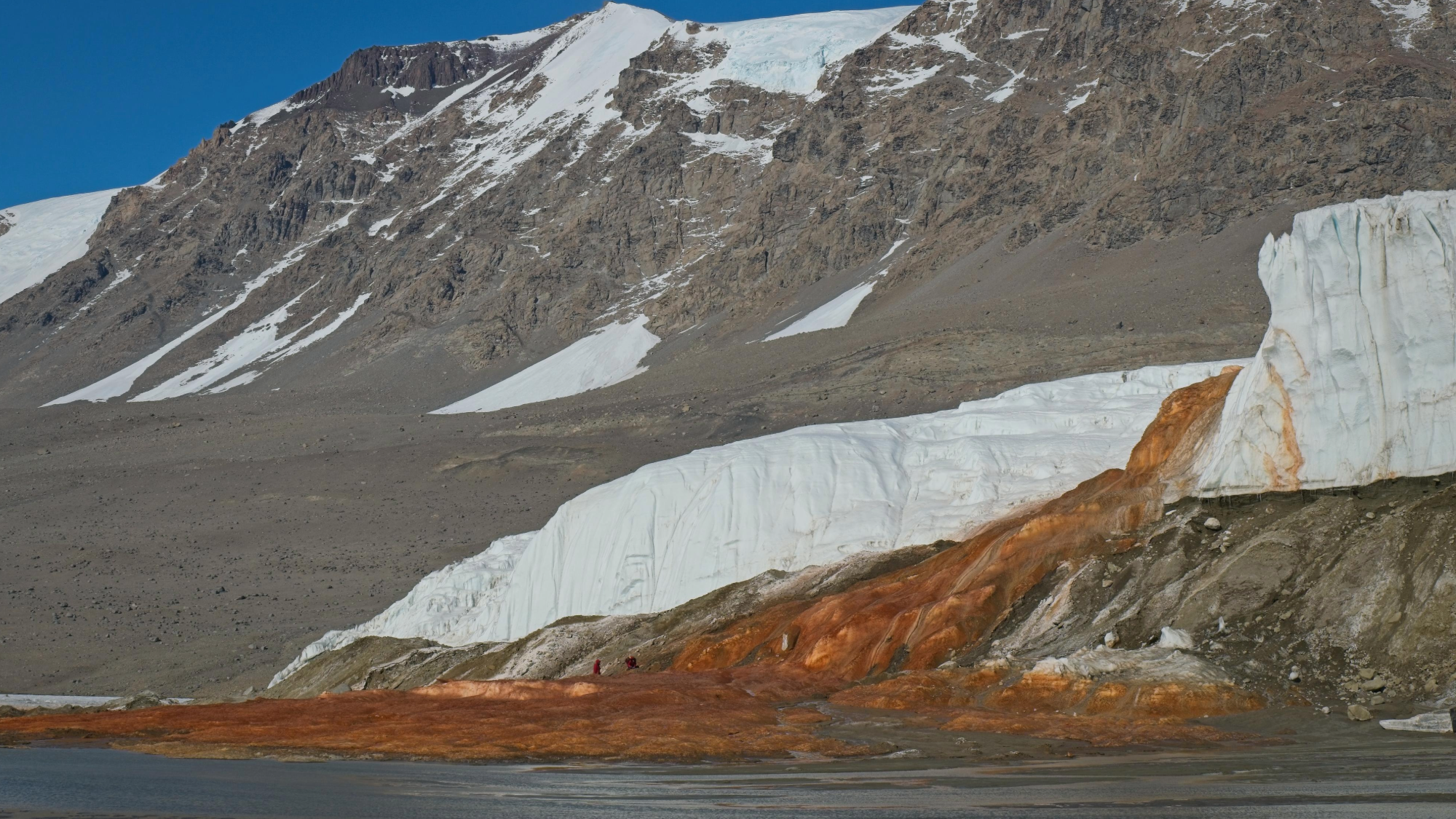
Blood Falls at Antarctica’s Taylor Glacier. Iron-rich subglacial brine emerges, creating the striking red outflow.
Image: Bryan Minnea
Get the Popular Science daily newsletter💡
Breakthroughs, discoveries, and DIY tips sent six days a week.
By signing up, you confirm you are 16+, will receive newsletters and promotional content and agree to our Terms of Use and acknowledge the data practices in our Privacy Policy. You may unsubscribe at any time.
Antarctica is in the red. Well, at least the continent’s striking Blood Falls are. Situated on the eastern edge of the Taylor Glacier in the McMurdo Dry Valleys of Antarctica, this dramatic outpouring of crimson water plunges into Lake Bonney. Its signature hue comes from the iron-rich brine cascading down the rock face, but exactly where that water came from is not clear. However, one thing is now clear—that salty water is bustling with marine life, despite being miles away from the ocean.
According to a study published today in the journal Nature Geoscience, the water flowing through Blood Falls has a distinct community of marine organisms. The presence of these salt water-specific organisms indicates that the water system beneath the glacier has a marine origin.
“Finding what is effectively a thriving marine oasis in a polar desert—more than 20 miles from the ocean—was extraordinary,” Andrew E. Allen, a study co-author and microbial ecologist at the University of California, San Diego, tells Popular Science. “The diverse microbial community we found retains a biological connection to an ancient marine environment while demonstrating the remarkable resilience and adaptability of life.”
Previous geochemical studies of the area suggested that the water source that feeds Blood Falls likely originated when seawater flooded the Taylor Valley during past warm periods. The water source was then isolated beneath the advancing Taylor glacier when sea levels fell.
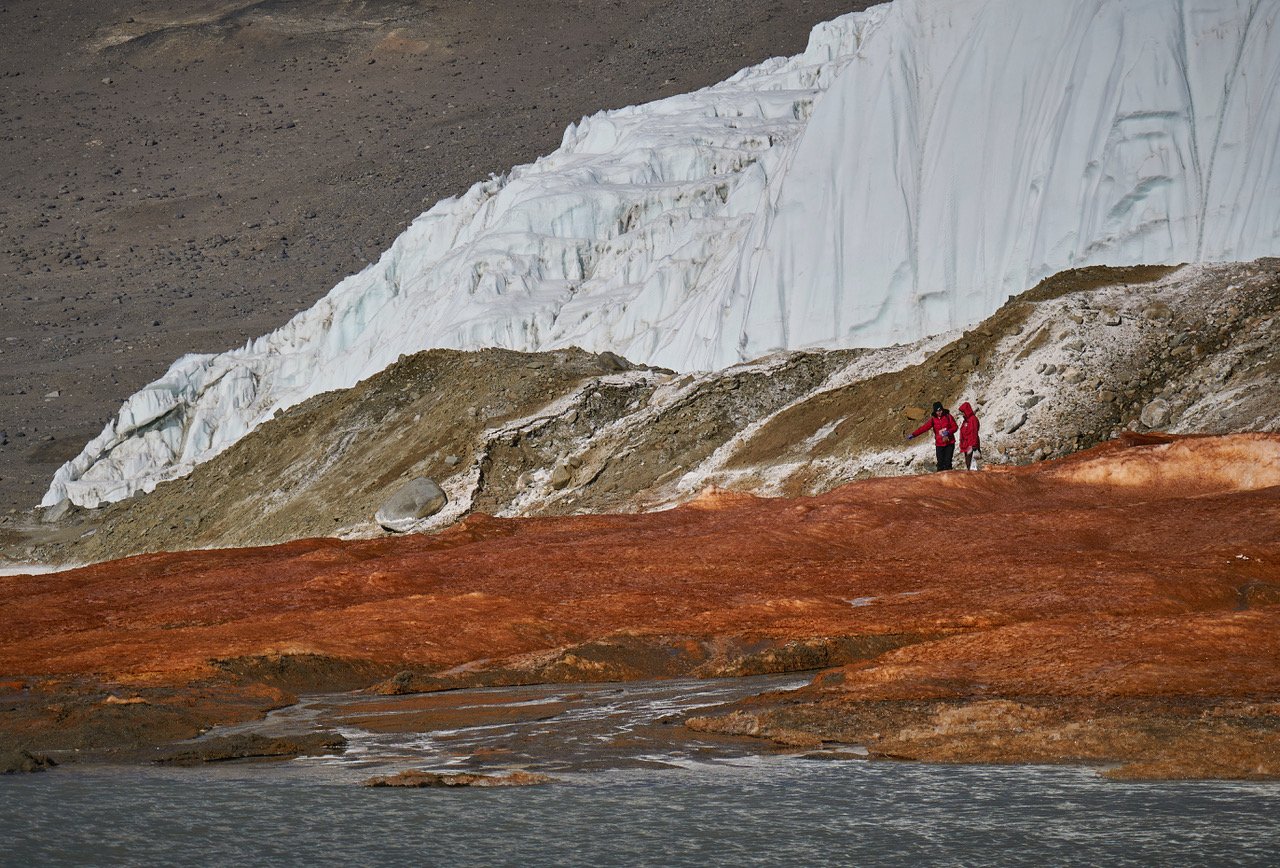
To learn more about the origin of the microbes at Taylor Glacier and Blood Falls, the team analyzed 167 samples of water, sediment, and air. They used several genetic techniques to identify the microorganisms in each sample. They found that the microorganisms in the red ice, sediment, and mud at the lowest edge of the glacier (called a terminus) were almost entirely associated with marine environments. The surrounding sites were dominated by organisms found in freshwater and on land.
“The biological activity that we observed from mRNA analyses suggests that this relic marine community isn’t just frozen in time but has somehow persisted despite a very dramatic change of environment,” Allen explains. “The distance these communities reached in the Dry Valleys could be really important for interpreting the extent of ancient flooding.”
In future studies, the team hopes to do more genomic sequences to get a better understanding of when these communities of tiny terrestrial and marine microbes split apart from one another.
“Life never ceases to amaze,” says Allen. “If we look sensitively enough, we repeatedly find things that we didn’t expect to find.”

2026 Popular Science Home of the Future Awards
39 products that will improve your everyday life.