

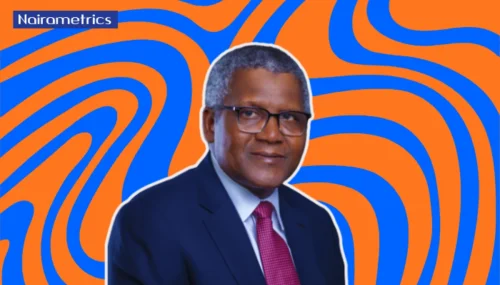
I saw a report yesterday where Aliko Dangote’s daughter was announcing that the Forbes-rated billionaire would seed one-third of his estimated $35 billion wealth, which would translate to about $11 billion, to charity focusing on Health and Education. The first thing that came to my mind was the loud, annoying Igbo billionaire whose symbolism of parochialism towards wealth and its uses evidences a shallow understanding of life and its functions. Let me quickly say before I continue that the labelling of the anachronism of my talk as an Igbo billionaire is not meant to disrespect a hard-working tribe but meant to describe a tendency of fast and ostentatious wealth that is not riddled with fastidious thinking and impact-led funnelling of such wealth. This type is found in every single tribe in this country, including my super minority Ibibio tribe. The ‘money na water gang’ are the type of new rich who came about their wealth either through significant legitimate means or illegitimate means.
But what marks them out is the fast spending, lavish engagements and almost non-thinking use of wealth. For this crew, the term generational or institutional wealth has no say in their lives, and as expected, they run dry very quickly or, at best, at their demise since they had not built wealth or structured it strategically. Institutional wealth is usually the fastest route to generational wealth, which in turn allows for the constructive deployment towards impact. We are well-versed with the stories of the Rockefellers and the Carnegies, and I’m quite excited that the Dangotes, Otedolas, Baloguns, Elumelus are leading the way in this regard.
Wealth at the level of the Dangotes and his peers comes with enormous responsibility. It is no longer within the purview of its owner’s immediate family since there is more than enough to go round for generations till eternity, and this is why it usually is deployed towards impact in the way Aliko has been doing, and has tried to entrench even after his passing. Thankfully, what is coming to the fore is that the mindset needed for generational wealth is what is needed to even grow it in the first place. If you approach wealth creation the Obi Cubana way, you would—if lucky—amass a few billions that would cater for the irresponsibility that is the show-off class. True, at that level, ‘money na water true true’ because it will flow away from you at the appointed time. Nigeria is littered with sad stories of yesterday’s monied men whose wealth now gathers dust and assets dying away with it being of no use to even their immediate family, talkless of society.
Generational wealth is steady and sturdy; it is calm and snobbish; it lends itself to control and discipline and comes with respect and hard work. What Aliko is doing is to ensure it is depersonalised, subject it to corporate governance and ringfence it so that it can meet its objectives. This is essentially what the true wealthy do with their wealth as against the here today gone tomorrow monied class. Like the Rockefellers, Aliko has made sure that he continues to impact long before he has gone with this foundation. With a start-up fund of $11 billion that would be obviously brilliantly managed, you will see robust growth, putting it in a strong position to continue to impact long when we are all gone. It is for this that a society like ours with a growing poverty level should remain grateful to Aliko and his ilk who are thinking very succinctly at incremental impact as against the ‘money na water’ crew whose wealth remains temporary in the first place.
This was a well-thought-out initiative which I must say is not unique in its stead since Nigeria can boast of similar initiatives like Tony Elumelu ‘s TEF, Femi Otedola’s child and education initiatives, to mention just these two out of a plethora. Good move Sir. Edgar is the convener of The Dukes International Masterclass on Crisis Management and Reputational Management, holding this October in Abuja and London