

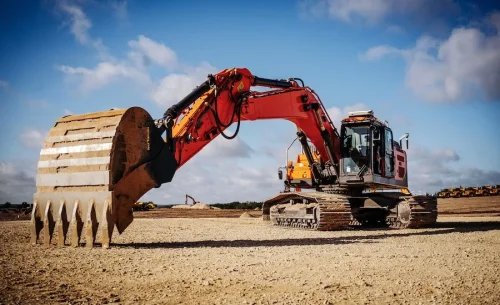
Photo courtesy Gravis Robotics
Gravis Robotics’ aftermarket onboard computing allows for full automation or in-cab operator assistance. In one of the largest infusions into the rapidly growing heavy equipment automation sector, Swiss-based tech startup Gravis Robotics has secured a $200-million Series A funding round, the firm announced Aug. 17.
The funding round comes from Japan-based Softbank Group, which cited Gravis’ artificial intelligence-based machine controls as a key component of the investor’s larger AI strategy. “Physical AI is central to SoftBank’s vision for the next phase of AI,” explained Dai Sakata, Softbank Group managing director, in the funding announcement. “Gravis is bringing AI-powered autonomy to construction, helping build smarter, more efficient infrastructure.”
Automation in construction equipment has gained ground in recent years, both in full automation of certain repetitive tasks and the addition of extensive in-cab machine controls to assist operators on complex tasks. Gravis offers an aftermarket conversion for major brands of heavy equipment to convert the machines for autonomous operation as well as for in-cab operator assistance. Onboard sensors, cameras and computers drive the machine, and Gravis claims that its AI control system can work with the smallest compact equipment up to large excavators and earthmovers.
While the machines can perform some tasks such as trenching and bulk excavation autonomously, the Gravis system also offers in-cab assistance for operators. This Gravis Copilot functionality offers 3D machine controls, analytics, augmented-reality guidance and hazard detection during operation. Previously used in Europe and expanded into North America earlier this year during the CONEXPO trade show, Gravis controls have been used on major equipment brands including Caterpillar, Case CE, John Deere, JCB, Hitachi, Yanmar and Volvo CE. The $200-million investment is a significant shot in the arm for the Zurich-based startup, according to CEO and Founder Ryan Luke Johns. “With SoftBank’s backing, we can hire the best builders and engineers, put Gravis-powered autonomy on every major jobsite, and scale faster than anyone thought possible,” he said in the funding announcement. Looking for quick answers on construction and engineering topics?

Try Ask ENR, our new smart AI search tool. Ask ENR →
Jeff Rubenstone is Deputy Editor for News and Technology at the Engineering News-Record. As news director of ENR he oversees the publication’s news coverage, and also covers emerging technologies and innovations in the construction space. With well over a decade of experience reporting on the industry, Jeff has a broad background in engineering and construction journalism. He is based in New York City.