
Sept. 3, 2026, 7:04 a.m. ET
Progress isn’t linear for NFL players. Some enter the league as stars. Many more need time to develop after jumping from the college ranks to test themselves against some of the world’s best athletes. That makes it difficult to tell which talented players are ready to break out and which will leave vast reserves of potential untapped. But every team has at least one candidate ready to take things to the next level and establish themselves.
For some, that will be a rookie or two who can handle the leap to playing on Sundays. Others will see veterans emerge from depth roles into surefire starting positions. And some starters will rise to Pro Bowl or All-Pro levels, serving as a foundation for a Super Bowl contender. Who fits that bill for every team in the NFL? Let’s break it down, running through the list in alphabetical order.
Arizona Cardinals: CB Denzel Burke Jeremiyah Love is the obvious answer, but Arizona’s running back depth may prevent him from having the same kind of impact he had at Notre Dame. The Cardinals’ passing defense, however, ranked just 26th in expected points added (EPA) allowed in 2025. Burke wasn’t part of the problem; he worked his way into the starting lineup and recorded a 78.4 passer rating allowed in coverage. If he can showcase steady growth after an overlooked rookie campaign, he could wind up with Pro Bowl hype. Atlanta Falcons: S Xavier Watts Watts laid the base to prove he’s a foundational piece of the Atlanta defense going forward. He notched four interceptions and emerged as a trustworthy free safety who could allow Jessie Bates III to thrive in the veteran’s second All-Pro season as a Falcon. Watts has the versatility to play deep or creed up to the line of scrimmage.
His impressive instincts lead to quick play diagnosis and the ability to stay near the ball all three downs. Baltimore Ravens: WR Devontez Walker Someone needs to fill the WR2 slot behind Zay Flowers. Rashod Bateman crashed down to earth last season, is often injured and could be suspended pending a domestic violence investigation. Ja’Kobi Lane earned some preseason hype, but Walker could still fulfill his potential under new head coach Jesse Minter. He had a 20.6 percent catch rate over expected (CROE) and 16.9 EPA in the incredibly limited sample size of eight targets last season.
If he can be even half that efficient over a full season he’ll be Lamar Jackson’s huckleberry. Buffalo Bills: G O’Cyrus Torrence Torrence stepped into a starting role at guard as a second round rookie in 2023. He played a significant role in a rushing offense that gained a league-high 2,714 yards and finished second in both yards per carry and expected points added (EPA) per run. The Bills recognized this and signed him to a $76 million extension this offseason, showcasing the gap between NFL evaluators and Pro Football Focus offensive line grades, where he lingered in the 50s in the 0-100 scale. The 330-pounder has yet to earn Pro Bowl or All-Pro honors, but reports out of Buffalo this preseason have been glowing.
Carolina Panthers: EDGE Jaelan Phillips A Phillips breakthrough would solidify my “not wrong, just early” take that he’d be a defensive player of the year candidate in 2023. That year, and the next one, were cut short by injury. But he had 62 pressures and a shimmering 15.7 percent pressure rate, making him a borderline top-10 pocket-crumpler despite converting that to a single sack. The counting stats will follow if he can stay healthy.
That would go a long way justifying the $120 million contract Carolina gave him this offseason. Chicago Bears: WR Luther Burden III This won’t be a surprising pick to anyone who’s done their fantasy research. Ben Johnson was the offensive coordinator that helped push Amon-Ra St. Brown to greatness as a wideout equally comfortable split wide or in the slot. Burden had about a 60-40 split wide vs.

slot as a rookie and, like St. Brown, showed off prodigious run-after-catch ability — his 43 yards after catch over expected (YACOE) were a top-five mark among players with 60 targets or fewer. He has the opportunity to claim a starring role in a passing offense without D.J. Moore, and his 78.3 percent catch rate and above average advanced stats suggest his solid first-year campaign is scalable. Cincinnati Bengals: EDGE Boye Mafe Mafe was a key part of a Super Bowl team, but only played half the snaps for the league’s top defense last season.
He signed a $60 million contract to be rain to the desert of Cincinnati’s pass rush, part of an overhaul that added four new starters to the defensive side of the ball. The former second-round pick has been a steady presence off the edge, settling in at a pressure rate between 12.6 percent and 12.8 each of the last three seasons. He’s solid enough against the run to rack up more snaps, and we could see him set a new career high in sacks given the opportunity he’ll have in his new home. Cleveland Browns: WR KC Concepcion We’ve been hitting Concepcion and fellow rookie Denzel Boston pretty hard in these previews, but it’s for good reason. The Browns’ awful quarterbacks badly need someone who can turn a short target into a big gain, especially after overhauling 80 percent of their offensive line. That’s Concepcion, who has remarkable wiggle and averaged 7.2 yards after catch per reception his final season at Texas A&M. He can be an even more effective version of Harold Fannin Jr.
this fall. Dallas Cowboys: LB DeMarvion Overshown Overshown was a chaos goblin at Texas, but the 2023 third-round pick has played just 19 games in three seasons due to awful injury luck. He’s in the final season of his rookie contract and has a ton to prove and a massive financial benefit to doing so. He’s shown he can be an effective blitzer (five sacks in 82 pass rushing snaps in 2024) and has the speed and safety background to be a deterrent in coverage (allowed six yards per target in 2025). If he can put everything together, he’ll boost one of 2025’s worst offenses and make himself a ton of money in the process. Denver Broncos: RB Jonah Coleman JK Dobbins remains electric. He also remains injury prone.
RJ Harvey was one of the league’s least efficient runners, racking up -89 rushing yards over expected (RYOE) in just 146 carries (though he was an asset in the passing game). That leaves room for the fourth round rookie to shine. Coleman is a bowling ball of a runner with a hard-charging first step and the power to blast through rapidly closing holes to keep his offense on schedule.
He may not be a sensation right away, but he’ll be ready when opportunity knocks. Detroit Lions: DT Tyleik Williams The 2025 first round pick is flanked with talent; Aidan Hutchinson on one side, Alim McNeill on the other. That helped spur a late-season surge that made him a bright spot in an otherwise frustrating Lions season.
He’s primed for an even bigger 2026, particularly if he can shore up his run-stuffing up front. But Detroit badly needs a pass rushing presence to help Hutchinson. His 15 pressures last fall despite playing only 41 percent of the Lions’ defensive snaps suggest he can be an asset. Green Bay Packers: CB Brandon Cisse The Packers didn’t have a first round pick last spring thanks to the Micah Parsons trade.
More Read
They still may have landed a first round talent in Cisse, the seventh cornerback selected in the 2026 NFL Draft. Cisse has looked at times like a worthy successor to Jaire Alexander and will start across from Keisean Nixon as the team’s boundary cornerbacks in the season opener. While he was uneven at South Carolina at times, he also allowed only 18 receptions across 12 games in his lone season as a Gamecock, often matched up against SEC WR1s. The learning curve will be steep, but he’s handled it so far this summer.
Houston Texans: G Keylan Rutledge Houston has been searching for offensive line answers… well, it seems like since the franchise’s inception. That landed on Rutledge on Day 1 of this year’s draft.
He’s slated to man the left guard slot ahead of David Montgomery, a veteran back much more effective inside the tackles (1.1 RYOE/carry) than out (0.5 RYOE/carry). If the Georgia Tech standout can continue his bruising ways, he’ll help revive 2025’s third-worst rushing offense and create space for C.J.
Stroud to thrive as a passer. Indianapolis Colts: EDGE Laiatu Latu Latu was a solid rotational pass rusher as a rookie. In 2025 he was an above average starter. In 2026 he’ll up his game to Pro Bowl levels or beyond.
After 42 pressures, four sacks and a 12.0 percent pressure rate in his first year, he boosted those numbers to 62, 8.5 and 14.4. Progress isn’t linear in the NFL, but he looked the part of a star edge defender last season and, primed for more playing time, feels like a safe bet to hit double-digit sacks if he can stay healthy.
Jacksonville Jaguars: TE Brenton Strange Strange was one of the many beneficiaries of the space Jakobi Meyers’ arrival created in the passing game. He thrived as opponents left linebackers flailing to cover him, averaging just under four yards of separation per target. His 0.52 expected points added (EPA) per target were third only to George Kittle and Colston Loveland among tight ends with at least 50 passes thrown their way.
2026 could be the year he emerges as more of a downfield threat, but even if he simply remains a rumbling safety valve he’ll help Jacksonville’s 2025 momentum carry over to 2026. Kansas City Chiefs: CB Mansoor Delane Attrition hit the Chiefs’ cornerback trust hard this offseason, making both Jaylen Watson and Trent McDuffie Los Angeles Rams.
Fortunately, last year’s collapse provided the leverage to select the 2026 NFL Draft’s first cornerback — the ultra-smooth Delane. He’s already emerged as a starter across from 2025 third-round choice Nohl Williams. He’s a jellyfish tracking deep balls and a pistol shrimp when it comes to closing on in- or out-cutting routes.
His rookie season may have some growing pains, but he’s got room to stake his claim as a franchise cornerstone. Las Vegas Raiders: WR Jalen Nailor Nailor is the kind of player who can lift up a young quarterback. He had the most productive season of his career with J.J. McCarthy slinging passes in his general direction last fall.
His ability to fight through traffic — a 67 percent contested catch rate, per FTN — is the kind of effort that turns interceptions into first downs and bad decisions into nervous relief. After having his targets limited by Justin Jefferson and Jordan Addison’s presence, there’s no such blockage at the top of the Raiders wideout depth chart. Nailor could be Las Vegas’ WR1… and Fernando Mendoza’s huckleberry. Los Angeles Chargers: CB Tarheeb Still Still burst into the starting lineup as a fifth-round rookie in 2024. While he went without an interception in 2025, he actually lowered his passer rating allowed (from 79.8 to 76.8) by giving up under 5.3 yards per target in coverage.
He’s a rising star who can move from “underrated starter” to “Pro Bowl honoree” with only modest growth and a healthy interception total. Los Angeles Rams: EDGE Byron Young Young is coming off a 12-sack season with Jared Verse as his pass rushing running mate. Now he gets Myles Garrett and Aaron Donald alongside him. It’s difficult to improve on a dozen sacks and a 14.9 percent pressure rate.
If anyone is going to do it, it’s the guy about to see the fewest double-teams of his pro career. Miami Dolphins: LB Jacob Rodriguez The Dolphins probably won’t be very good in 2026. They’ll certainly give a whole bunch of young prospects and overlooked veterans a chance to shine, however. Rodriguez has all the traits to solidify himself as a pillar of the team’s rebuild. His versatility opens up new pages in first-year head coach Jeff Hafley’s playbook, and the franchise regards him highly enough to have released 2025 starter Tyrel Dodson in the run-up to cutdown day. Minnesota Vikings: RB Jordan Mason Mason has long been an efficient RB2 or RB1b, serving a platoon role while contributing 490 rushing yards over expected (RYOE) on only 395 attempts across four seasons.
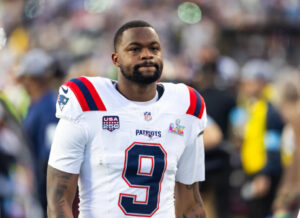
Aaron Jones turns 32 in December, had his lowest usage since his rookie year in 2017 and had a career low in yards per touch (4.7). The baton is there to be passed to the younger, more explosive back. Can Mason keep up his impressive pace for a full season of top tailback duties? New England Patriots: WR Romeo Doubs Doubs steadily improved across four seasons as a Packer. His catch rate over expected (CROE) rose from -5.5 percent as a rookie to 7.9 percent last fall — 13th-best among qualified wide receivers.
Now he’s heading to an offense that produced the No. 1 and No. 2 wideouts when it came to exceeding downfield expectations (Kayshon Boutte and Stefon Diggs, neither of whom are on the roster this fall). Even better, he’s going from Green Bay’s “everybody eats” passing offense to one with a more defined pecking order.
He’ll be behind A.J. Brown on Drake Maye’s wish list, but should see his targets — and production — explode in Foxborough. New Orleans Saints: DL Vernon Broughton Singling out Tyler Shough feels too easy.
The quarterback who engineered three game-winning drives and completed just under two-thirds of his passes despite the league’s 10th-highest average target distance could well make the leap to Pro Bowl status and solidify his place as a franchise quarterback. Broughton is more interesting — a 2025 third-round pick who played just 24 snaps as a rookie due to injury. He brings massive size and an explosive first step to the New Orleans front, where he’s penciled in as a starter in the team’s first depth charts. He may face a learning curve (it’s basically his rookie season, after all), but has the potential to be an asset up front for a needy defense. New York Giants: TE Isaiah Likely Likely has been a useful offensive piece through his four-year NFL career. He’s also had to split snaps with Pro Bowler Mark Andrews at tight end. Former Ravens head coach John Harbaugh imported him to New York, where he’ll be paired with Theo Johnson and a receiving corps with a still-recovering-from-an-ACL-tear Malik Nabers and third round rookie Malachi Fields at the top of the depth chart.
Likely ranked 12th among qualified tight ends with 1.94 yards per route run (YPRR) in 2024; similar efficiency could lead to a big year for the Giants’ needy offense. New York Jets: EDGE David Bailey It’s not revelatory to suggest the second overall pick in the 2026 NFL Draft will be great. But Bailey came with a new questions despite consistently wreaking havoc on FBS quarterbacks. His run defense is a work in progress — which is fine, considering the Jets’ playoff chances this fall — but his pass rush remains intense and polished. His explosion off the line has created problems for New York’s offensive line throughout training camp. He remains one of the favorites to win defensive rookie of the year. Philadelphia Eagles: LB Jihaad Campbell Philadelphia will be relying on two new wideouts to share the load behind DeVonta Smith, but Campbell may be the team’s best chance to add to its list of Pro Bowlers.
The latest link in a chain of uber-athletic first-round defenders from the SEC, the former Alabama star improved throughout his rookie 2025. He allowed just 75 yards on 20 targets in coverage, recorded a 17.2 percent pressure rate on roughly four blitzes per game and had a missed tackle rate under six percent.
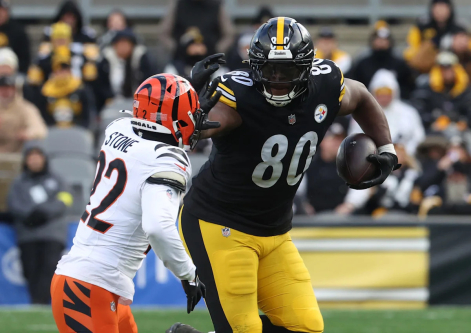
Even a modest step forward could cement his place as a star. Pittsburgh Steelers: TE Darnell Washington Aaron Rodgers needs a game plan in which he gets the ball out quickly to avoid wear and tear on a soon-to-be 43-year-old body. While Pittsburgh added a key possession receiver in Michael Pittman Jr. this offseason, Washington could wind up being his huckleberry instead. His 1.64 yards per route run were 14th-best among tight ends to run at least 200 routes.
He’s able to find space — 4.3 yards of separation per target with Rodgers — and use his 265-pound frame to rumble upfield to turn short passes into big gains. He averaged 6.6 yards after catch per target last season. His 62 yards after catch over expected (YACOE) were second only to Tucker Kraft among tight ends with fewer than 320 routes. San Francisco 49ers: WR De’Zhaun Stribling It was a bit of a surprise to see San Francisco settle on Stribling after trading back to the top of the second round at this year’s draft.
The Ole Miss standout was largely considered a third or fourth-round talent thanks to elite speed but a raw collection of routes and an inability to finish consistently through traffic. But he’s been a revelation for an aging receiving corps this preseason, creating space at a variety of levels and, importantly, bringing some of the blocking chops vacated when Jauan Jennings decamped for Minnesota. Seattle Seahawks: RB Jadarian Price With Kenneth Walker III a Kansas City Chief and Zach Charbonnet recovering from a torn ACL, Seattle needed to replenish its running back room. That led to a college RB2… which would be concerning, had Notre Dame’s RB1 not been the third overall pick in this year’s draft. Price only had 280 carries in three South Bend seasons, but averaged six yards per handoff in relief of Jeremiyah Love.
Now he joins an offense than won a Super Bowl while running the ball more than all but two other NFL teams in 2025. Tampa Bay Buccaneers: WR Jalen McMillan McMillan was Tampa Bay’s most efficient wide receiver last season, averaging a team-high 2.14 yards per route run. That was in a small sample size, however; only four games played as he worked back from (Kurt Angle voice) a broken freakin’ neck suffered in the preseason. Mike Evans’ departure has created the space to join the startling lineup alongside 2025 draftee Emeka Egbuka and Chris Godwin, the latter of which is awesome but is also 30 years old and has played only 16 games the last two seasons. Opportunity will come for the third-year wideout to prove he can be a full-time headache for NFC South defenses. Tennessee Titans: QB Cam Ward Tennessee largely left the first overall pick in the 2025 NFL Draft out to dry as a rookie, leaving him throwing most of his passes to Chimere Dike and Elic Ayomanor behind an offensive line that allowed him to be sacked a league-high 55 times.
The Titans addressed those issues, bringing new starters to the middle of the line and spending significant capital to put Wan’Dale Robinson and Carnell Tate atop his receiving depth chart. That could allow a diminished Calvin Ridley the space to thrive and help push Tennessee back toward respectability behind a quarterback whose college career was defined by his ability to win anywhere. Washington Commanders: RB Bill Croskey-Merritt Last year’s buzzy fantasy gem was more than just the beneficiary of a weak running back platoon. Croskey-Merritt’s 0.8 rush yards over expected (RYOE) per carry were eighth-best in the NFL last season — and a sign he can still thrive even if the Commanders’ offensive line is as bad as preseason reports suggest. The addition of Stefon Diggs and Chig Okonkwo should, at least theoretically, create some space for a young back who saw stacked boxes on 28 percent of his carries.