

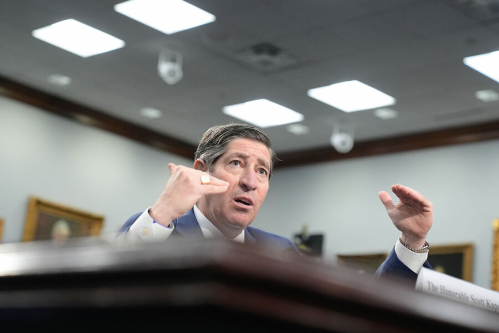
The Trump administration is a step closer to being able to restrict what federal employees can tell the public about their work, though the plan is expected to face opposition in court.
The 30-day public comment period for the proposal recently closed, and the Office of Personnel Management is reviewing nearly 30,000 comments. The policy could go into effect as soon as the end of this year or early in 2027, if it survives potential legal challenges.
“I very much expect these agreements will both be challenged in principle and will be heavily litigated in any instance where the government tries to rely on them,” says David Super, a professor of law and economics at Georgetown University Law Center.
Why We Wrote This
President Donald Trump’s desire to control the flow of information from his administration includes a move to subject federal workers to nondisclosure agreements. A proposed policy raises questions about free speech and government transparency.
Executive branch agencies that employ 2 million civilian workers would have the option to make staff members sign nondisclosure agreements as part of the administration’s attempt to stop leaks of information. Other presidents have tried to stop leaks, too, but this proposal is the first and broadest of its kind.
Thomas Lopez, a citizen who weighed in during the public comment period, wrote on the government website that collected comments: “I’m in favor of the proposed NDA policy as is. No changes. It’s good for the nation.”
From a review of roughly 300 of the comments on the site, the vast majority opposed the proposal. Many who opposed NDAs cited, among other things, existing laws that already ban unauthorized disclosures of information and others that protect whistleblower rights.
“What we need is to protect federal workers from the implicit threat of retaliation for legally and constitutionally protected disclosures, while safeguarding the American public’s right to a degree of transparency,” wrote commenter Sue Jennings, adding that she had retired after 31 years in the federal workforce.
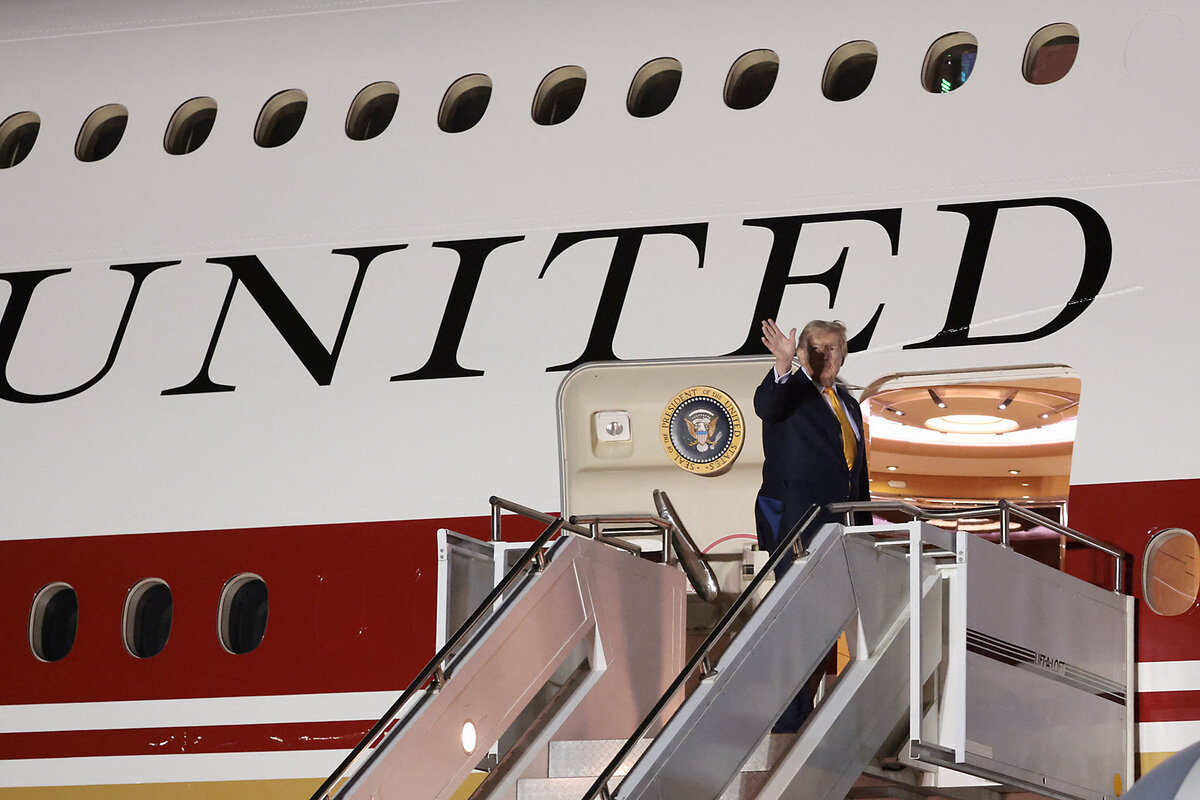
President Donald Trump boards the new, Qatari-gifted Air Force One in Britain, July 8, 2026. The administration is seeking to require nondisclosure agreements from executive branch employees, part of the White House’s overall effort to consolidate executive power.
The NDA proposal is part of the Trump administration’s overall effort to consolidate executive power, including by asserting it has the right to fire heads of independent agencies and to fire federal workers who don’t support administration policies.
The administration says leaks have placed government operations at risk – such as news organizations obtaining information about the January U.S. military raid in Venezuela. President Donald Trump has sought to curtail freedom of the press, most recently when the Justice Department subpoenaed four New York Times reporters over their reporting about Air Force One.
The language in the nondisclosure proposal’s template is unusual, says Donald Moynihan, a professor at the University of Michigan’s Ford School of Public Policy.
It would essentially bar federal workers from disclosing “nonpublic, confidential, or proprietary information.” The uncertainty of what falls under “nonpublic” could create a chilling effect on employee speech, Professor Moynihan adds. Concerns include that employees could be targeted for talking publicly about routine aspects of their jobs or that they might not report potential waste, fraud or illegal activity.
The Office of Personnel Management (OPM) says whistleblower rights are protected. However, the proposal states that employees could face disciplinary action, as well as potential civil and criminal penalties, if they disclose information without authorization.
“Imagine that the policy is in place and you are a federal employee: You are no longer certain about what you can or cannot say,” says Professor Moynihan. “This policy to me seems to make it harder for the public to learn about what’s happening inside the very government, precisely at a time when we have good reason to believe there is significant corruption … [and] determination to shut down transparency and oversight of their activities.”
President Trump required White House aides to sign NDAs during his first term, and he has also used similar agreements in his private businesses. OPM Director Scott Kupor said much of the private sector uses NDAs and says “the federal government should not be held to a lower standard.”
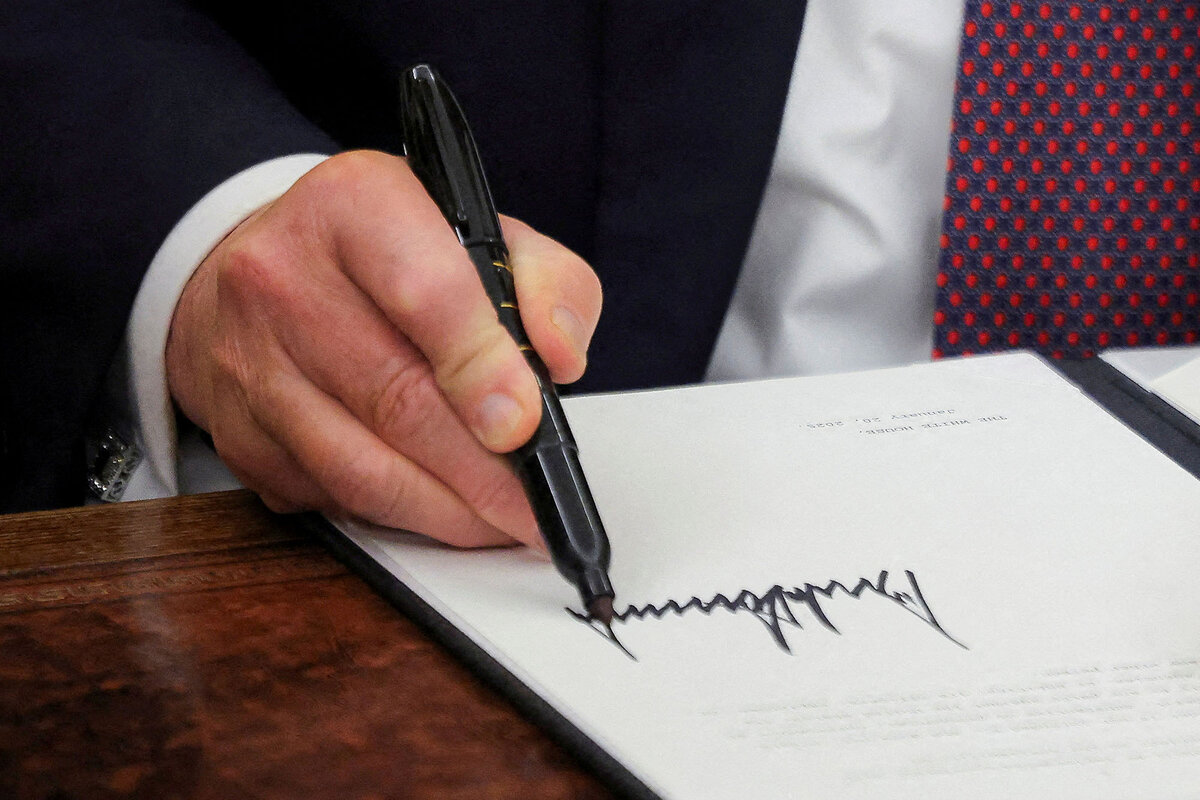
Carlos Barria/Reuters/File
President Donald Trump signs documents as he issues executive orders in the Oval Office at the White House in Washington.
Mr. Trump is exerting control over the federal workforce in other ways. The Supreme Court’s June ruling in Trump v. Slaughter said that a president can fire the head of an independent agency at will. Mr. Trump plans to reclassify federal workers’ jobs to make them easier to terminate if they do not support the administration.
When federal workers are hired, they have protections that make traditional termination difficult. They are granted advance notice before removal, the opportunity for response, and the ability to appeal disciplinary action to an independent board.
The reclassification puts both career and merit-hired employees into policy-influencing roles, removing those civil service protections.
The administration’s efforts aim to “suppress or chill speech, dismantle the non-partisan civil service, weaken democracy, and reward the administration’s loyalists at the expense of the American people,” an American Federation of Government Employees spokesperson wrote in an email.
Tevi Troy, a senior fellow at the Ronald Reagan Institute and former senior aide under President George W. Bush, says Mr. Trump is trying to cut through the traditional ways that government has worked, following his first-term experience.
President Trump “wants to do more things unilaterally, using executive authority, using executive actions, using things where the president himself can do it without having to wait for other branches of government or wait for Congress,” he says.
Staff writer Scott Blanchard contributed reporting for this article.