

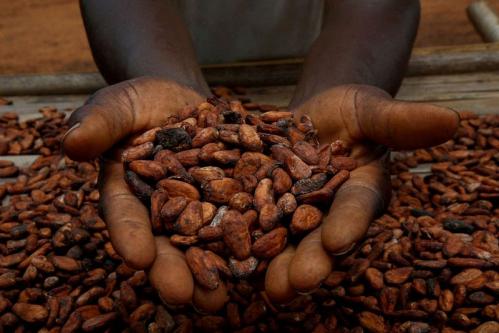
The Bank of Industry (BOI) has unveiled an €85 million long-term financing facility aimed at expanding local cocoa processing, reducing Nigeria’s dependence on raw bean exports and strengthening value addition across the cocoa value chain. The commitment was announced on Tuesday by the Managing Director and Chief Executive Officer of BOI, Dr Olasupo Olusi, during the Cocoa Value Addition Summit 2026 in Abuja. Speaking at the summit, themed “From Bean to Brand,” Olusi said the bank’s financing strategy would prioritise value addition over the export of raw agricultural commodities.
The €85 million facility is being provided through a partnership between the European Investment Bank (EIB) and the Bank of Industry, with funding support from the European Union under its Global Gateway initiative. What they are saying
Olusi said the bank is placing particular emphasis on developing Nigeria’s cocoa value chain because of its importance to rural livelihoods. “We are particularly focused on cocoa value chains, which provide livelihoods for thousands of Nigerians.”
He added that the financing initiative is intended to improve productivity, encourage value addition and strengthen access to markets, ultimately increasing earnings for farmers and processors. “Through this initiative, we aim to enhance productivity, value addition, and market linkages that will directly improve the incomes of farmers and processors.”
More insights
According to Olusi, about 70% of the €85 million financing facility will be channelled to Nigeria’s cocoa and dairy sectors, which BOI considers among the industries with the greatest potential to create jobs and retain foreign exchange earnings. He argued that Nigeria continues to lose significant economic value by exporting raw cocoa beans instead of processing them into finished products such as chocolate.
To address this, BOI will not only provide financing but also technical support to help beneficiaries comply with international quality, climate and sustainability requirements, including the European Union Deforestation Regulation (EUDR). The bank also plans to create dedicated financing windows for smallholder farmers organised in cooperatives, offering concessionary loans to improve access to funding. Olusi said BOI’s long-term objective is to encourage the establishment of processing factories within cocoa-producing communities so that jobs, taxes and greater economic value remain in Nigeria. He added that increasing local processing could enable Nigeria to earn as much as $30,000 per tonne from processed cocoa products, compared with about $9,000 per tonne from exporting raw cocoa beans. Also speaking, Permanent Secretary of the Federal Ministry of Industry, Trade and Investment, Dr Chris Isokpunwu, represented by the ministry’s Director of Industrial Development, Mohammed Bala, said more than 80% of Nigeria’s cocoa is still exported as raw beans despite the industry’s vast processing potential. He noted that expanding domestic processing would boost export earnings, create employment and stimulate industries such as confectionery, cosmetics and pharmaceuticals. What you should know
The new financing initiative comes at a critical period for Nigeria’s cocoa industry, which has experienced significant price volatility over the past year.

In March, cocoa farmers across Ondo, Osun and Ekiti states raised concerns over a sharp decline in cocoa bean prices, saying the downturn had wiped out much of the gains recorded during the 2024 price boom and pushed many producers into financial hardship. Farmers said cocoa prices had fallen by more than 70% from their record highs, leaving many unable to repay debts or secure profitable buyers for their harvests.
Globally, cocoa prices also experienced a steep correction after reaching historic highs. Prices climbed to nearly $11,000 per metric tonne in 2025 before falling to about $4,197 per tonne by February 2026, representing a decline of roughly 62% within nine months. However, the market has recently shown signs of recovery, with global cocoa prices rising by about 24% in May, pushing prices back above the $4,400-per-tonne mark after the sharp declines recorded earlier in 2026. This rebound has renewed optimism that stronger local processing could help cushion Nigerian farmers and processors against future price swings in the international cocoa market.